Springs · Cedar Dale
Garage Door Track Repair or Replacement in Cedar Dale
You bought the house with a door that sticks near the top of its travel.
In plain words
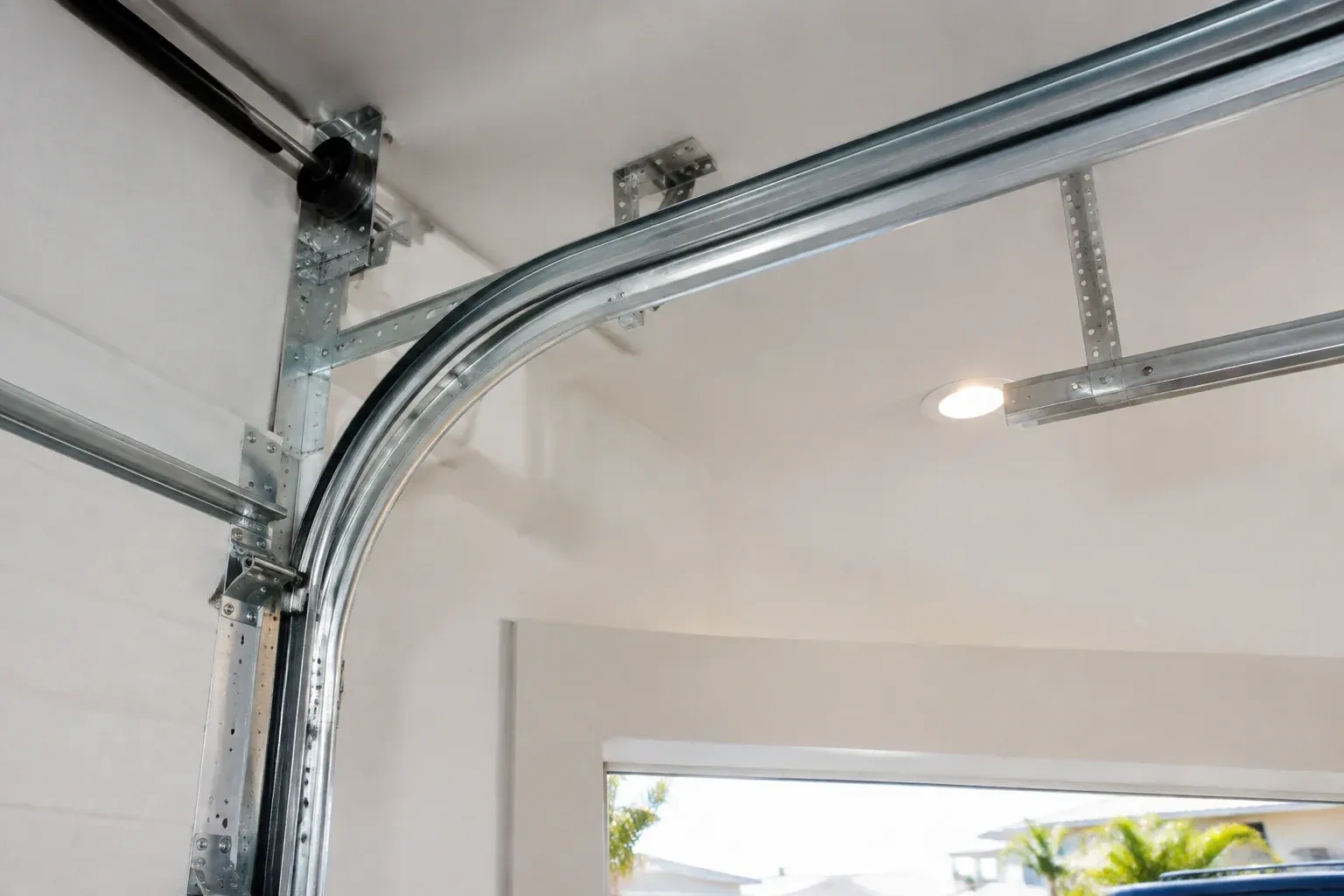
Whether a piece of track is straightened or replaced depends on where and how it is damaged. A shallow dent in the vertical run, away from the curve, can usually be dressed back to profile with track pliers and a block, and a channel that worn rollers have pried open can be squeezed closed. A kink, a crack, a bend in the curved section or steel thinned by rust calls for a new piece of the same profile and radius, because a roller path with a hard spot in it keeps catching. The technician shows you the damage and explains which option suits each piece before the work starts.
How the visit goesHalfway up, the door lurches and one roller rides onto the lip of the channel. Near the curve the track looks wider than the rest, and the door hesitates in the same place on the way down.
Garage Door Track Repair or Replacement
How the visit goes
Securing the door before the track is touched
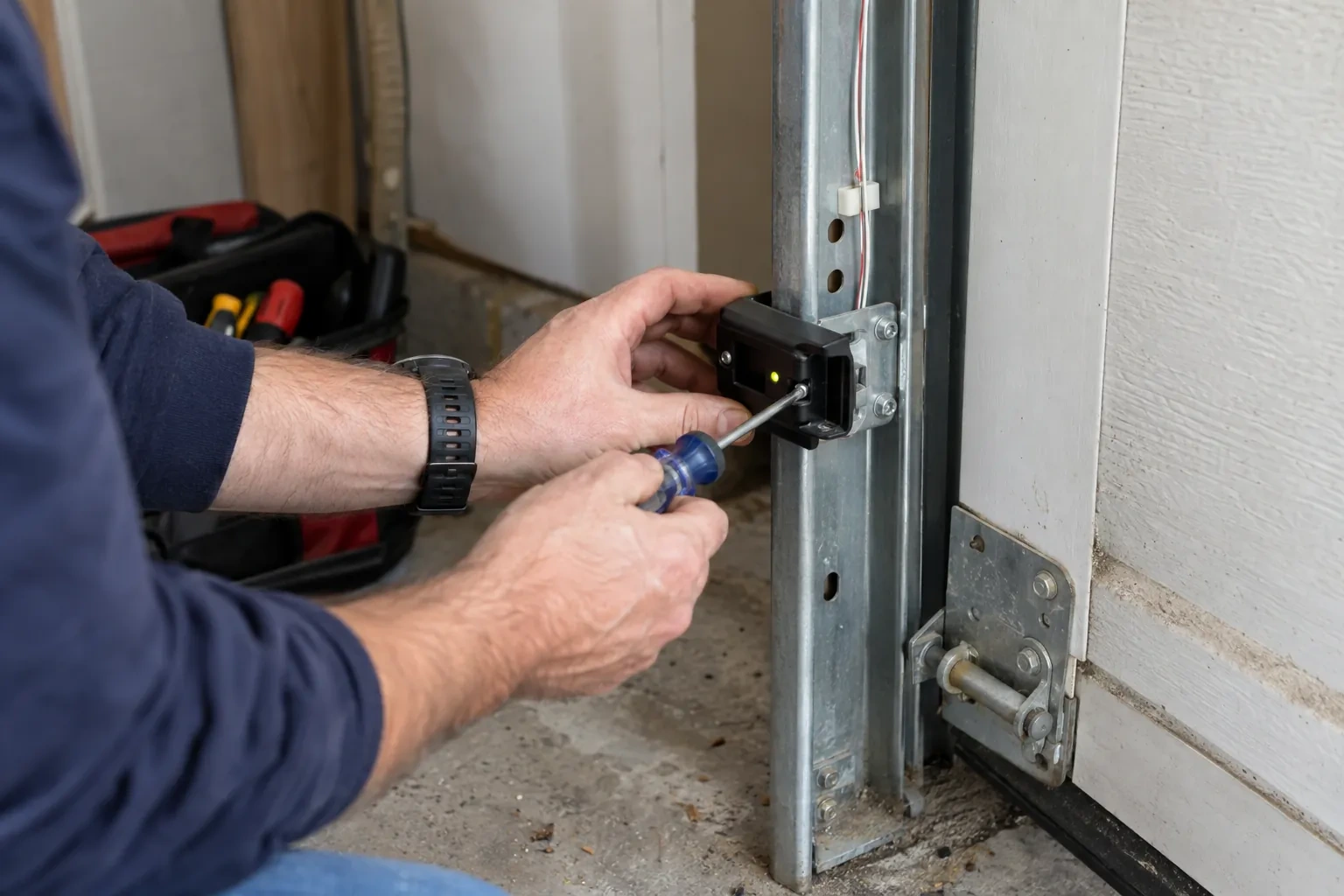
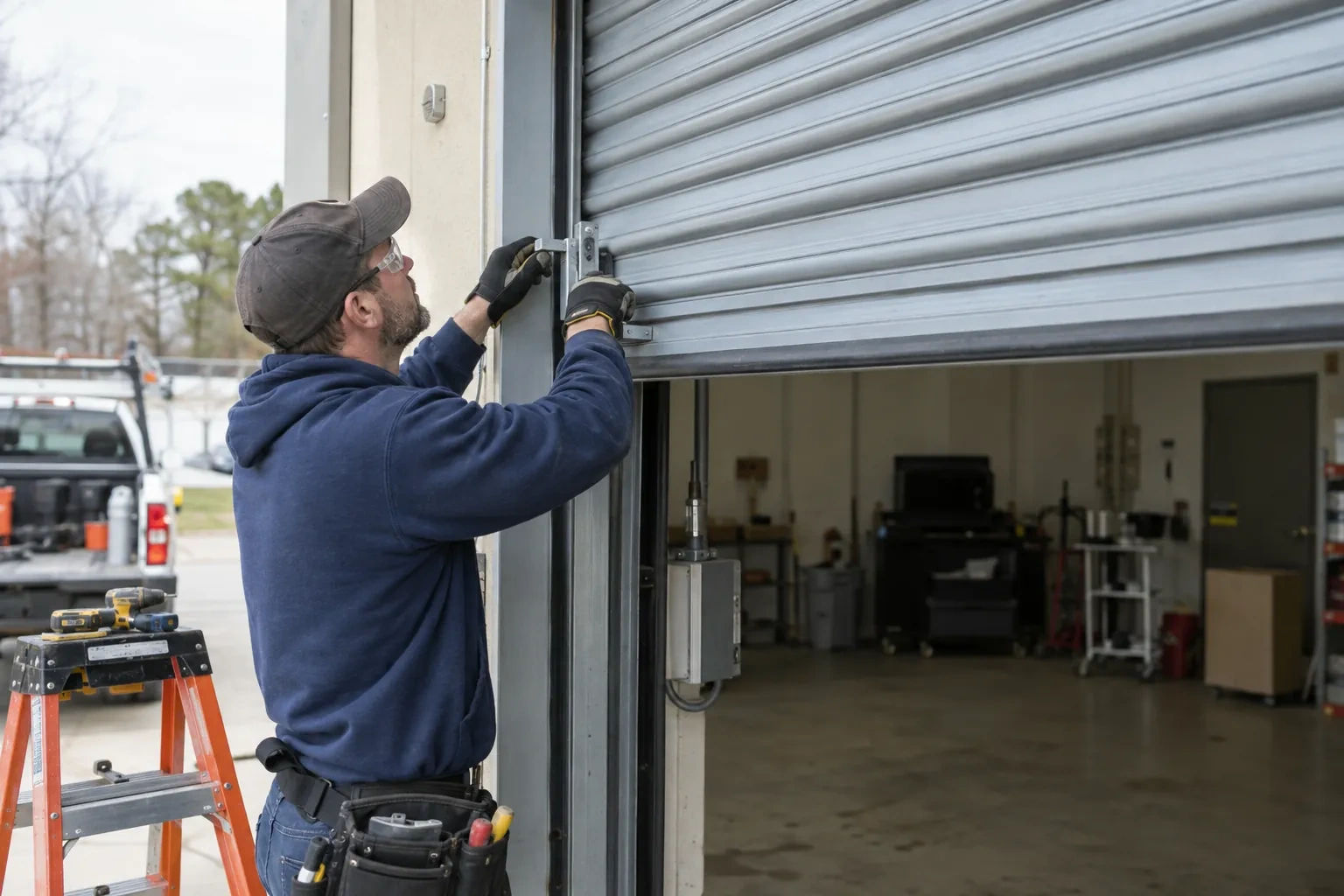
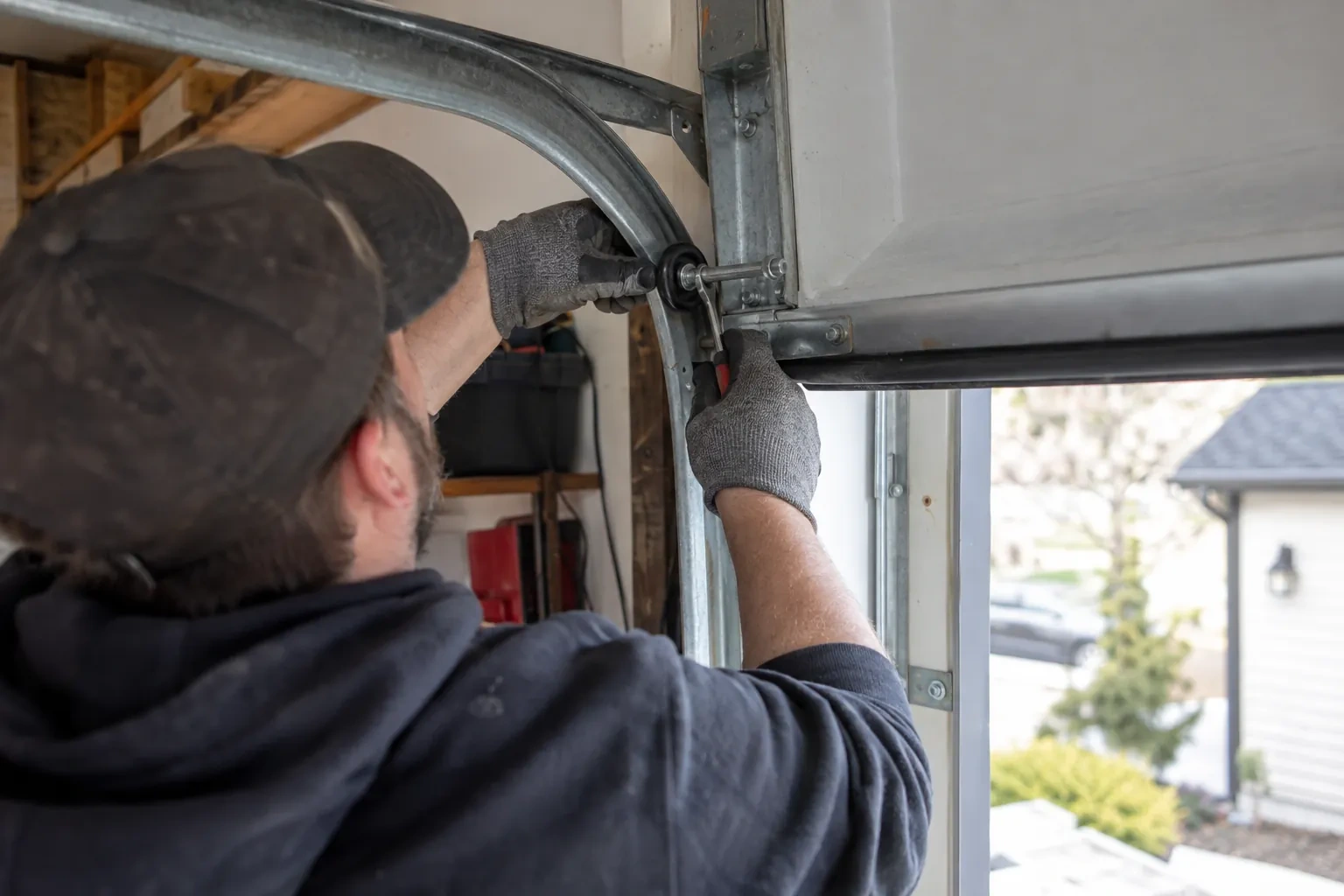
The track is what keeps the rollers, and therefore the door, where they are, so nothing on it is loosened until the door is held some other way. If the door is not fully closed, it is restrained first, a track clamp under a roller so it cannot drop, or a prop, before the release is pulled and the opening cleared. A door jammed on a bent section is often resting its weight on one roller and cable, so that weight goes onto the clamp or support first. With the door still, the brackets, hangers and fasteners can be examined and loosened one at a time without the door shifting, and the rest of the visit becomes calm, methodical work.
Tension back, balance and opener tests
Once the track is fixed and every roller is seated, the springs are wound back to the turns the door calls for and the clamps come off. The technician lifts the door by hand through its full travel, watching each roller through the curve and along the horizontal run for any catch, and checks that the door holds itself at roughly waist height. It is run up and down several times by hand before the opener is reconnected, and the opener's travel limits and force settings are then adjusted to the newly aligned door, with the reversing test done against a block on the floor. You watch the finished door make the trip before the tools are packed.
The record of the track profile and layout
Before leaving, the technician tells you what the door runs on: two-inch or three-inch track, the radius of the curve, whether the layout is standard, low-headroom or high lift, and which pieces were straightened or replaced. Write it inside the cover of the door manual or on a card by the opener. Any future part, a roller, a hinge, a section of track, is then ordered to match rather than measured from scratch, and a technician years from now can read at a glance how the door was set up. If the jamb was repaired or a hanger moved to a joist, that goes on the same note.
Garage Door Track Repair or Replacement
In the van
Jamb lumber and construction screws
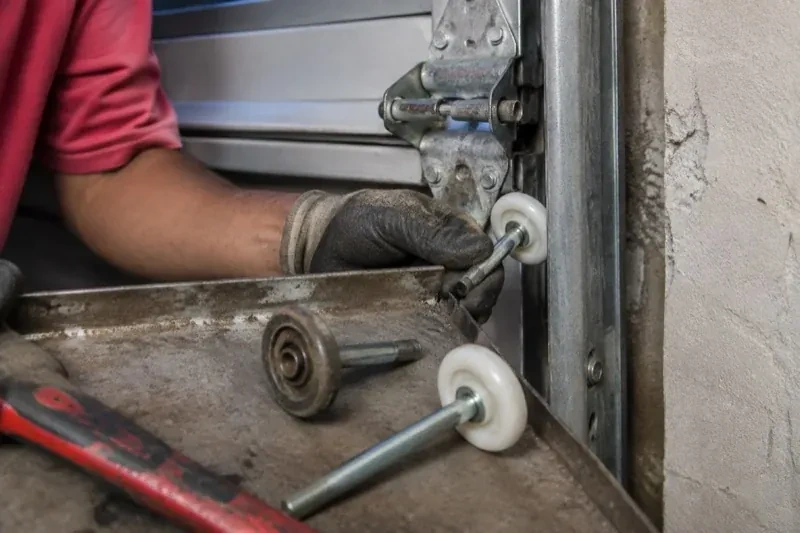
Replacement rollers and hinges
Level, plumb line and square
Horizontal track with curve
Jamb brackets or continuous angle
Garage Door Track Repair or Replacement
What affects the quote
Springs that have to be unloaded
Work at the flag bracket or on the curve means winding the torsion springs down and back up. That adds time, and the quote says whether it applies to your repair.
Bracket-mounted or continuous angle
Track on jamb brackets is adjusted bracket by bracket, while a full-height angle comes off and goes back as one piece. Each mounting style shapes the time and the fasteners quoted.
Straighten or replace, piece by piece
A dent dressed in place is labour only, while a kinked, cracked or rusted length means a new piece of track. The quote lists which pieces get which treatment.
What to have ready
- Does the door rub the frame or catch at the same spot every time?
- Is it a single or a double door, and roughly how tall?
- Is the door closed, fully open, or stuck partway?
Garage Door Track Repair or Replacement: questions
QuestionsDoes a heavy insulated door need heavier track?
Usually the standard two-inch track handles a residential insulated door well, provided the gauge matches what the door maker specified and the brackets and hangers are properly fixed. Very heavy or oversized doors, and some carriage-style wood doors, are set up on three-inch track or on heavier-gauge two-inch. If a heavier door was hung on the light track from an earlier door, flexing and spreading follow, and the technician will say so.
Why is the horizontal track sagging?
The horizontal run hangs from the ceiling on back hangs of perforated angle, and it sags when a hanger bends, its screws pull out of a joist, or it was only ever fixed into drywall. A sagging hanger droops that run out of level or its intended pitch. The fix is a straight or new hanger screwed into solid framing, with the run set to the manufacturer's specified pitch and matched to its partner; a door that drifts back toward the opening once raised is a separate, balance-related symptom.
What is the track made of, and what sizes are there?
It is galvanized steel folded into a channel that the roller wheels ride in. Residential doors almost always use two-inch track, with three-inch reserved for heavier or wider doors. The curved piece comes in a radius, commonly 12 or 15 inches, that sets how much headroom the door uses. Replacement pieces are ordered to the same profile, gauge and radius as the rest of the set.
Related services
- Garage Door Hinge ReplacementThe roller at the top of the second panel is leaning outward and only half of the wheel is still in the track.
- Garage Door Cable ReplacementThe cable has wrapped itself around the shaft above the door instead of sitting on its drum.
- Torsion Spring ReplacementLooking up at the coil above the door, you can see a clean split with a gap of several centimetres between the two halves.