Springs · Cedar Dale
Garage Door Roller Replacement in Cedar Dale
Every morning the door announces itself: a rattle on the way up, a grinding squeal on the way down, loud enough that the neighbours know when you leave.
In plain words
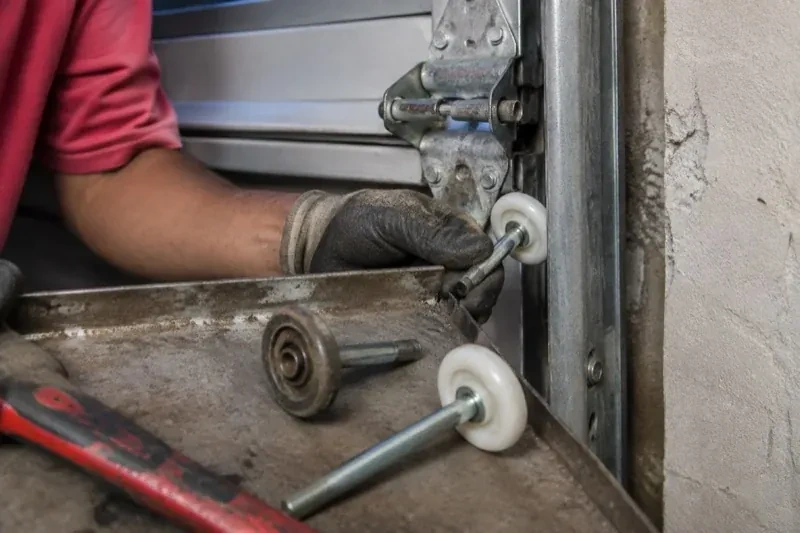
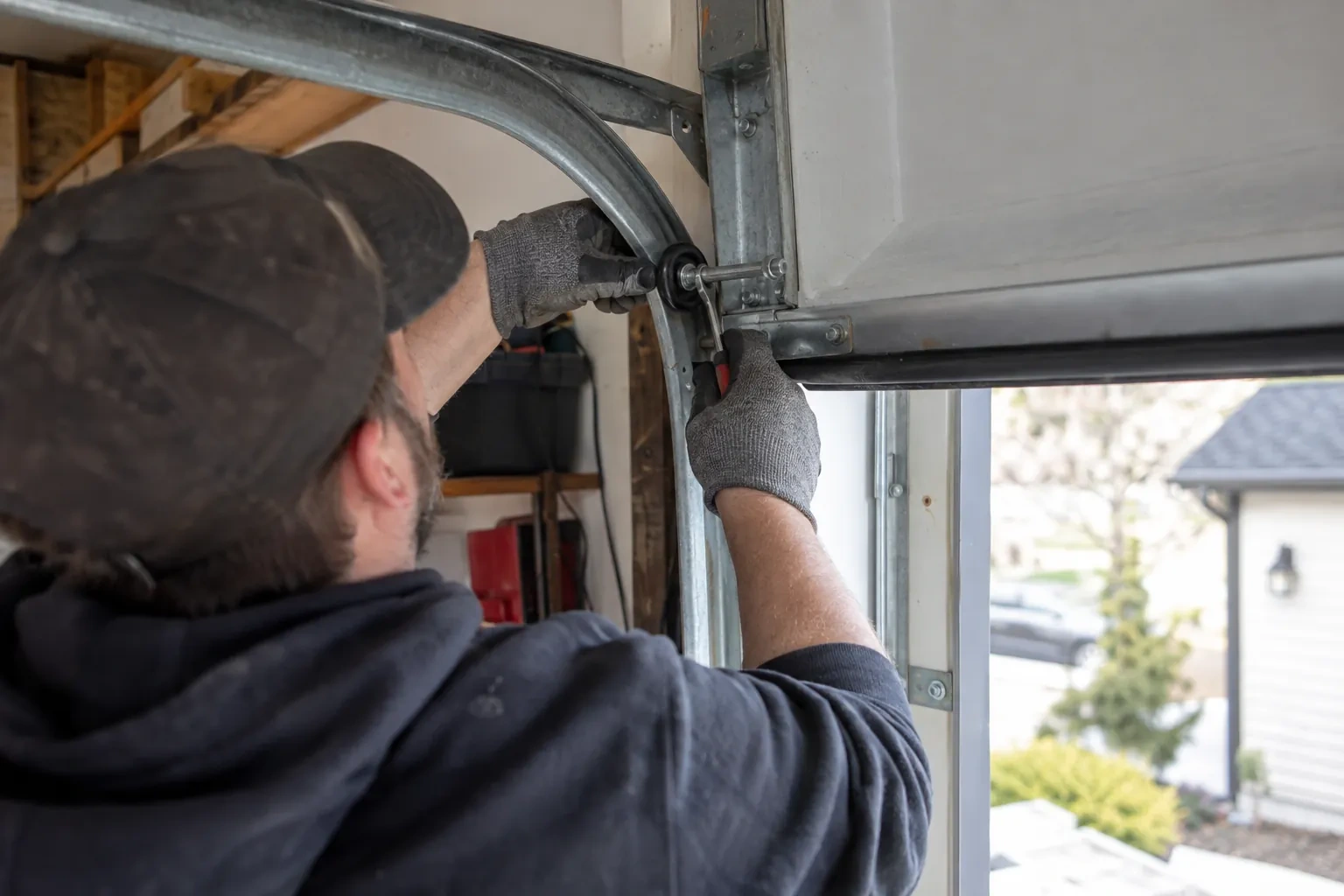
Not every roller suits every door. Wheel diameter has to match the track: two inches on residential track, and either two or three inches on commercial track, so the installed track is measured, not assumed. Stem length has to match the hinges: four inches through a single hinge, seven or ten inches where two hinges stack at the end of a heavier door. Bearing count and load rating have to suit the door's weight, with insulated steel and wood doors needing more than a light single-skin door. Measuring all of that before a set is chosen is part of the service, so the new rollers sit properly and last.
How the visit goesHalfway up, the door hesitates and the opener strains before it carries on. Pulled by hand with the opener released, you feel the same catch at the same height, as if a wheel is dragging instead of turning.
Garage Door Roller Replacement
How the visit goes
What the winter left behind
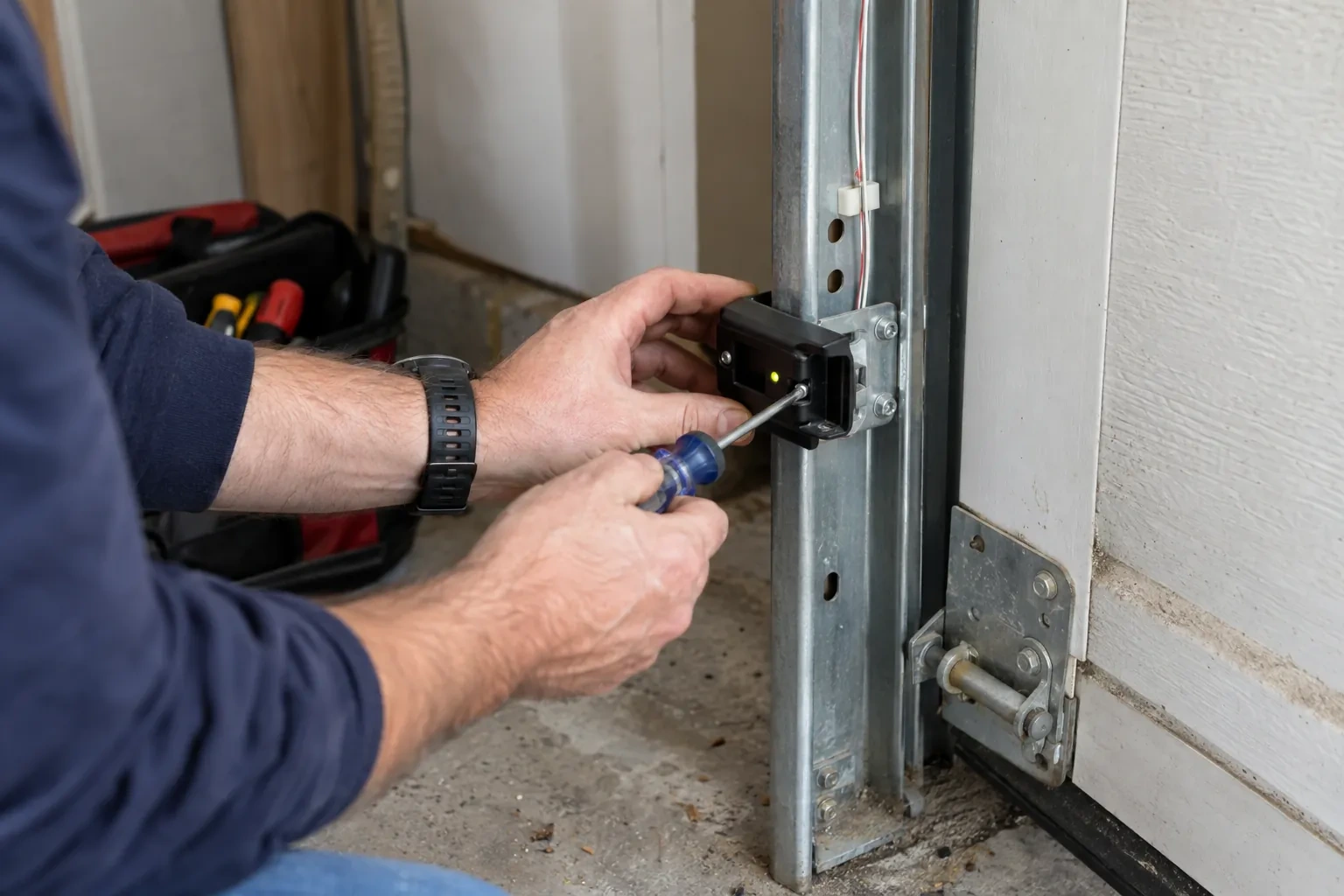
In this climate the foot of the track is where trouble collects. Slush and salt carried in on the tires settle in the bottom few inches, freeze overnight into ridges and leave a brine that attacks steel. The technician looks for corrosion on the bottom rollers and their stems, rust on the bottom brackets, ice damage or flat spots on wheels that have been skidding rather than turning, and the state of the lifting cables that share that wet corner. Finding salt damage here steers the recommendation toward sealed-bearing rollers and a thorough track cleaning, and occasionally toward new bottom brackets as well.
Securing the door before a roller comes out
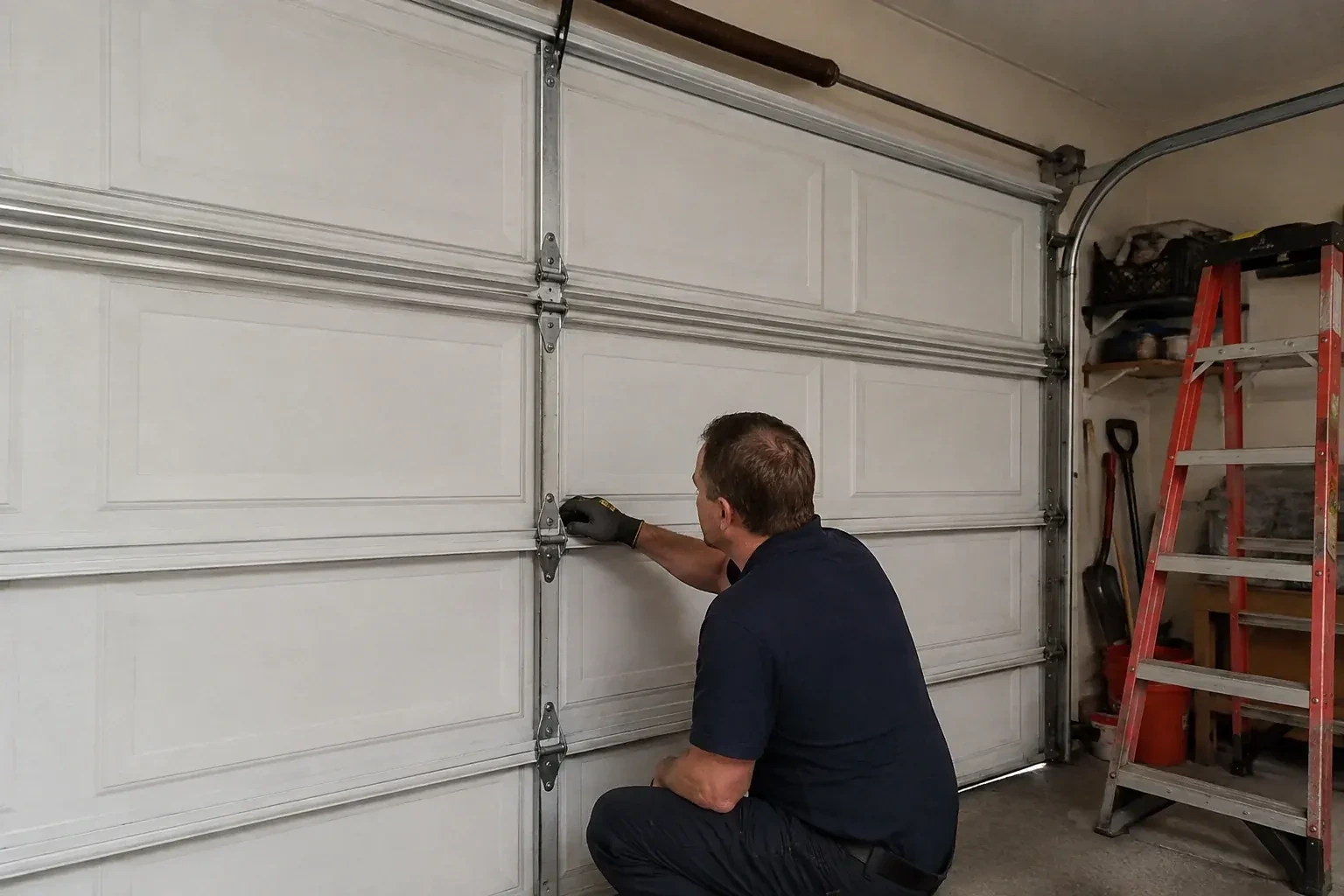
Nothing is unbolted until the door cannot move. The technician disconnects the opener, positions the door where the work is safest for the rollers being changed, and locks it there with clamps or locking pliers set in the track under the wheels so the sections cannot slide or drop. With a heavy door left in the open position, the horizontal track and its hangers are checked for a firm hold first. This set-up takes a few minutes and is the reason the rest of the job can proceed calmly, one roller at a time, without a section shifting while a hinge is loose.
Signs to watch for next time
Rollers wear slowly, so it helps to know the early signals. A rhythmic clicking that travels with the door, like a train over rail joints, points to a bearing beginning to fail. A wheel that leans to one side in its hinge, or a door that starts to rock as it rounds the curve, suggests a stem or wheel wearing oval. Grinding that returns a day or two after lubrication means the wear is in the wheel, not the grease. Catching these while the door still runs makes the next roller change a planned visit rather than a door stuck halfway.
Garage Door Roller Replacement
In the van
Track clamps or locking pliers
Garage door lubricant
Sealed-bearing nylon rollers
1-1/2 inch reversal test block
Three-inch rollers for commercial track
Garage Door Roller Replacement
What affects the quote
Door height and high-lift track
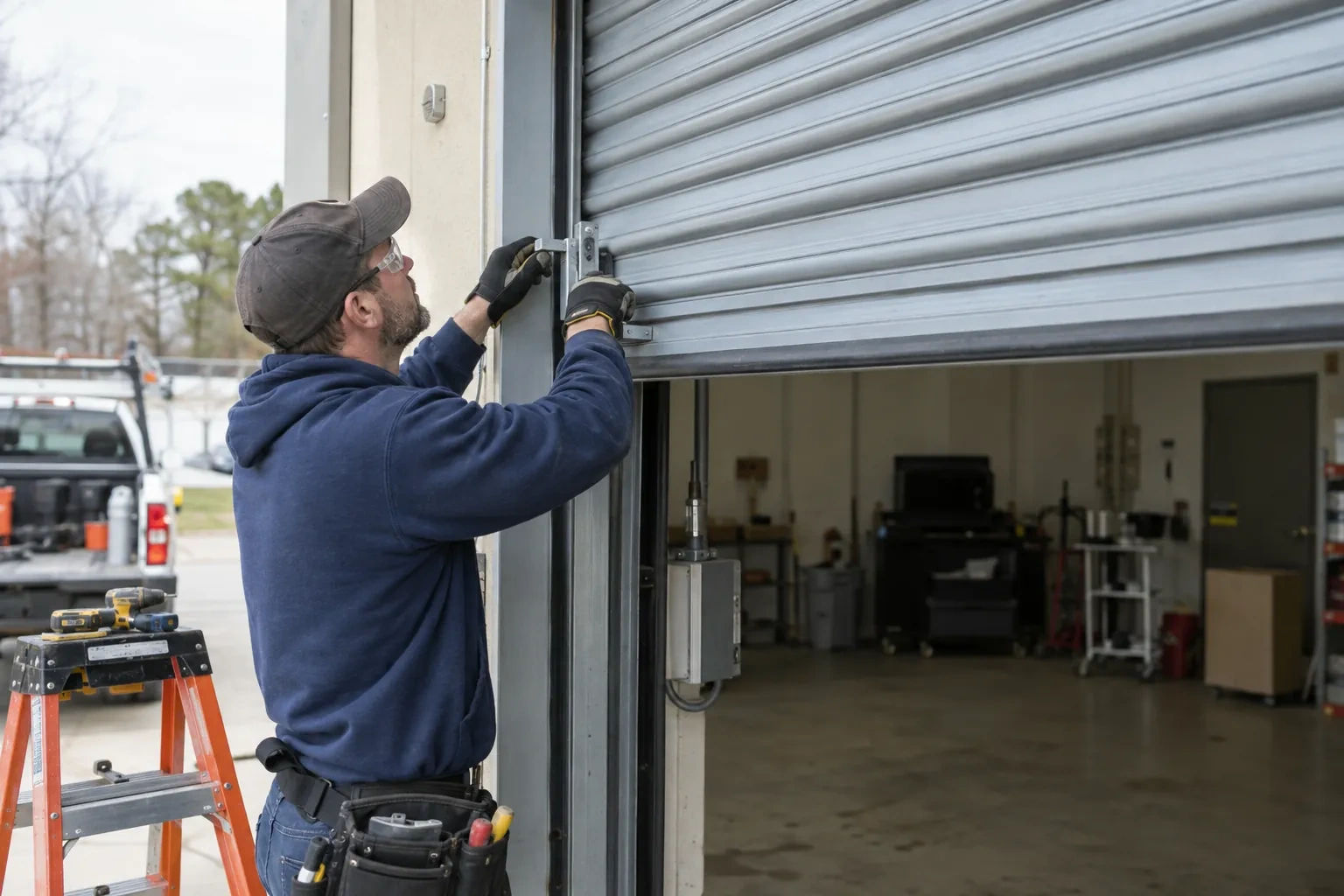
Tall doors, and high-lift or follow-the-roof track, put the horizontal run high overhead, so ladder work and the extra sections lengthen the visit.
Balance adjustment first
If the door drifts when released at halfway, the spring system needs adjusting before new rollers are fitted so they do not wear early; that adjustment is quoted as its own line.
Hinges that need replacing
Cracked, elongated or rusted hinges found during the inspection are replaced with the correct numbered hinge, each priced as its own item alongside the rollers.
What to have ready
- Does the door stay put at halfway when the opener is released?
- Is the opener straining, reversing partway, or working harder than it used to?
- How many sections does the door have, and is it wood, insulated steel or single-skin?
Garage Door Roller Replacement: questions
QuestionsHow long do garage door rollers last?
It depends on what they are made of and how often the door moves. Builder-grade plastic wheels with no bearings often show wear after only a few years. Steel and nylon rollers with seven to thirteen ball bearings are typically rated for ten to fifteen thousand cycles, roughly the life of a torsion spring, which for many households means seven to ten years. Sealed-bearing nylon rollers are rated far higher. A door used many times a day, or one living with salt and slush, shortens all of those.
Should I replace rollers when the springs are replaced?
It is a common and sensible pairing. Rollers and springs are the two most frequently replaced parts on a door and wear on similar timelines, so a door that has used up its springs has usually worn its rollers too. Doing both in one visit means the door is secured and the opener disconnected once, and the bottom brackets, which are handled for spring work anyway, receive new rollers while they are accessible. Ask for the rollers to be checked whenever spring work is booked.
I lubricated everything and the grinding came back. Why?
Lubricant restores bearings and hinges that are still sound; it has nothing to offer a wheel worn oval, a nylon tire that has cracked, or bearings whose balls have pitted their race. When a spray settles the noise for a day or two and it returns, the wear is in the roller itself and replacement is the answer. Spray on the track or a plastic wheel can make matters worse by collecting grit, so the technician cleans that off as part of the job.
Related services
- Garage Door Track Repair or ReplacementYou bought the house with a door that sticks near the top of its travel.
- Garage Door Cable ReplacementThe cable has wrapped itself around the shaft above the door instead of sitting on its drum.
- Torsion Spring ReplacementLooking up at the coil above the door, you can see a clean split with a gap of several centimetres between the two halves.