Repairs · Oshawa
Garage Door Panel Replacement
From outside, the horizontal groove between two sections now steps sideways by a centimetre.
In plain words
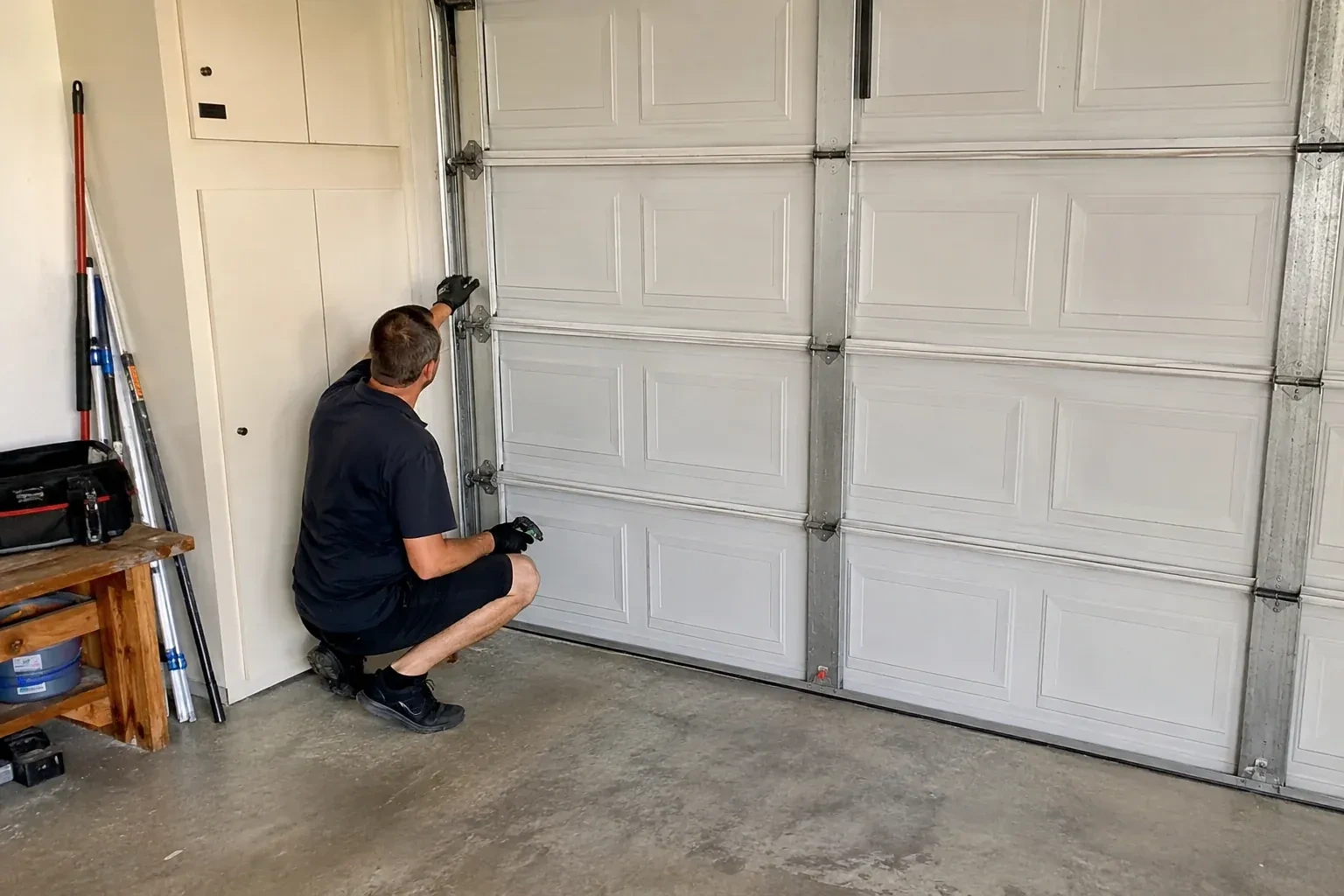
Everything about a section replacement flows from knowing exactly which door you have. Two doors that look alike from the driveway can differ in section height, thickness, the shape of the joint where sections meet, where the hinges bolt on and how the skin is embossed. A new section has to share all of those details to seat cleanly against its neighbours. So the visit starts with a hunt for the manufacturer's label, usually on the edge of a section or on the track, followed by measurements and photographs. With that identity confirmed, the right section can be ordered with confidence rather than hope.
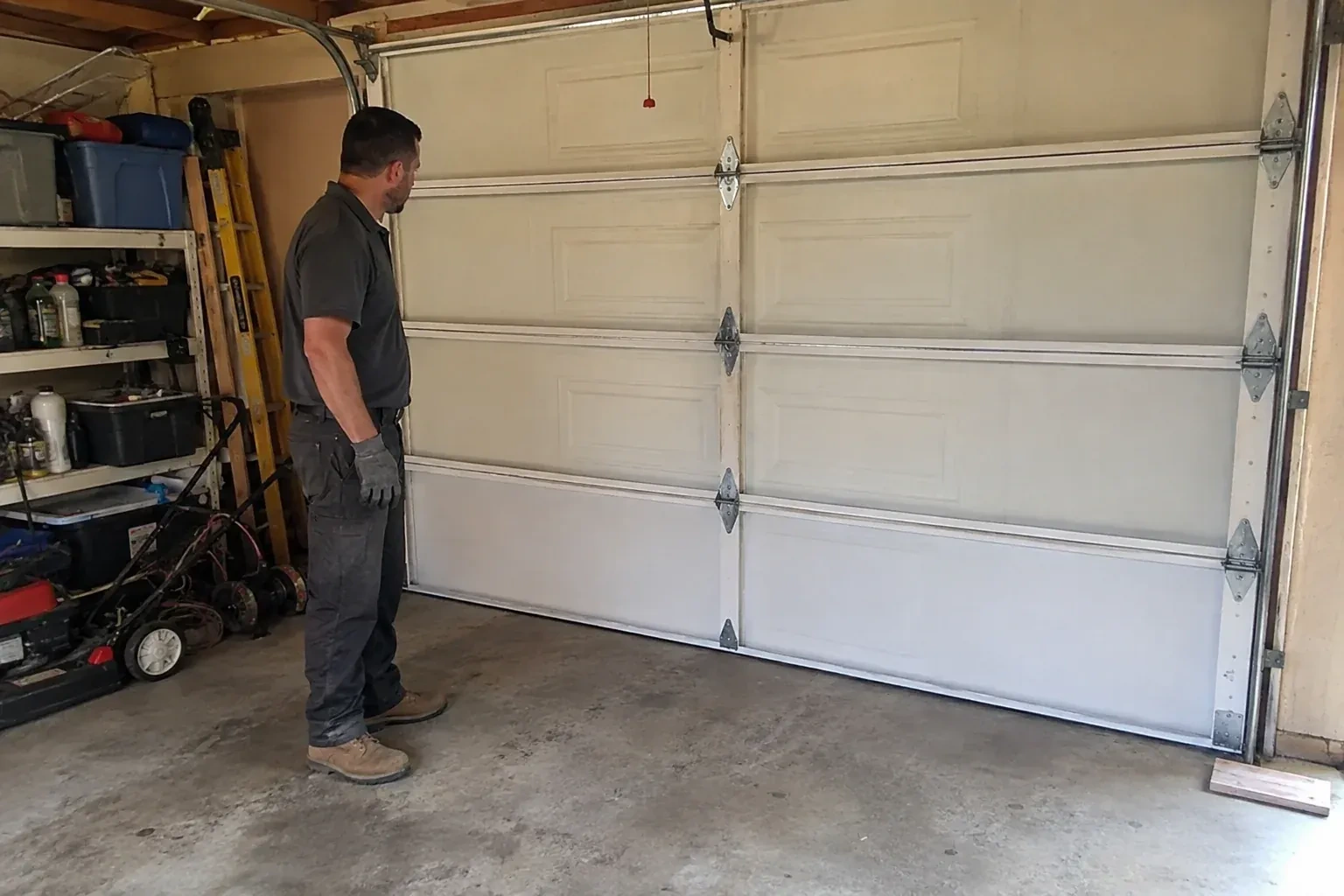
How the visit goesA stray ball went through one of the window panes in the top section. The glass is gone, the frame around it is cracked, and the steel beside the opening is pushed in, so the whole section is in question rather than one pane.
Garage Door Panel Replacement
How the visit goes
One section, or is it time for the whole door?
A single damaged section on a door that is otherwise sound is a clear case for a section. The picture changes when damage crosses two or three sections, when rust has taken hold along more than one edge, when older sections have warped or delaminated, or when the design is no longer produced. It also changes when you would like insulation, windows or a different look that only a new door provides. The technician lays the two options side by side, describing what each includes and what you would have afterwards, so the choice is made on the whole door's condition rather than on the one dent that prompted the call.
Re-tensioning and balancing the door
A replaced section can weigh a little more or less than the one that came out, especially when insulation or glazing differs, and the springs are set to the door as it now is. With the opener still disconnected, the technician winds the torsion spring to specification or rehangs the extension springs, then lifts the door by hand. A balanced door stays put around waist height, drifts neither up nor down, and moves through its travel with steady, even effort. Adjustments are made a quarter turn at a time until that is true, and the cables are checked for equal tension on both drums.
A record of the door for next time
You leave with the door's identity written down: manufacturer, model or series, section height and thickness, panel design, colour code and the position of the section that was replaced. Keep it with the house papers or photograph it and file it on your phone. The next time a section, a hinge or a set of rollers is needed, that record turns a search into a straightforward order. It also tells any future technician what has already been changed and when, which helps them judge the rest of the door's age and condition without guessing.
Garage Door Panel Replacement
In the van
Nylon or steel rollers
Bottom seal retainer and astragal
Bottom brackets with cable tabs
Garage-door lubricant
Winding bars and track clamps
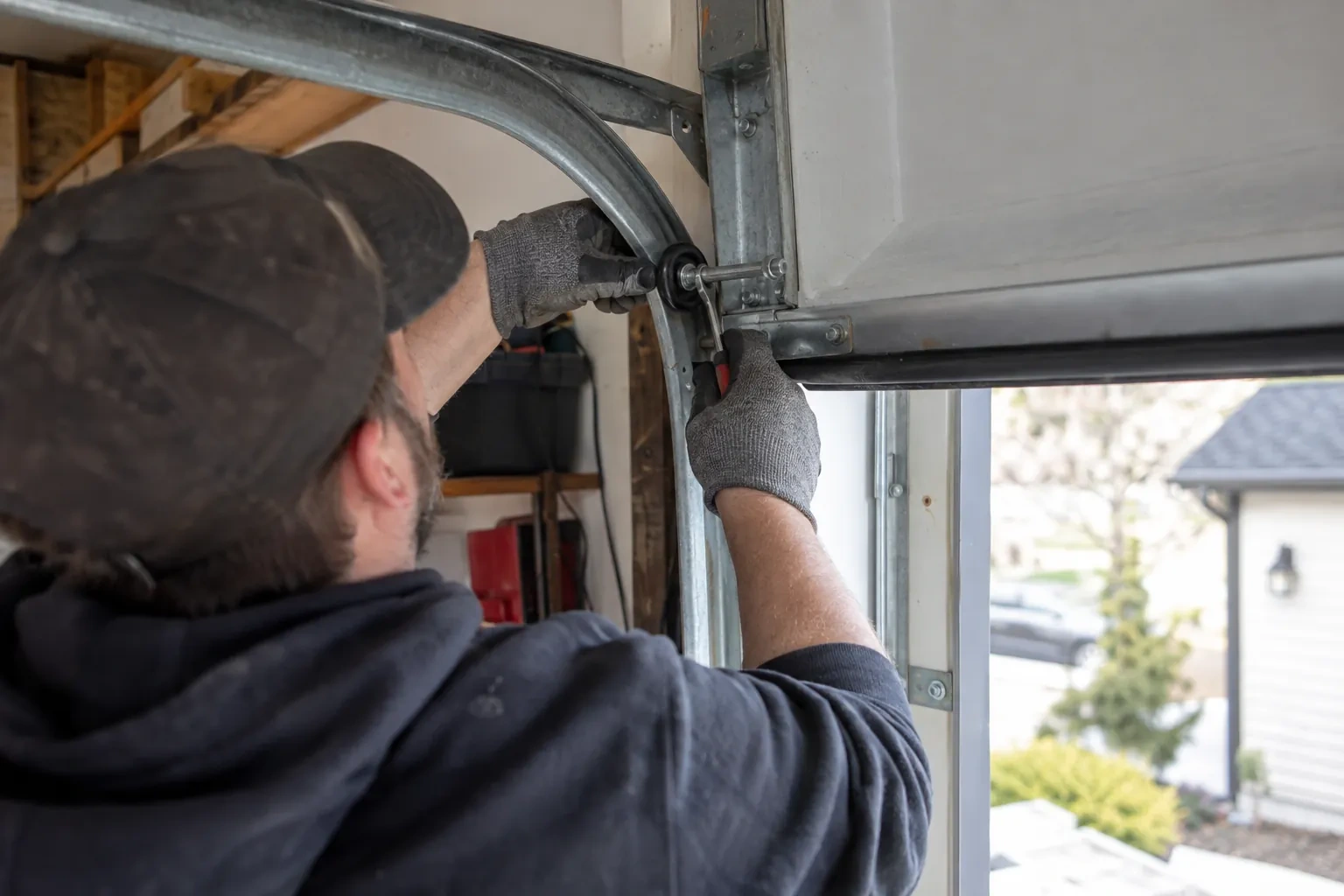
Garage Door Panel Replacement
What affects the quote
Which position the section sits in
A bottom section includes releasing and resetting spring tension and fitting brackets and seal; a top section involves the opener bracket and top fixtures; a middle section is the plainest exchange. The position shapes the labour.
Spring work required
A bottom section means torsion springs are unwound and rewound, or, on an extension-spring door, the door is raised and secured so the springs relax and its hooks and cables are reset instead. A section changing the door's weight may call for a balance adjustment.
Door width and section size
A section for a double door is nearly twice the length of one for a single door, with more steel, more hinges and a heavier lift. Section height and thickness feed into the same line.
What to have ready
- Does the door still open and close, by opener or by hand?
- Would you consider a whole new door if a matching section is unavailable?
- What caused the damage, and when did it happen?
Garage Door Panel Replacement: questions
QuestionsWhy is the bottom section handled differently from the others?
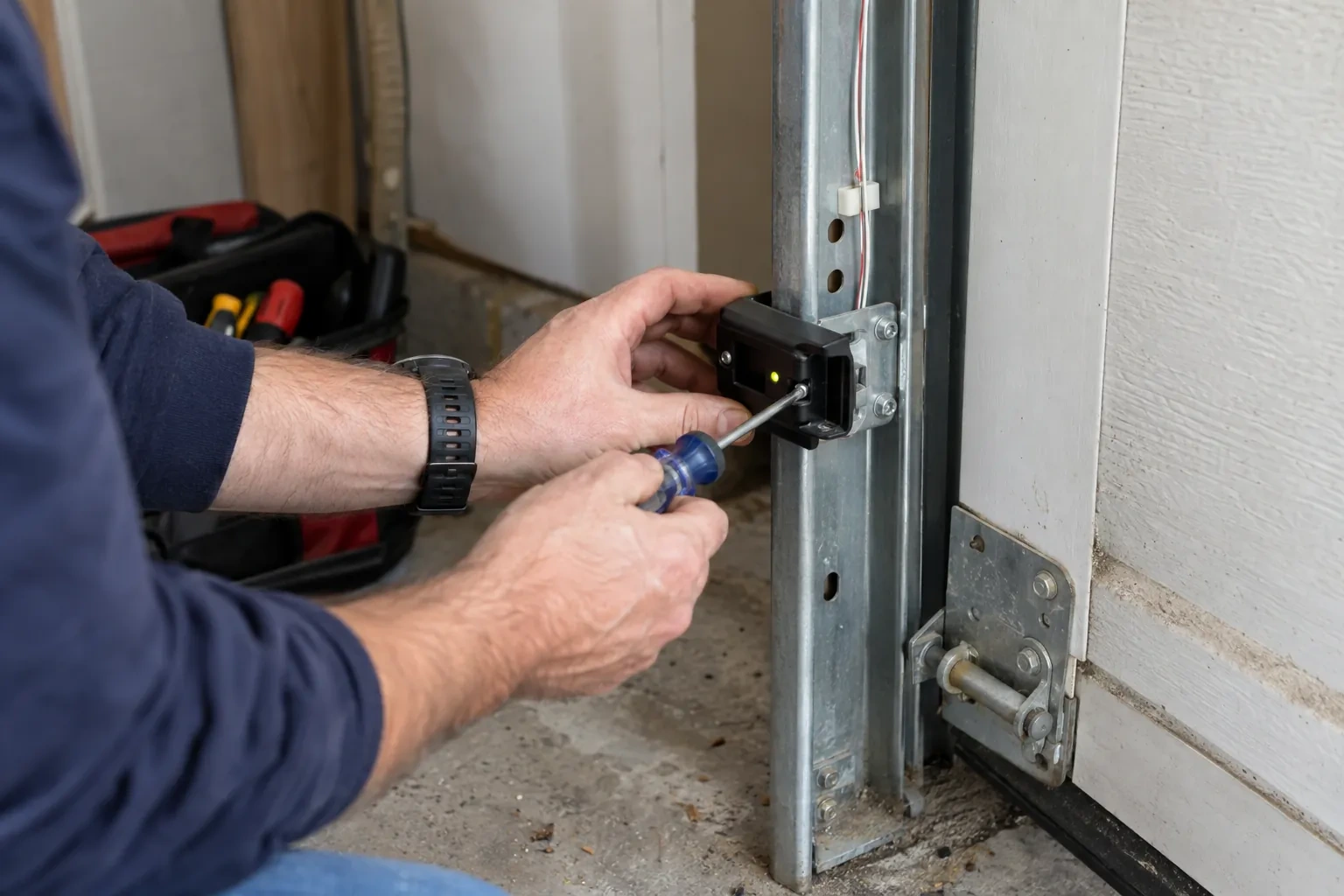
The bottom section is where the lift cables attach, through the bottom brackets at each end, and those cables are under the full pull of the springs. Before the brackets come off, the springs have to be unwound or unhooked so the cables go slack. The bottom section also carries the seal retainer and astragal that meet the floor. After the new section is in, the springs are re-tensioned and the balance reset.
How long does it take to get a replacement section?
Sections are made to order for a specific model, size, position and colour rather than kept in stock, so there is a lead time from the manufacturer. It varies with the maker, the colour and the season, and the technician confirms the expected timing when the order is placed. In the meantime the door is left in a safe state, either in normal use or braced and closed, depending on the damage.
Does changing a section affect the springs or balance?
It can. A new section may be a little heavier or lighter than the old one, particularly if insulation, glazing or a strut differs, and the springs are set for the door's actual weight. After the exchange the technician lifts the door by hand with the opener disconnected and adjusts the spring tension until it holds steady at mid-height. On a bottom-section job the springs are unloaded and reloaded as part of the work anyway.
Related services
- Garage Door Tune-UpThe door lands with a thud you can feel through the kitchen floor, and sometimes it bounces back up a few centimetres before settling.
- Off-Track Garage Door ResetOne side of the door hangs a hand's width lower than the other.
- Garage Door Bottom Seal ReplacementEvery mild afternoon the snow melts off the car, runs to the door, and by morning the rubber strip along the bottom is frozen to the concrete.