Springs · Oshawa
Garage Door Hinge Replacement
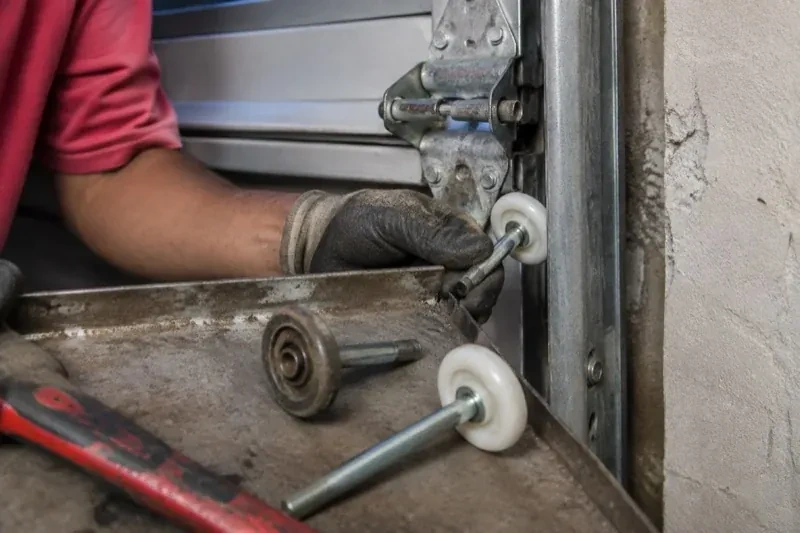
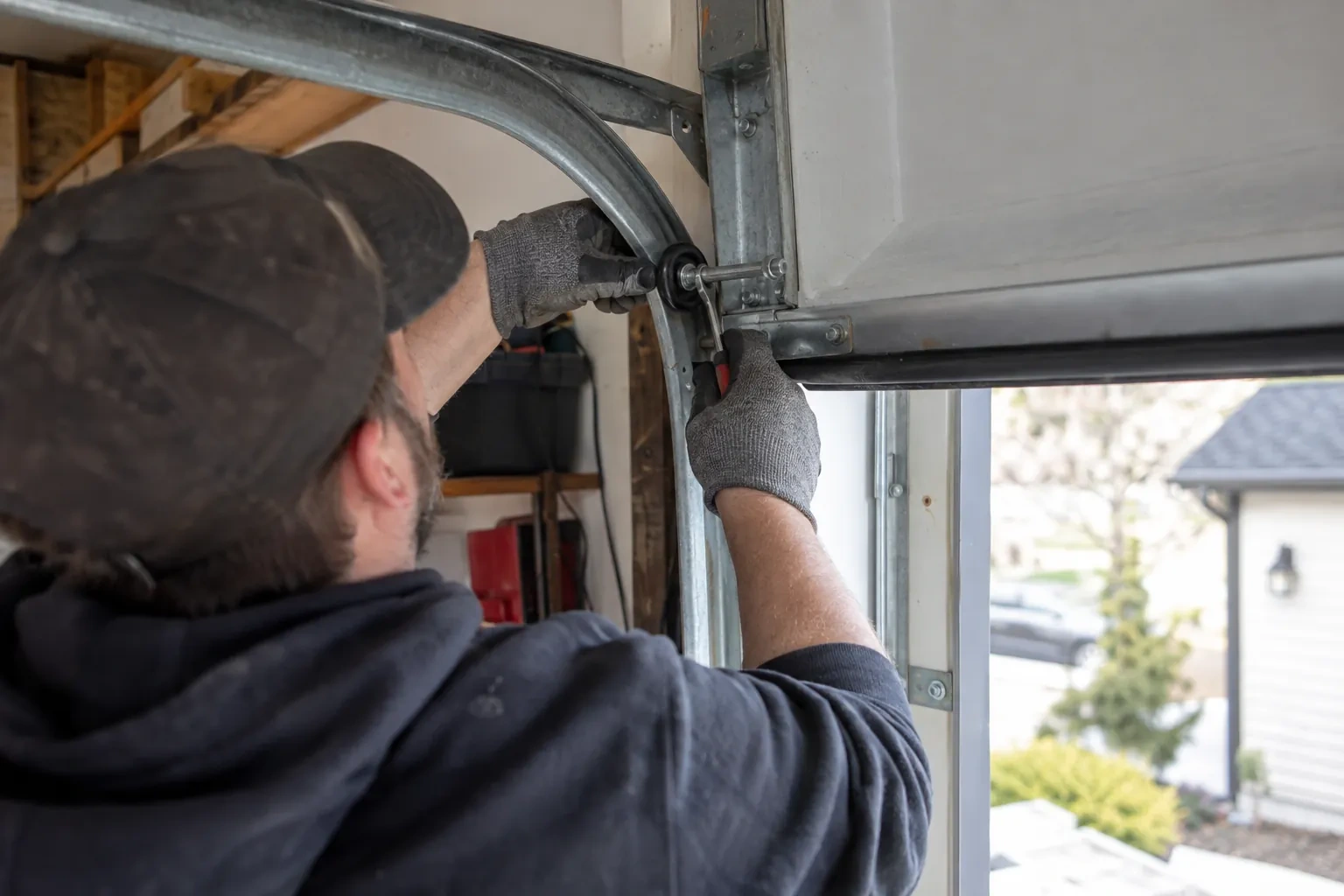
The roller at the top of the second panel is leaning outward and only half of the wheel is still in the track.
In plain words
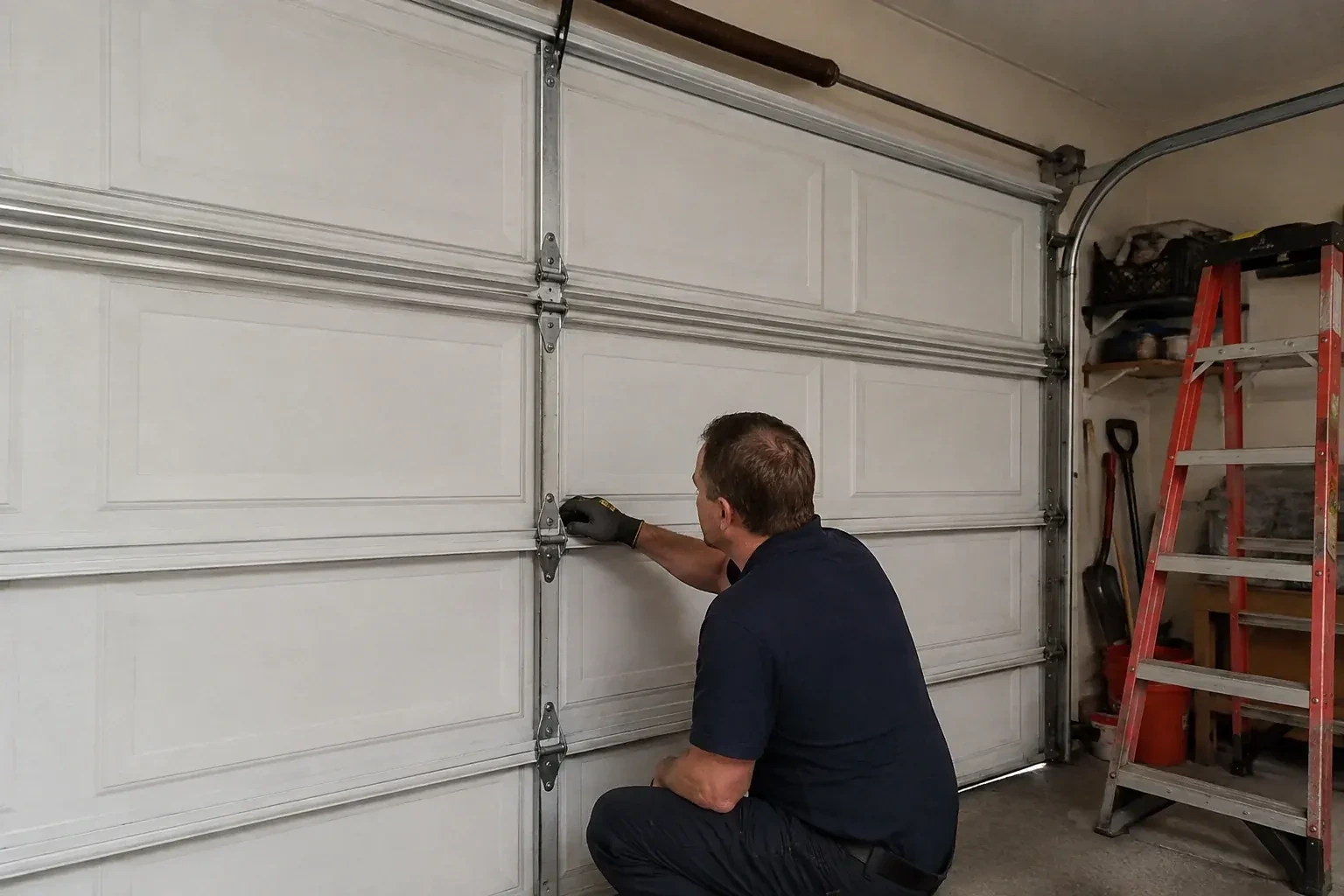
Not every hinge on the door is the same part. The edge hinges are numbered: 1 at the joint above the bottom panel, then 2, 3 and sometimes 4 or 5 going up. Each number stands the roller a little further off the door face, which is what lets the door lean snugly against the jambs when closed even though the tracks angle away from it. Centre hinges carry no roller and share the geometry of a 1. Reading the stamped number on the old hinge, or counting the joint from the floor, is how the replacement is chosen so the door keeps sealing evenly along both sides.
How the visit goesPressing a hand against one of the middle hinges makes it rock on the panel. The screws turn and turn without ever tightening, and there is a rattle from that spot every time the door settles onto the floor.
Garage Door Hinge Replacement
How the visit goes
Reading the number on each edge hinge
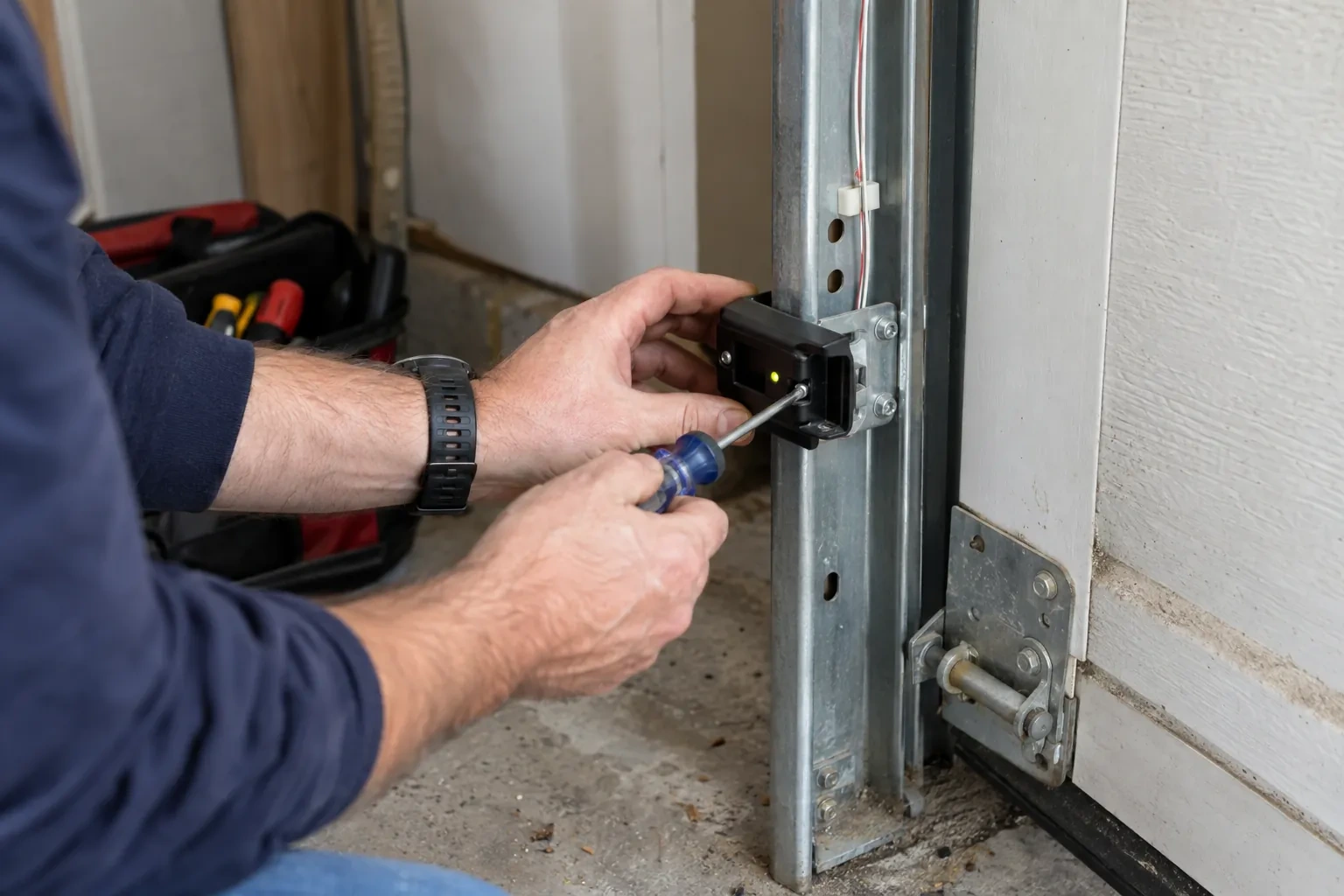
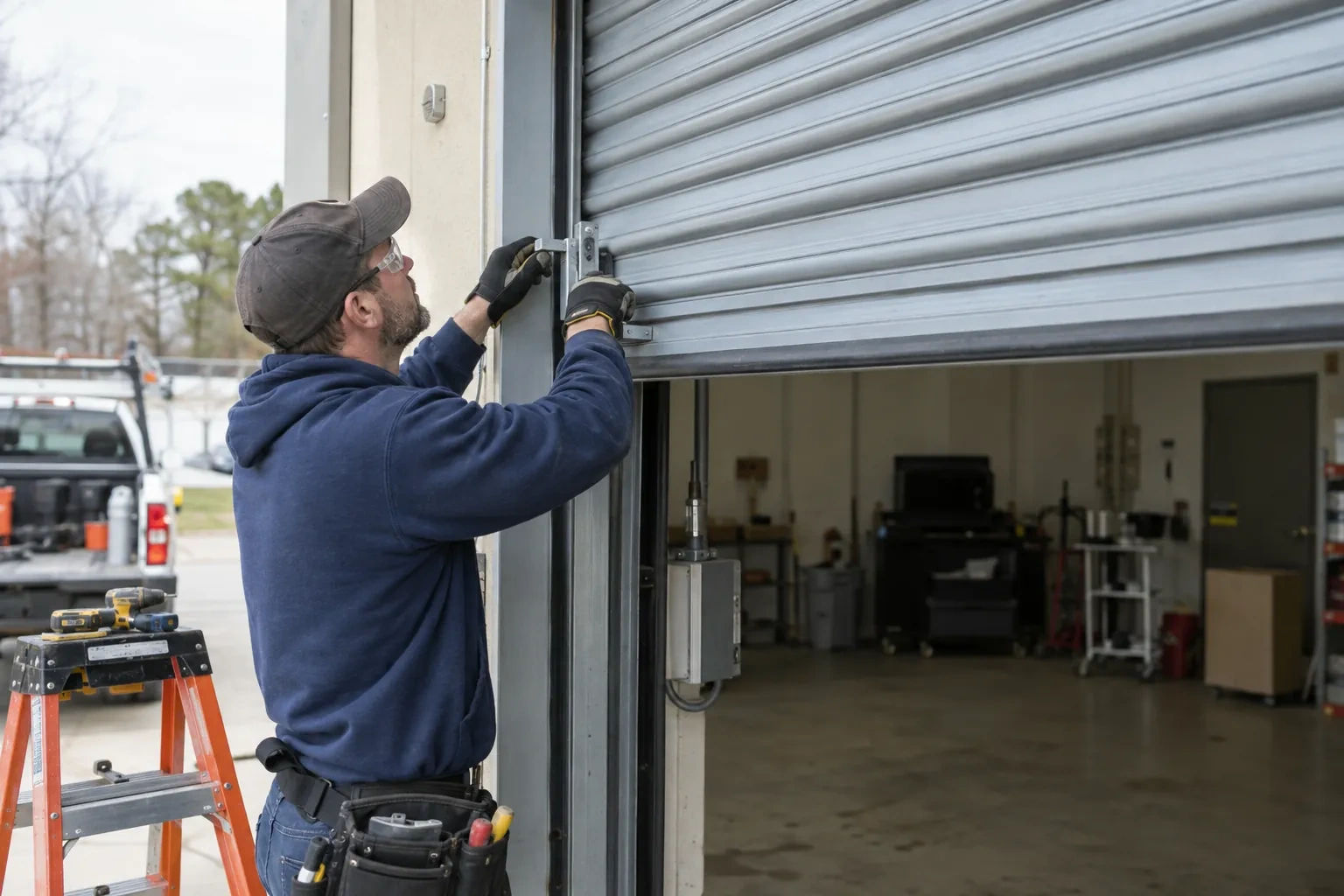
Every edge hinge carries a stamped number, and the technician reads it rather than assuming. A 1 sits at the joint above the bottom panel, a 2 at the next joint up, then 3, with 4 and 5 appearing on taller doors. The number sets how far the roller stands off the door, so the door leans into the jambs when closed and follows the track as it climbs. An earlier repair sometimes leaves a 2 where a 3 belongs, and that door binds or gaps at the curve for years without anyone knowing why. Confirming the number on each joint, and correcting any that are wrong, is part of the first look.
Travel, fit, balance and the opener
Once every hinge is on, the door is run by hand. The technician watches each joint turn the curve, listening for the pop that started the call and looking for a gap opening between panels. The door is closed and checked for an even fit against both jambs, then raised to waist height and let go: a balanced door stays put, which confirms the hinge work has not disturbed the springs' job. Rollers are watched for staying flat in the track. Then the opener is reconnected, its travel limits confirmed, and the reversing test and photo-eye check carried out while you watch.
What was fitted, written down
Before leaving, the technician tells you which hinges were replaced, their numbers and gauge, whether rollers or backer plates went on, and anything corrected along the way such as a wrong-numbered hinge or a loose track bracket. Write it inside the door manual or on a card near the opener, along with the door's make and panel count. Hinge widths and hole patterns vary between manufacturers, so the next technician, or you at the parts counter, can match parts without measuring from scratch. If some hinges were left in place as sound, their condition goes on the same note so you know what to watch.
Garage Door Hinge Replacement
In the van
Track clamps or locking pliers
Hex-head self-drilling screws
Numbered galvanized edge hinges
Centre hinges
Heavy-gauge hinges for heavy doors
Garage Door Hinge Replacement
What affects the quote
Manufacturer-specific hinge patterns
Hinge width and hole spacing differ between door makers. A door that needs a maker-specific hinge rather than a standard one may involve ordering, which the quote notes.
Gauge and grade of the replacement
Standard 14-gauge hinges are priced differently from heavy 11-gauge parts, and moving a heavy insulated door up a gauge is an upgrade named as its own line in the quote.
Damage to the stile or panel
After an impact, straightening a stile, fitting a support plate or adding a strut comes with the hinge work and is quoted as separate items so you can see each one.
What to have ready
- Do any screws turn without tightening when you press a hinge?
- Has a car, bin or anything else bumped the door recently?
- Is the loose or broken hinge at the edge of the door or in the middle?
Garage Door Hinge Replacement: questions
QuestionsWhy does the door pop or click at the same spot every time?
A noise at a fixed height points at the joint passing through the curve at that moment. A cracked hinge leaf flexing open and snapping back, a pin rocking in a worn hole, or a roller stem shifting in a loose hinge all make a sharp report as the load transfers. Because it always happens at one place, the technician can go straight to that joint and usually finds the hinge or roller responsible.
Can a light bump from the car damage a hinge?
Yes, more often than people expect. The bottom two panels take the contact, and the edge hinge at that joint bends along with the stile behind it, so the panel edges rub and the roller leans. The damage sometimes only shows as a new squeak at the curve. The technician straightens or renews the stile, fits a new hinge and roller, and checks the strut and track on that side.
Will new hinges make the door quieter?
Often noticeably. A cracked or loose hinge is the source of many pops, clicks and rattles, and a hinge that holds its roller square lets the wheel run flat instead of scraping the track lip. Combined with fresh lubricant on the knuckles and rollers, the door settles into a steady rumble. Any noise that remains usually points to the rollers, the opener chain or the springs, which the technician can identify for you.
Related services
- Garage Door Track Repair or ReplacementYou bought the house with a door that sticks near the top of its travel.
- Garage Door Cable ReplacementThe cable has wrapped itself around the shaft above the door instead of sitting on its drum.
- Torsion Spring ReplacementLooking up at the coil above the door, you can see a clean split with a gap of several centimetres between the two halves.