New Doors · Oshawa
Commercial Rolling Door Repair
A metallic clatter now comes from inside the hood whenever the curtain coils.
In plain words
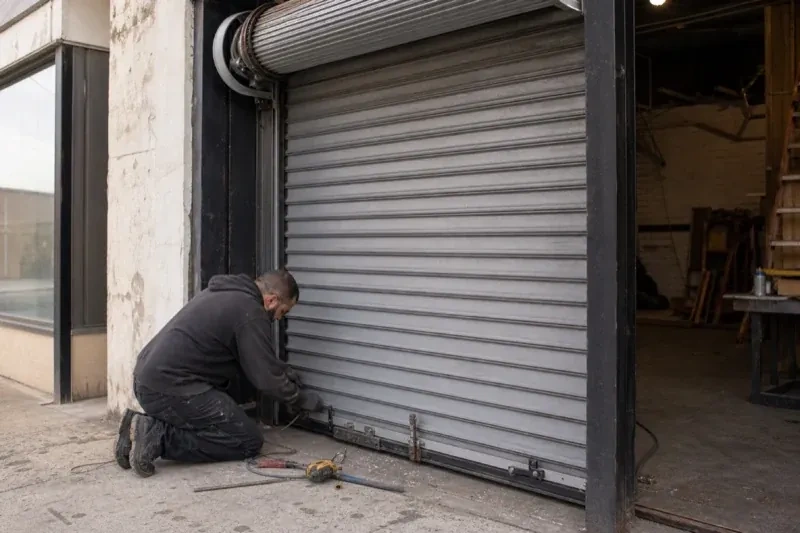
Impact damage often looks local but changes the path of the entire curtain. A bowed bottom bar can spread a guide, a bent slat can pull endlocks sideways, and a struck jamb can alter the opening width. Repair begins with measurements at the guides and brackets as well as a close look at the damaged section. Serviceable slats or curtain sections can be renewed, guides realigned and fasteners restored using components that match the identified assembly. The final check watches the repaired area enter the coil, pass through both guides and meet the sill evenly.
How the visit goesThe labelled rolling fire door still moves from its control, yet the release assembly and closing path were disturbed during nearby work. The facility needs the repair and return-to-service record handled as a fire-door scope.
Commercial Rolling Door Repair
How the visit goes
Read the curtain from bottom to coil
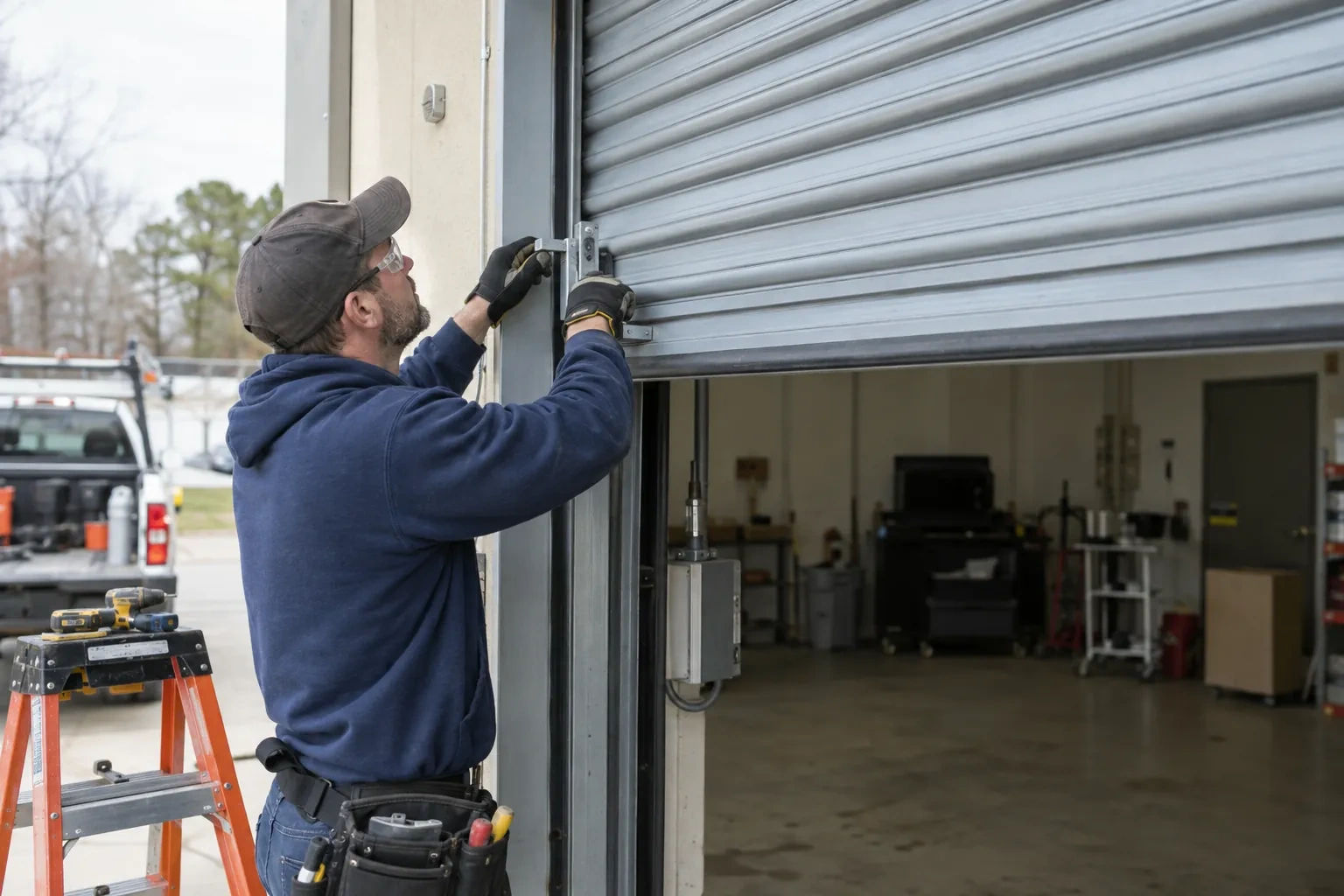
The curtain reveals how the door has been travelling. The bottom bar is checked for level, twist, impact marks and even contact with the sill. Moving upward, the inspection follows interlocking slats or sheet material, endlocks and windlocks for dents, separation, missing fasteners, polished rub marks or sideways shift. At the hood, the technician observes how the material enters the coil and whether it stacks evenly on the barrel. These clues show whether a damaged section can be renewed locally or whether distortion has spread far enough to affect guides, brackets and counterbalance.
Correct counterbalance and barrel issues
Barrel work is performed with the curtain secured because the internal or connected springs hold substantial tension. Bearings, brackets, shafts, tension wheels and fastening points are addressed first so the assembly has stable support. Spring adjustment follows the identified door procedure using proper winding bars and controlled increments, with operating effort checked between changes. The aim is balanced travel across the full opening, not a setting that merely feels light at one position. Drive sprockets, keys and roller chain are aligned and secured as part of the same mechanical path before power is returned.
Better contact at the weather line
Where sealing work was included, the renewed astragal follows the sill with consistent contact and the curtain closes without pressing the seal flat. Staff can preserve it by clearing abrasive grit, packaging and frozen buildup before cycling the door. Drainage near the opening should direct meltwater away from the bottom bar, and sensor faces benefit from a gentle wipe after salt spray. The service notes identify the lubricant and cleaning approach suited to the installed product. These routines support smooth winter movement and help the lower curtain, guides and fasteners remain easy to inspect.
Commercial Rolling Door Repair
In the van
Bearings and tension wheel
Operator brake and limits
Counterbalance spring assembly
Roller chain and sprockets
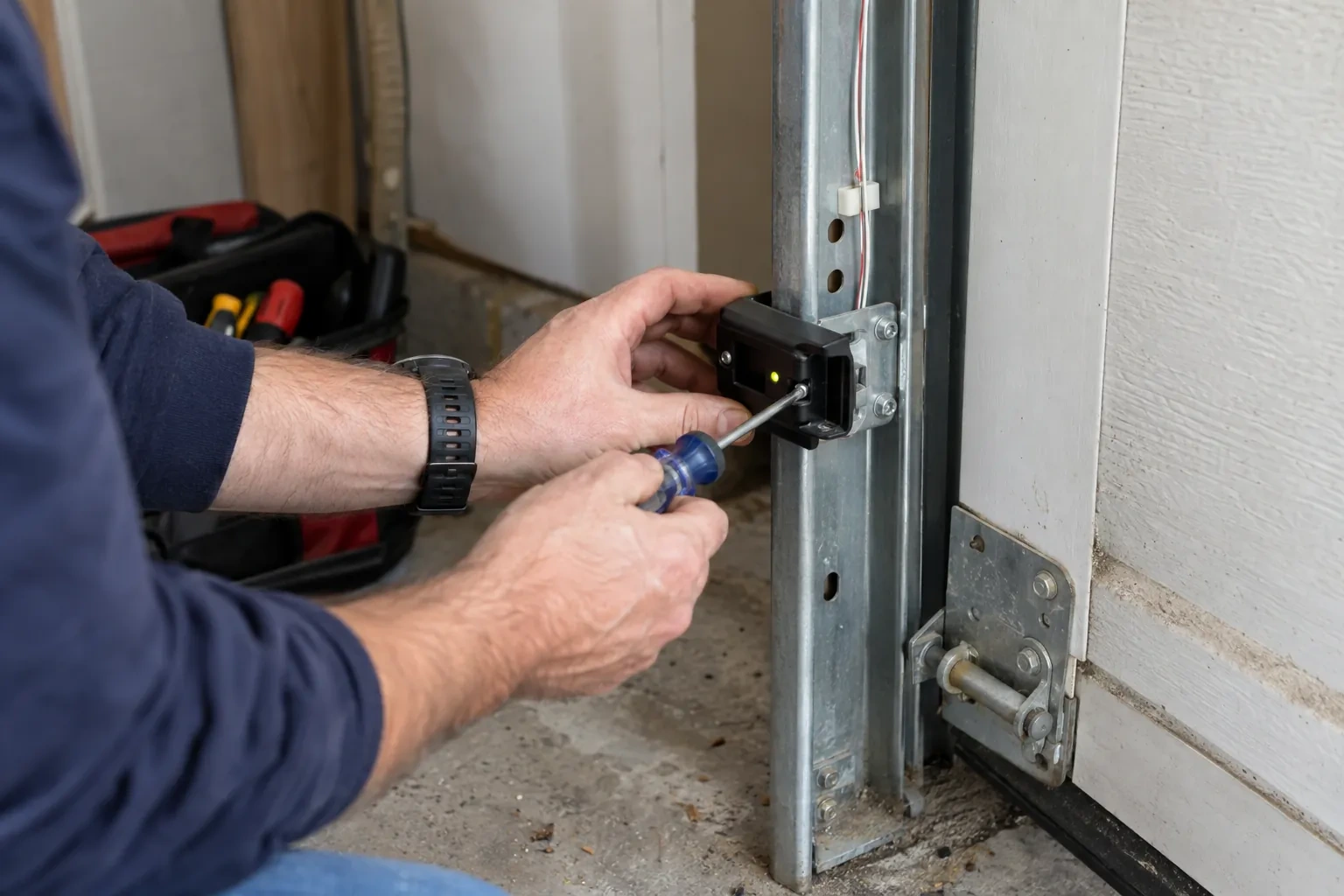
Photoelectric sensors
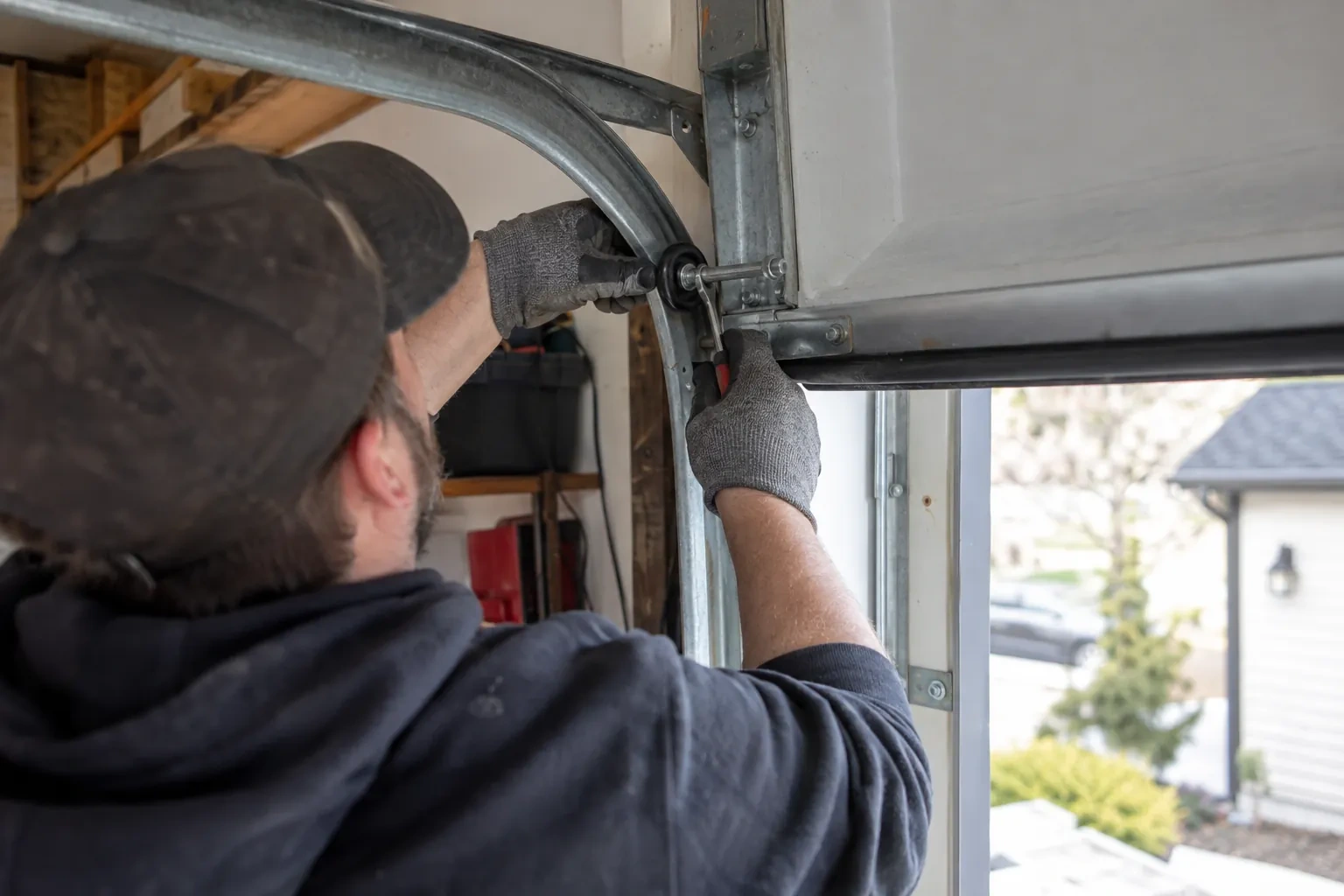
Commercial Rolling Door Repair
What affects the quote
Extent of curtain damage
One serviceable slat differs from a distorted group that has pulled endlocks sideways or damaged the coil. Material, profile, finish and number of affected curtain pieces guide the scope.
Access above the opening
Ceiling height, hood location, stored goods, mezzanines and nearby services affect safe reach to brackets, barrel and operator. Lifts, platforms and material-handling arrangements are planned accordingly.
Powered operator repairs
Brake, motor, reduction, sprocket, roller chain, limits and internal controls are assessed separately. The operator's identity and compatibility with the balanced door guide part selection.
What to have ready
- Are door, operator or previous service records available?
- Does the curtain carry a visible fire-protection label?
- Has manual effort, noise or travel changed gradually?
Commercial Rolling Door Repair: questions
QuestionsWhat information helps before the visit?
Useful details include the opening size, curtain material, manual or powered operation, model labels, current door position, recent impact or weather event and the exact point where travel changes. Photos of the full opening, bottom bar, controls and labels can clarify the system. Mention a fire-protection label at the outset so that scope is recognised.
Why is the bottom bar rising crooked?
An angled bottom bar can point to a shifted curtain, damaged slats, unequal guide friction, a moved barrel, impact at one guide or a counterbalance issue. Measurements at the sill, guides and brackets help separate those causes. Cycling is kept controlled because repeated powered movement can pull a minor tracking problem farther sideways.
Can a door stuck partly open be repaired in that position?
The position becomes part of the repair plan. Traffic is controlled, the curtain is supported or secured, and its weight and stored spring energy are managed before a guide or drive component is released. Depending on the fault, the door may be brought to a safer working position under control before the component repair begins.
Related services
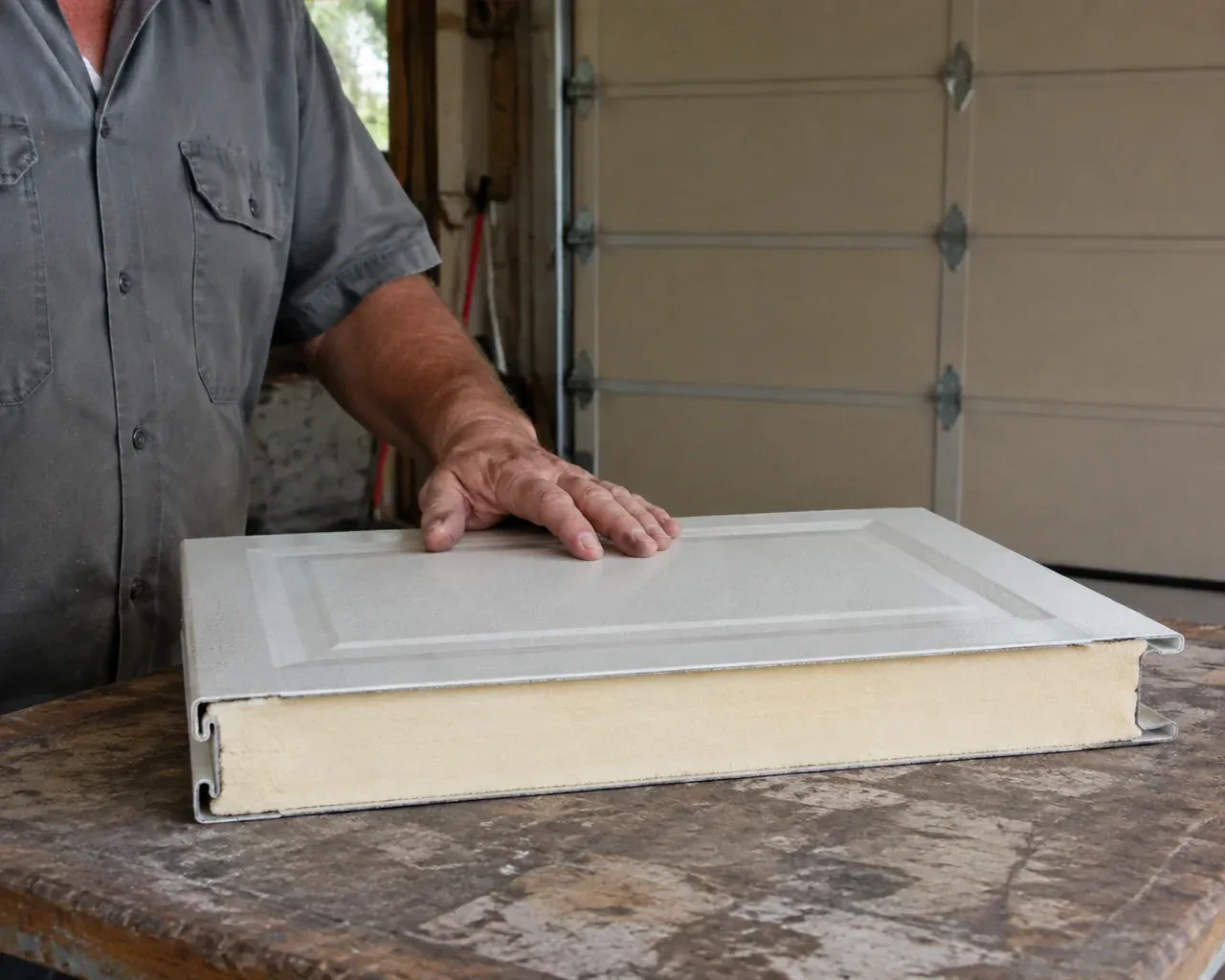
- Insulated Steel Garage Door InstallationA refreshed exterior has made the faded garage door stand out.
- Wind-Rated Garage Door ReplacementNew windows would improve the door's appearance, but they also change the section layout and reinforcement pattern.
- Carriage-House Garage Door InstallationA front elevation update has brought new trim, lighting and a deeper colour palette, leaving the garage door as the remaining piece.