Springs · Oshawa
Extension Spring Replacement
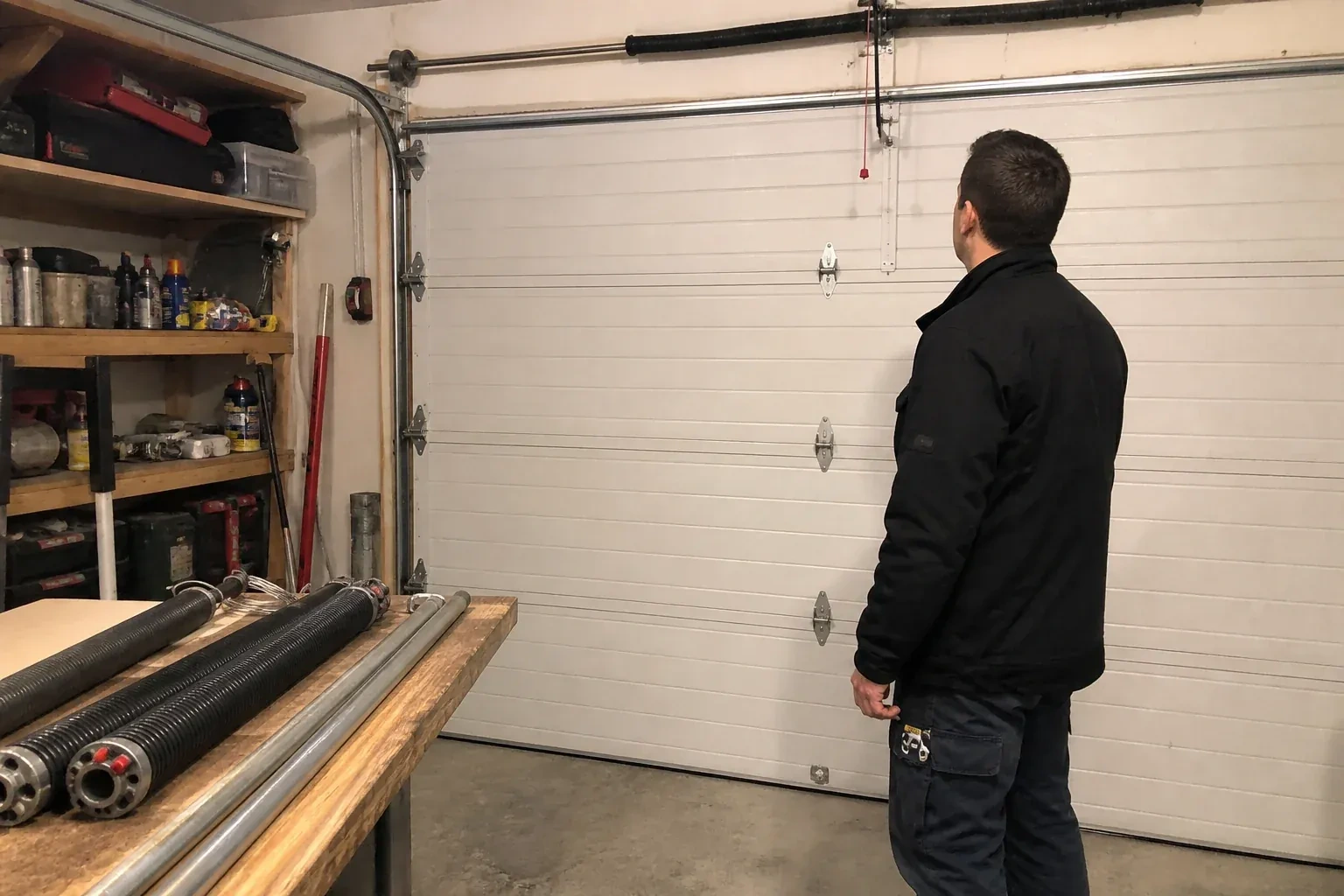
The door climbs with the left corner ahead of the right, then twists as it turns into the ceiling track.
In plain words
What you have afterwards is a door that behaves like a much lighter object. Both corners leave the floor together, the door holds still when you stop it at waist height, and it settles onto the floor instead of slamming. The opener runs quietly, because it is guiding a balanced door rather than hauling a heavy one, and its safety reversing works as designed. Both springs are new, both carry a containment cable, the pulleys turn freely and both S-hooks sit in the same hole. You also get the spring rating and door weight written down, so the next set can be ordered without measuring everything again.
How the visit goesOpen the door by hand and it drifts back down on its own, a little at first and then all at once. Nothing is broken that you can see, but the springs along the tracks look tired, rusty and slightly sagging.
Extension Spring Replacement
How the visit goes
Both springs, side by side
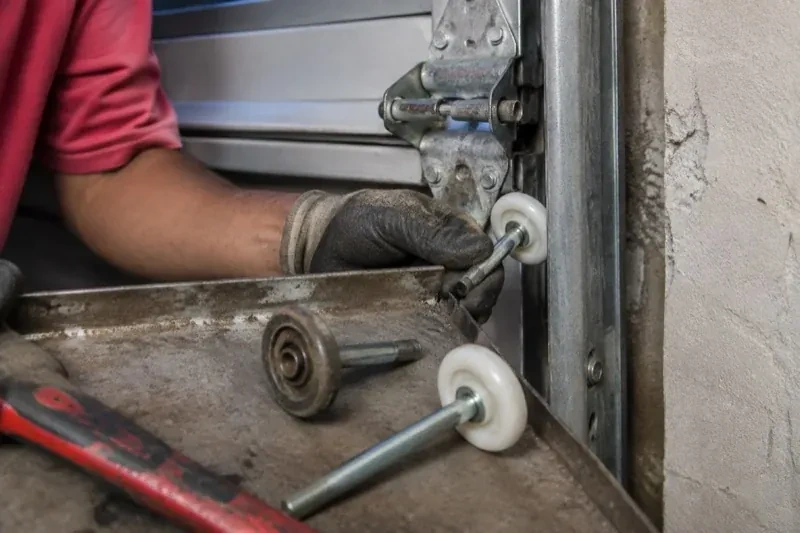
Even when only one spring has snapped, both are read closely. The technician looks for gaps opening between coils with the door up, which means the wire has stretched and lost its pull; rust pitting and scale, especially where the spring sits nearest the back wall; a spring hanging visibly longer or lower than its partner; and end loops that have opened or cracked. The two are compared for length, coil diameter and wire size, because springs of different ratings are sometimes found on the same door after a past repair. Whatever is found, the outcome is the same, a new matched pair, but the reading tells the technician what rating the door really needs.
Setting both sides to the same hole
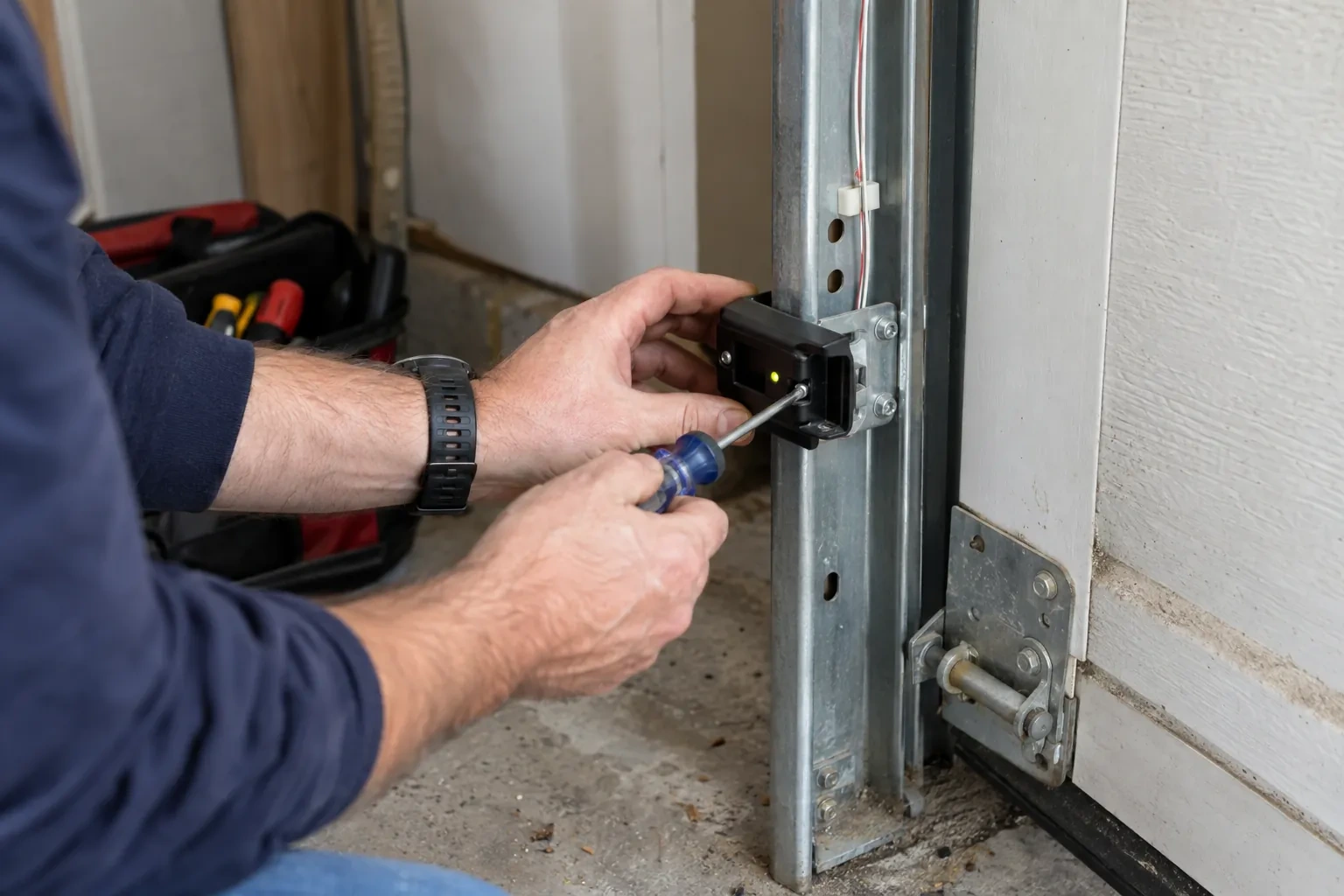
The initial tension is set with the door open and clamped, so the technician is adjusting slack springs rather than loaded ones. Each cable's S-hook is placed in a hole on the hanger, or its clip set to a mark, and the two sides are put at the same position. The cables are drawn to the same snugness so that neither corner of the door is being pulled ahead of the other. A level across the top section confirms the door is square in its tracks. Only when both sides read the same do the clamps come off and the door come down for its first balance check.
A monthly look along the springs
Extension springs are easy to inspect because they hang in plain view. Once a month, with the door fully closed so the springs are stretched, stand inside and look along each one from the back hanger to the pulley. The coils should be evenly spaced along the whole length; a section stretched wider than the rest is a spring losing its temper. Then raise the door and look again: with the door open the coils should close up tight, and both springs should hang at the same height. Rust bloom, a pulley that sits crooked, a cable off its groove or a containment cable hanging loose are all worth a call while they are still small.
Extension Spring Replacement
In the van
Pulleys (sheaves) and forks
Door-weighing scale
Bottom brackets and clevis pins
Garage-door spray lubricant
Lag screws and hanger bolts
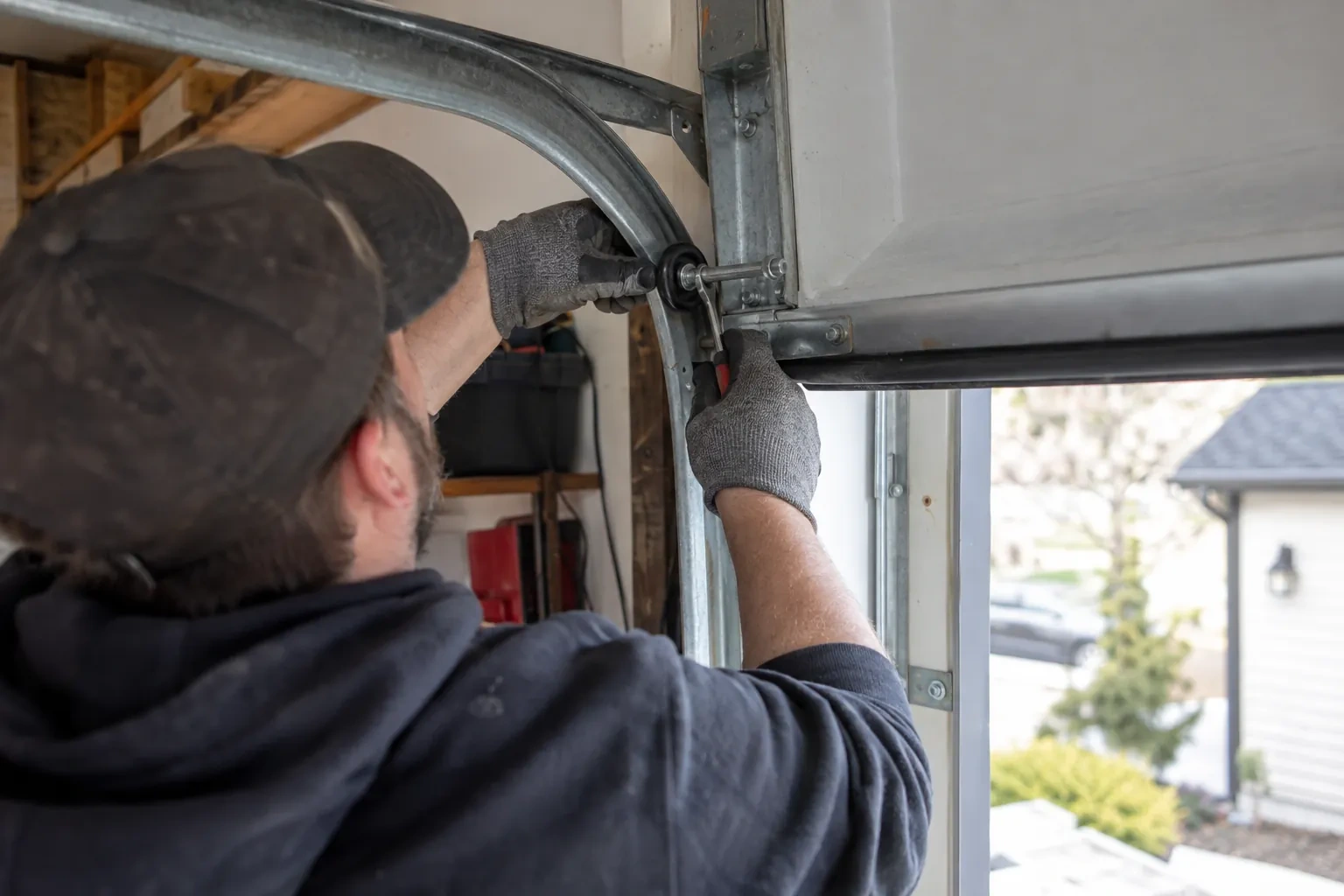
Extension Spring Replacement
What affects the quote
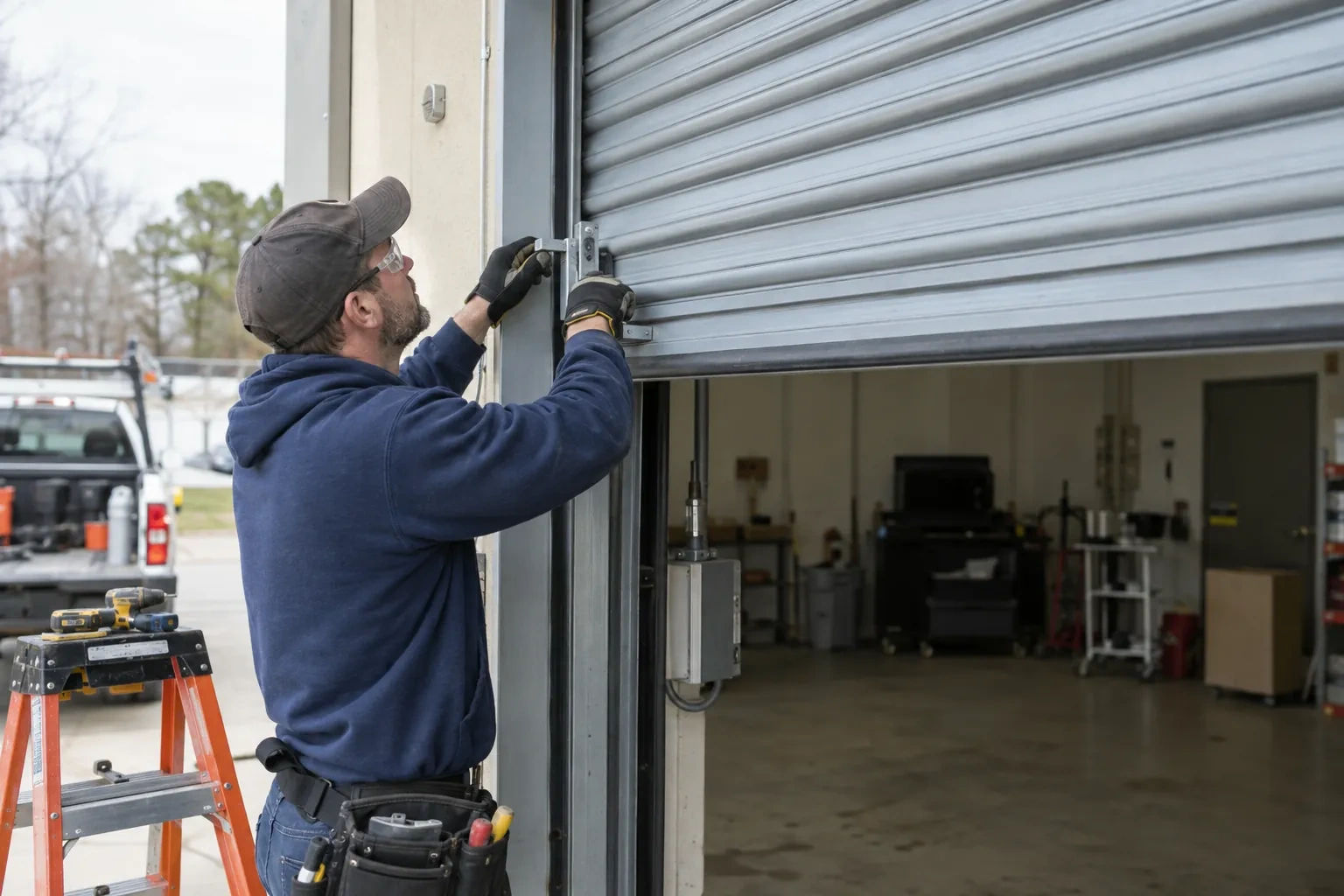
Track or section damage found on the way
A bent horizontal track, a bracket pulled off the jamb or a top section twisted by running the opener on a broken spring is separate repair work, quoted on its own.
How the door is sitting
A door resting closed with one spring gone is straightforward. A door stuck partway, twisted in its tracks or with a cable wrapped around a pulley has to be supported and straightened first.
Converting to torsion instead
Where the garage has the headroom, some owners take the opportunity to move to a torsion system. That is a different job with different hardware and is quoted as its own option.
What to have ready
- Does the door drop the last bit, or drift up on its own?
- Is the door closed, fully open, or stuck partway?
- Is a spring broken in two, hanging loose, or just looking stretched?
Extension Spring Replacement: questions
QuestionsWhat is the difference between extension springs and torsion springs?
They balance the door in different places. Extension springs are the two long coils that run beside the horizontal tracks and stretch as the door closes; they work through pulleys and cables. A torsion spring is wound on a shaft above the door opening and turns drums that wind the cables. The parts, the way tension is set and the service itself are different, so it helps to say which you have when you call.
Would a stronger spring make the door easier to lift?
Not in a useful way. The aim is a spring that matches the door's weight, so the door holds still wherever you leave it. A spring rated above that weight pulls the door up on its own, makes it hard to close, and leans on the opener to hold it down. A spring rated below lets it sink. Matched springs, set to the same hook position, give the light, even feel you want.
What does the paint colour on the end of the spring mean?
Manufacturers dab a colour on the end coil to indicate the spring's weight rating, which is a handy starting point. It is not the final word: a faded or repainted end coil tells you little, and the pair on an older door may have been a near match rather than the right one. The technician treats the colour as a hint and confirms the rating from the door's measured weight and the spring's own dimensions.
Related services
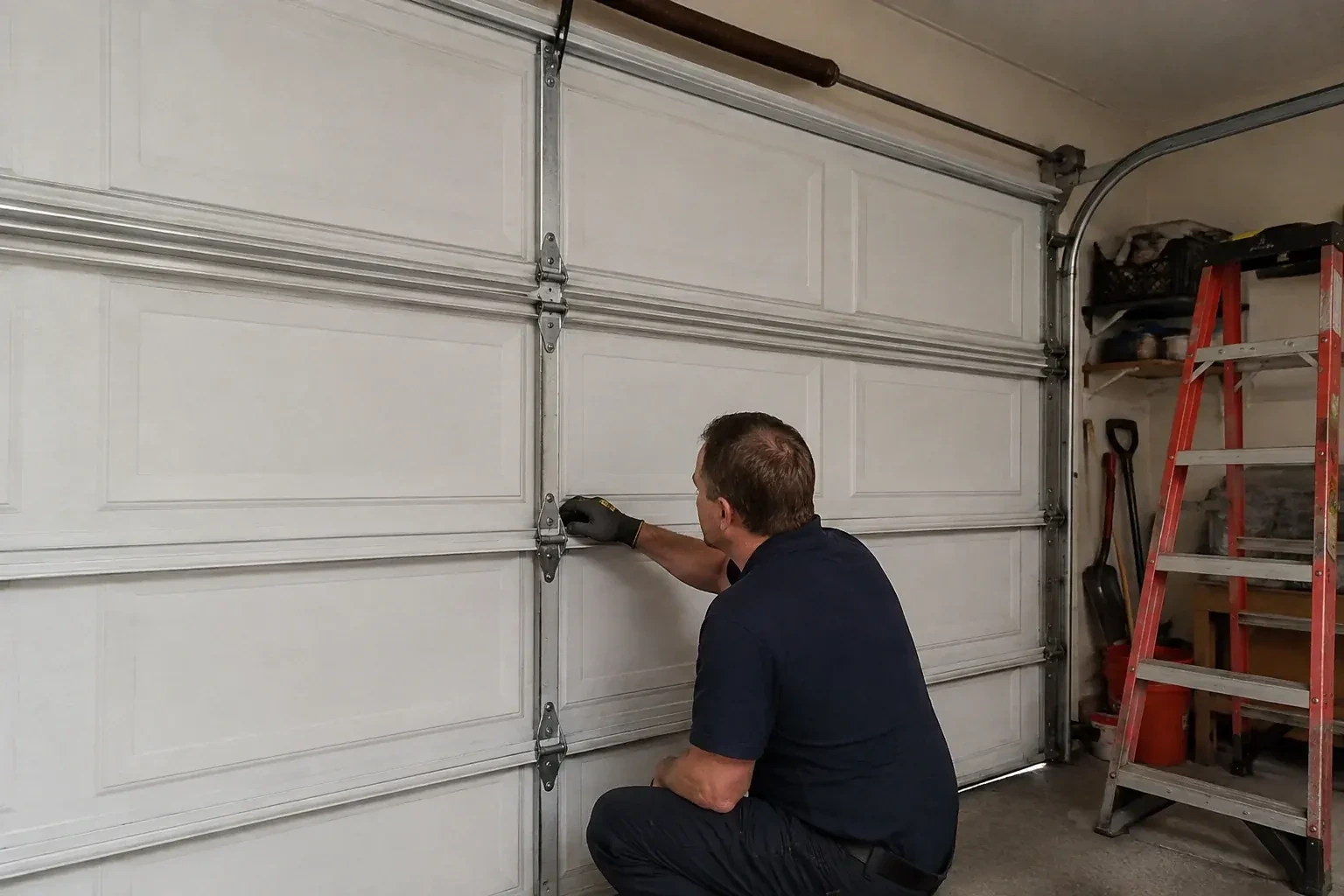
- Garage Door Hinge ReplacementThe roller at the top of the second panel is leaning outward and only half of the wheel is still in the track.
- Garage Door Track Repair or ReplacementYou bought the house with a door that sticks near the top of its travel.
- Garage Door Cable ReplacementThe cable has wrapped itself around the shaft above the door instead of sitting on its drum.