Springs · Oshawa
Garage Door Track Repair or Replacement
You bought the house with a door that sticks near the top of its travel.
In plain words
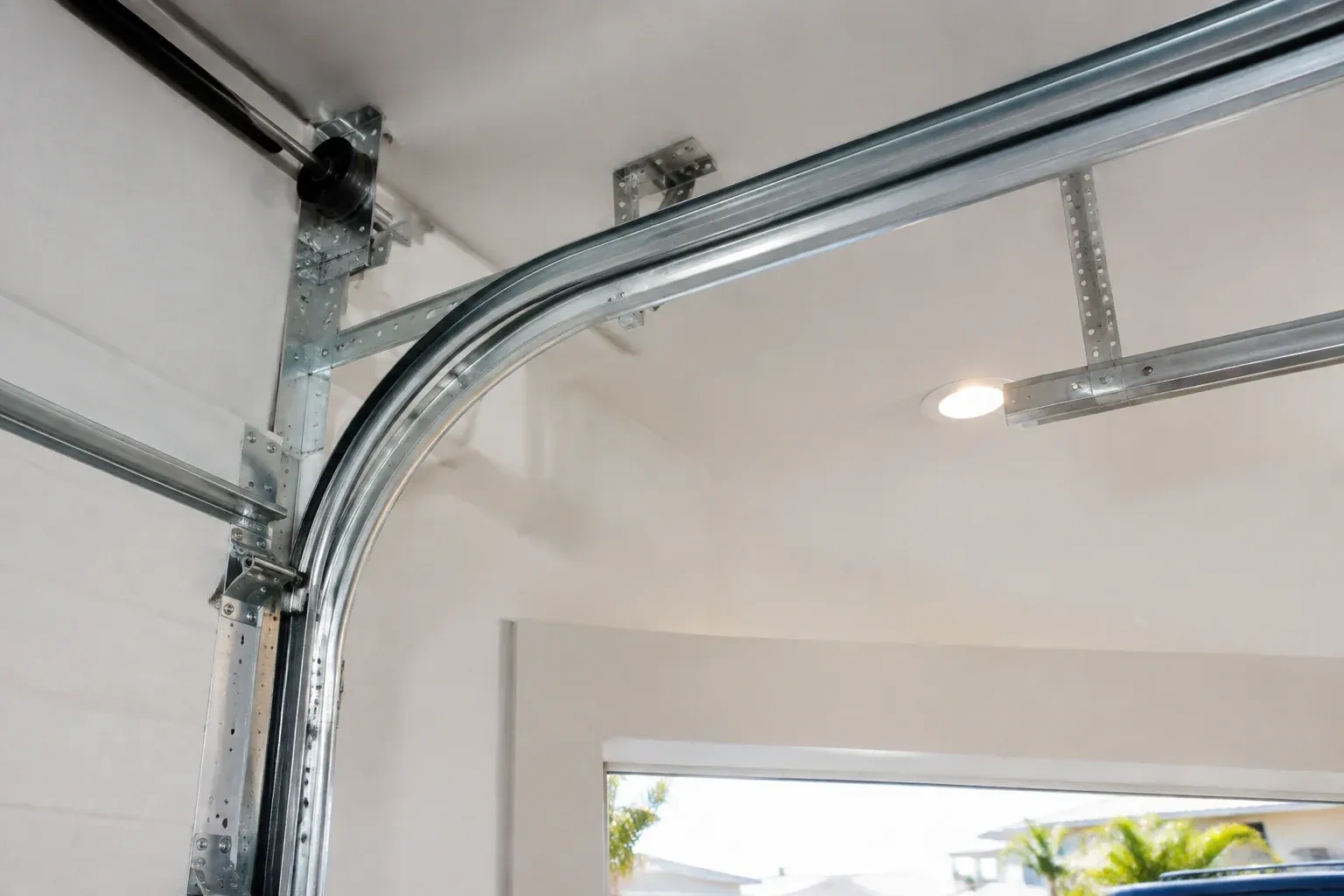
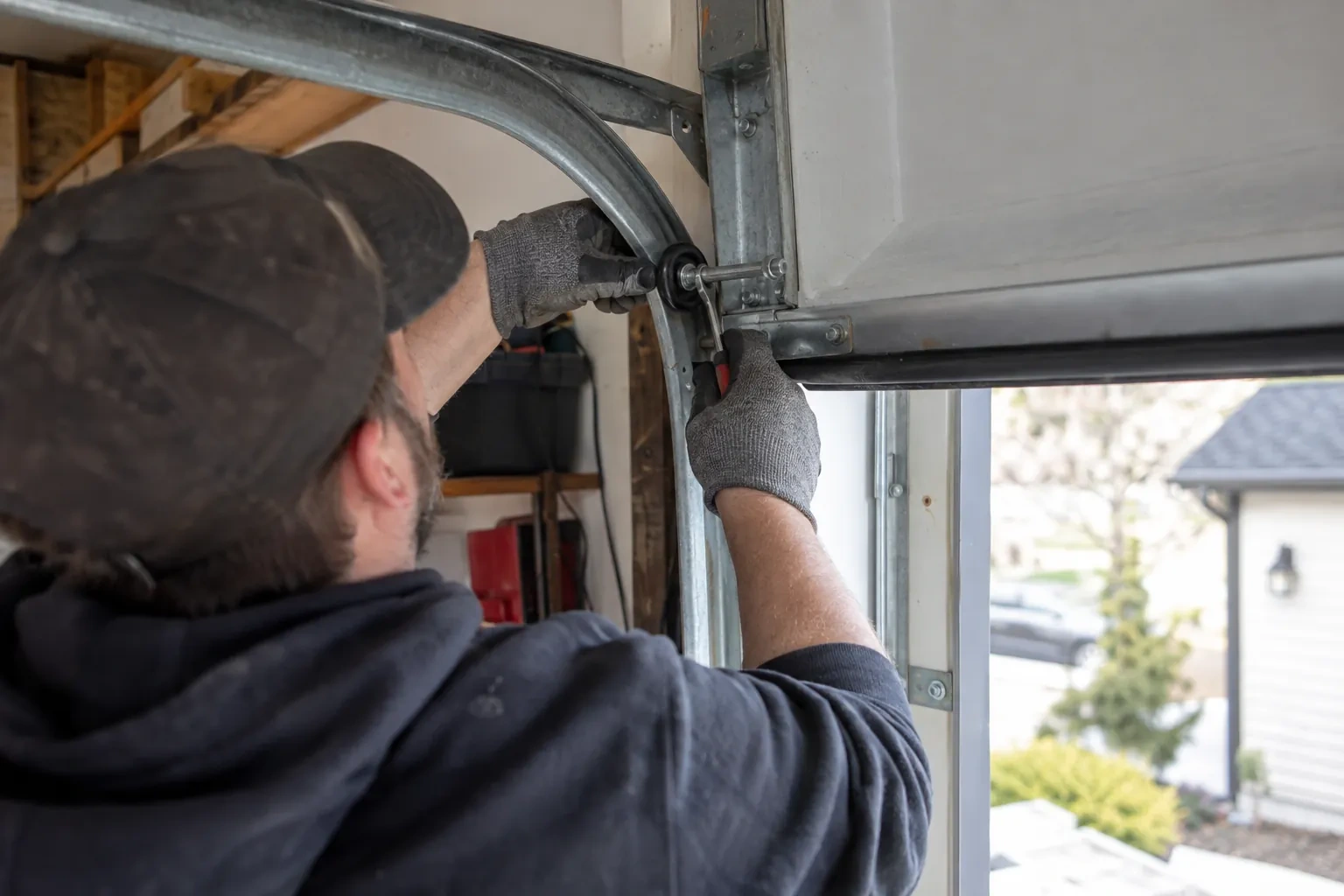
Track has to be in the right place, not merely straight. Each vertical run is set plumb with a slight taper away from the jamb at the top, so the door presses against its stop when closed and swings clear as it opens. The gap between track and door edge is equal on both sides. The horizontal runs are level with each other, square to the vertical runs and matched in radius so the door turns the curve without twisting. Track repair measures all of this and resets whatever has drifted, because a door is only as smooth as the path it is given.
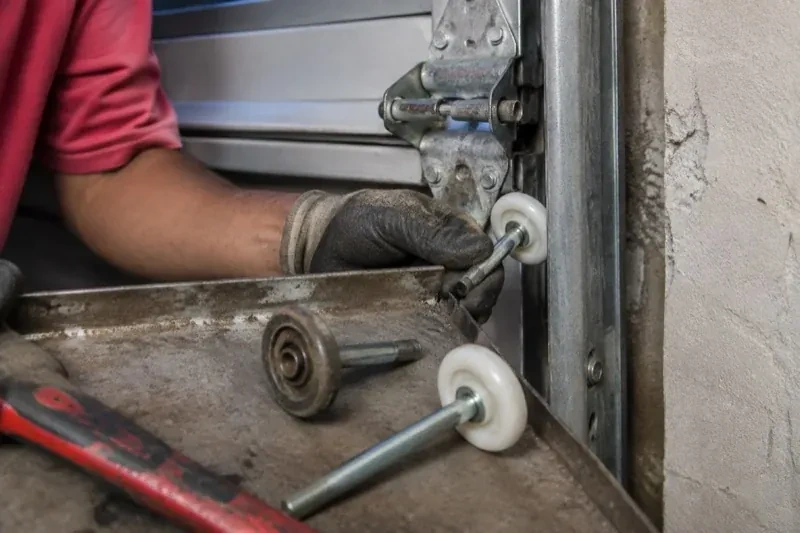
How the visit goesHalfway up, the door lurches and one roller rides onto the lip of the channel. Near the curve the track looks wider than the rest, and the door hesitates in the same place on the way down.
Garage Door Track Repair or Replacement
How the visit goes
Securing the door before the track is touched
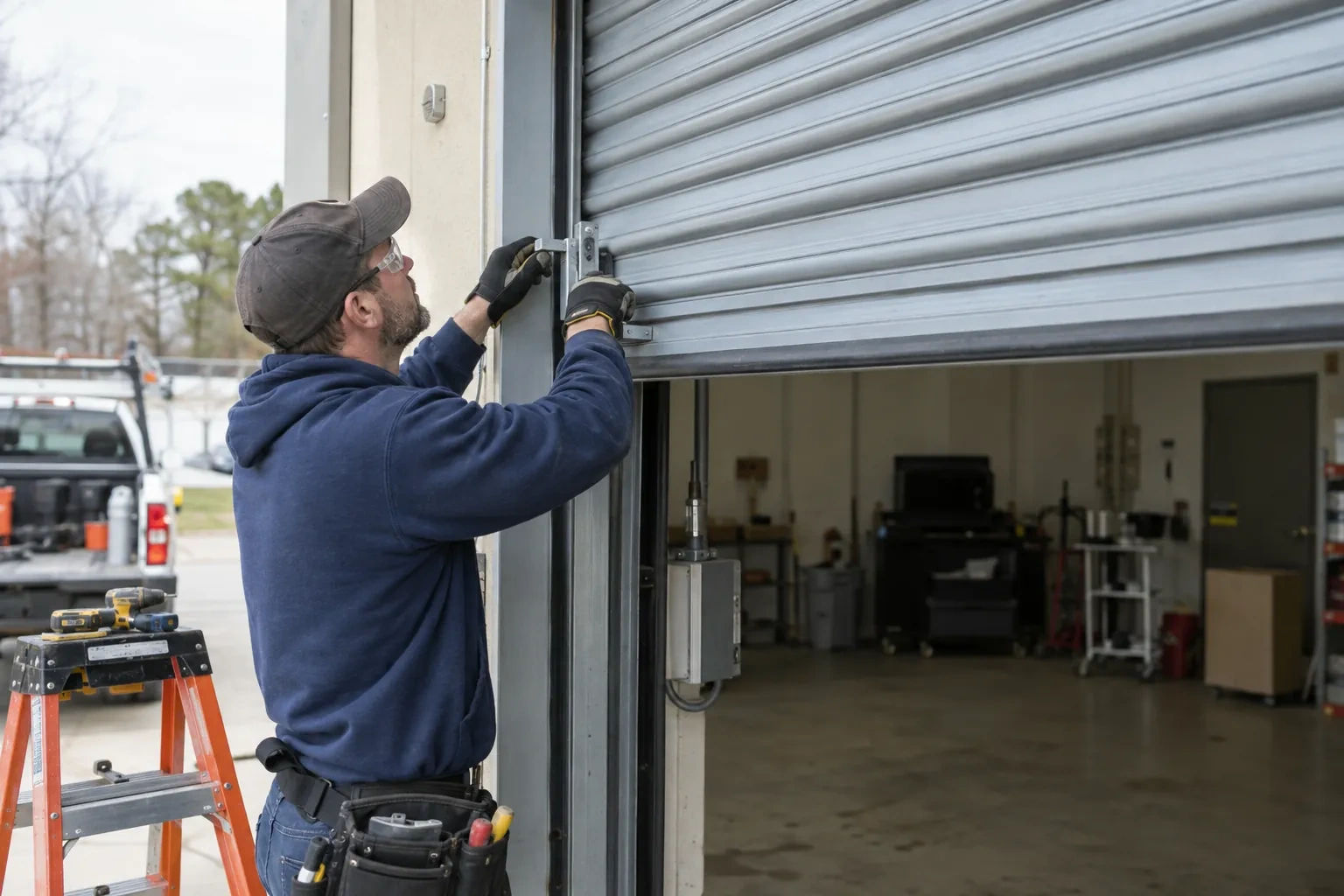
The track is what keeps the rollers, and therefore the door, where they are, so nothing on it is loosened until the door is held some other way. If the door is not fully closed, it is restrained first, a track clamp under a roller so it cannot drop, or a prop, before the release is pulled and the opening cleared. A door jammed on a bent section is often resting its weight on one roller and cable, so that weight goes onto the clamp or support first. With the door still, the brackets, hangers and fasteners can be examined and loosened one at a time without the door shifting, and the rest of the visit becomes calm, methodical work.
Fixing into sound framing
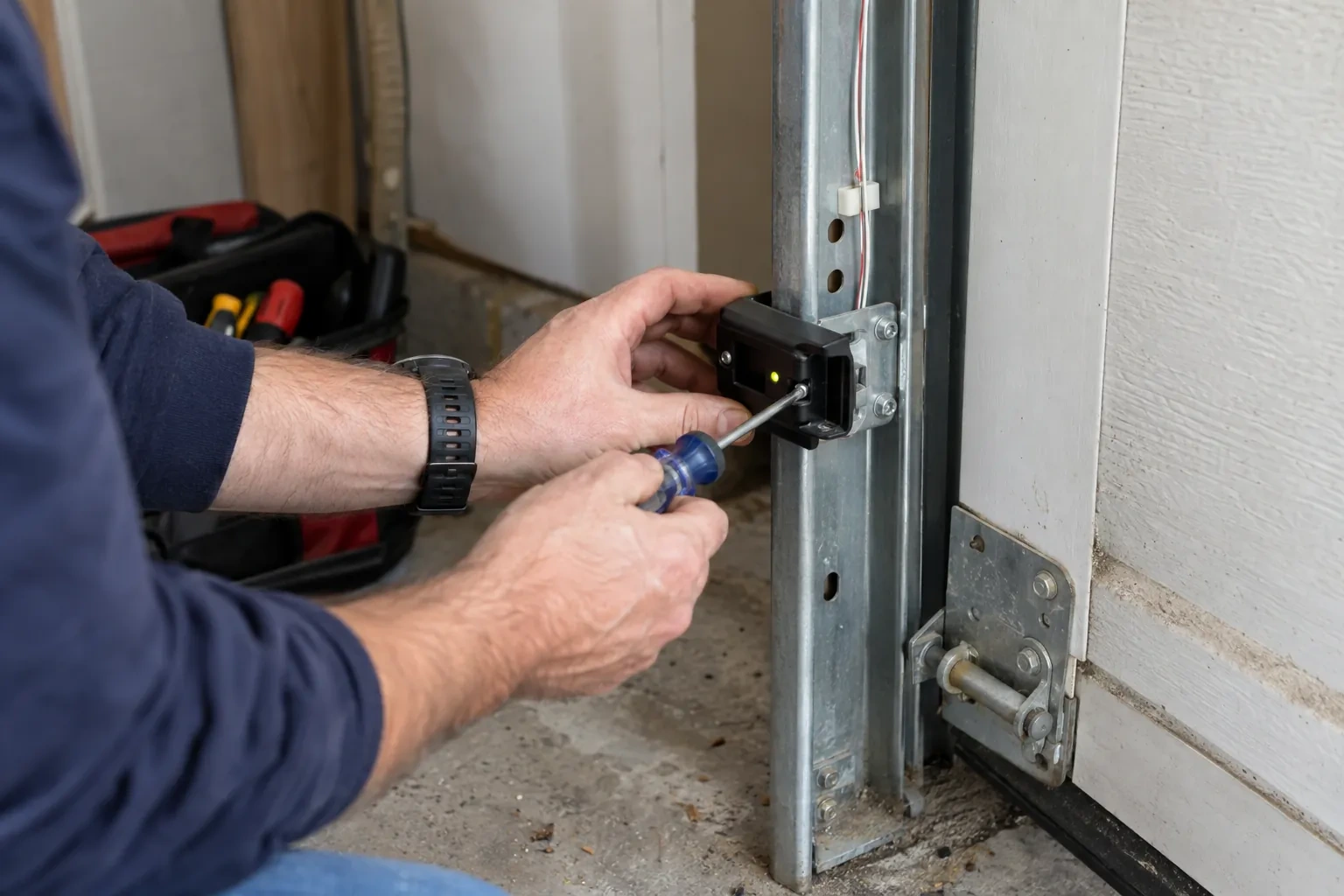
Track is only as steady as the wood it is screwed to. Where the bottom of a jamb has gone soft, the technician cuts back to solid timber and sisters a new piece alongside or replaces the lower length, fastening it through to the framing behind. Enlarged or stripped screw holes higher up are plugged and re-drilled, or the bracket is moved to fresh wood. Lag screws of the right length and diameter are driven into the jamb, and any hanger anchored into ceiling finish alone is moved to a joist or given a length of angle to reach one. This is unglamorous work, and it is the reason the alignment lasts.
A monthly look at the brackets and hangers
Track problems announce themselves early to anyone who looks. Once a month, with the door closed and the light on, run your eye down each vertical track: the brackets should sit flat against the wood with no gap behind them and no screw heads standing proud. Then look up at the horizontal runs and the angle hangers holding them; a hanger that has begun to lean or a run that no longer looks level with its partner is worth a call while it is a small adjustment. Finish by watching the door open once, checking that every roller stays in its channel through the curve, which is the same check the industry checklist asks for.
Garage Door Track Repair or Replacement
In the van
Jamb lumber and construction screws
Replacement rollers and hinges
Level, plumb line and square
Horizontal track with curve
Jamb brackets or continuous angle
Garage Door Track Repair or Replacement
What affects the quote
Track profile and radius
Two-inch track in a 12-inch or 15-inch radius is stock for most residential doors; three-inch track, unusual radii and high-lift pieces are ordered to the door and priced as such.
Damage to sections and bottom hardware
When a bumper strike has also dented the bottom section or bent a bottom bracket, that repair is described and priced separately from the track so you can decide each on its own.
Ceiling hangers and what they are fixed to
A hanger that has bent or pulled from a joist is replaced, and a run that was only fixed into drywall gets angle reaching to solid framing. Each hanger corrected is named in the quote.
What to have ready
- Has any roller come out of the channel?
- Can you see a bracket standing away from the wood or screws backing out?
- Where is the damage: near the floor, at the curve, or on the overhead run?
Garage Door Track Repair or Replacement: questions
QuestionsDoes a heavy insulated door need heavier track?
Usually the standard two-inch track handles a residential insulated door well, provided the gauge matches what the door maker specified and the brackets and hangers are properly fixed. Very heavy or oversized doors, and some carriage-style wood doors, are set up on three-inch track or on heavier-gauge two-inch. If a heavier door was hung on the light track from an earlier door, flexing and spreading follow, and the technician will say so.
Why is the horizontal track sagging?
The horizontal run hangs from the ceiling on back hangs of perforated angle, and it sags when a hanger bends, its screws pull out of a joist, or it was only ever fixed into drywall. A sagging hanger droops that run out of level or its intended pitch. The fix is a straight or new hanger screwed into solid framing, with the run set to the manufacturer's specified pitch and matched to its partner; a door that drifts back toward the opening once raised is a separate, balance-related symptom.
What is the track made of, and what sizes are there?
It is galvanized steel folded into a channel that the roller wheels ride in. Residential doors almost always use two-inch track, with three-inch reserved for heavier or wider doors. The curved piece comes in a radius, commonly 12 or 15 inches, that sets how much headroom the door uses. Replacement pieces are ordered to the same profile, gauge and radius as the rest of the set.
Related services
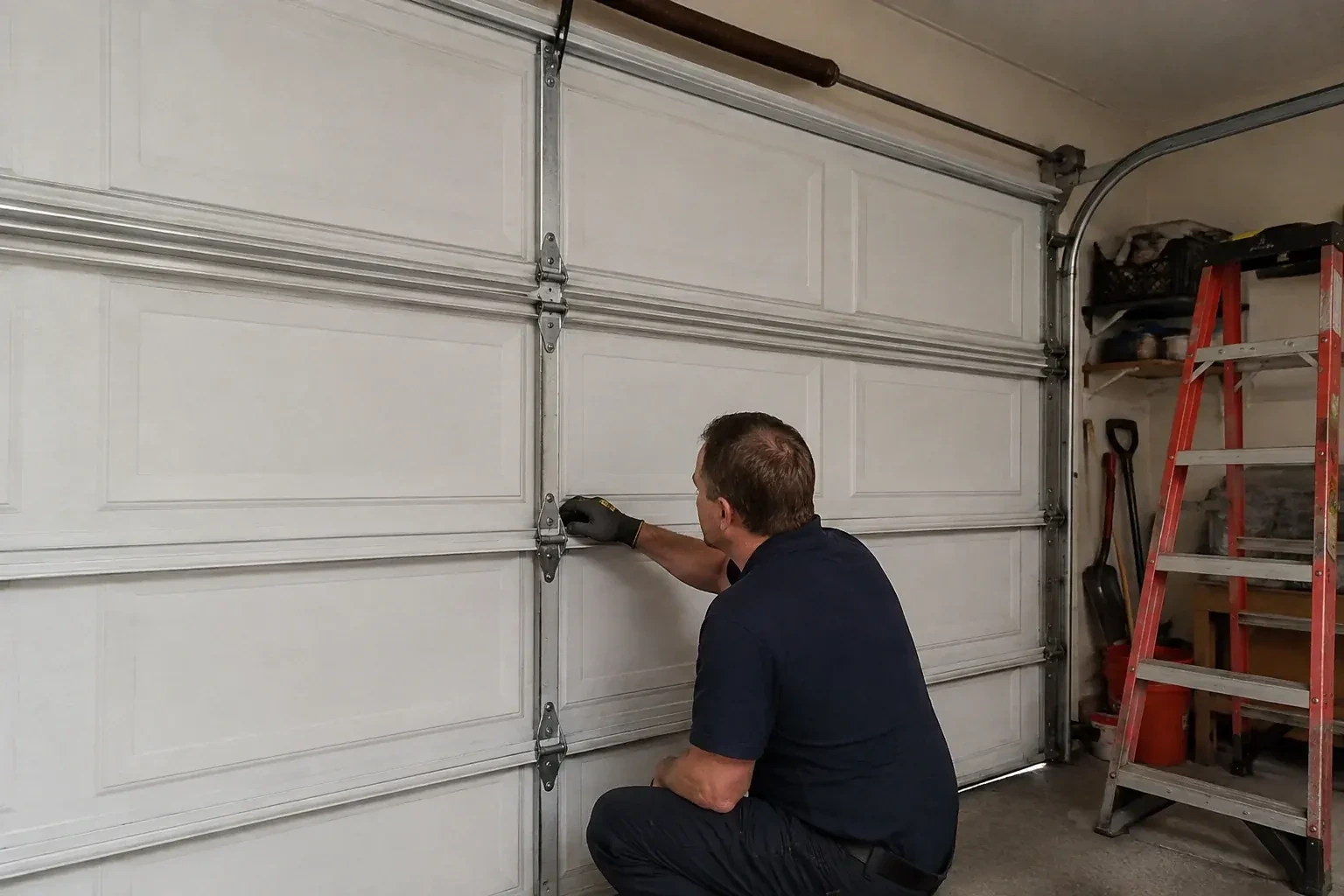
- Garage Door Hinge ReplacementThe roller at the top of the second panel is leaning outward and only half of the wheel is still in the track.
- Garage Door Cable ReplacementThe cable has wrapped itself around the shaft above the door instead of sitting on its drum.
- Torsion Spring ReplacementLooking up at the coil above the door, you can see a clean split with a gap of several centimetres between the two halves.