Openers · Oshawa
Belt-Drive Opener Repair
After the power came back you pulled the red cord to get the car out.
In plain words
A stalled belt drive is often a trolley problem, not a belt problem. The trolley rides the rail in two halves: an outer part linked to the door arm and an inner part gripped by the belt. Pulling the red cord parts them so the door can be lifted by hand; running the operator, or a second pull, locks them again. When the release lever sticks, the housing cracks or the halves refuse to re-engage, the motor moves the belt and nothing else. Repair means freeing or replacing the trolley, checking the belt for damage from the drag, and confirming the inner half is in step with the motor.
How the visit goesSomeone tightened the belt last month to stop the sag. Now the opener sounds like a chain drive, the motor labours on the way up, and the whole rail vibrates under the ceiling.
Belt-Drive Opener Repair
How the visit goes
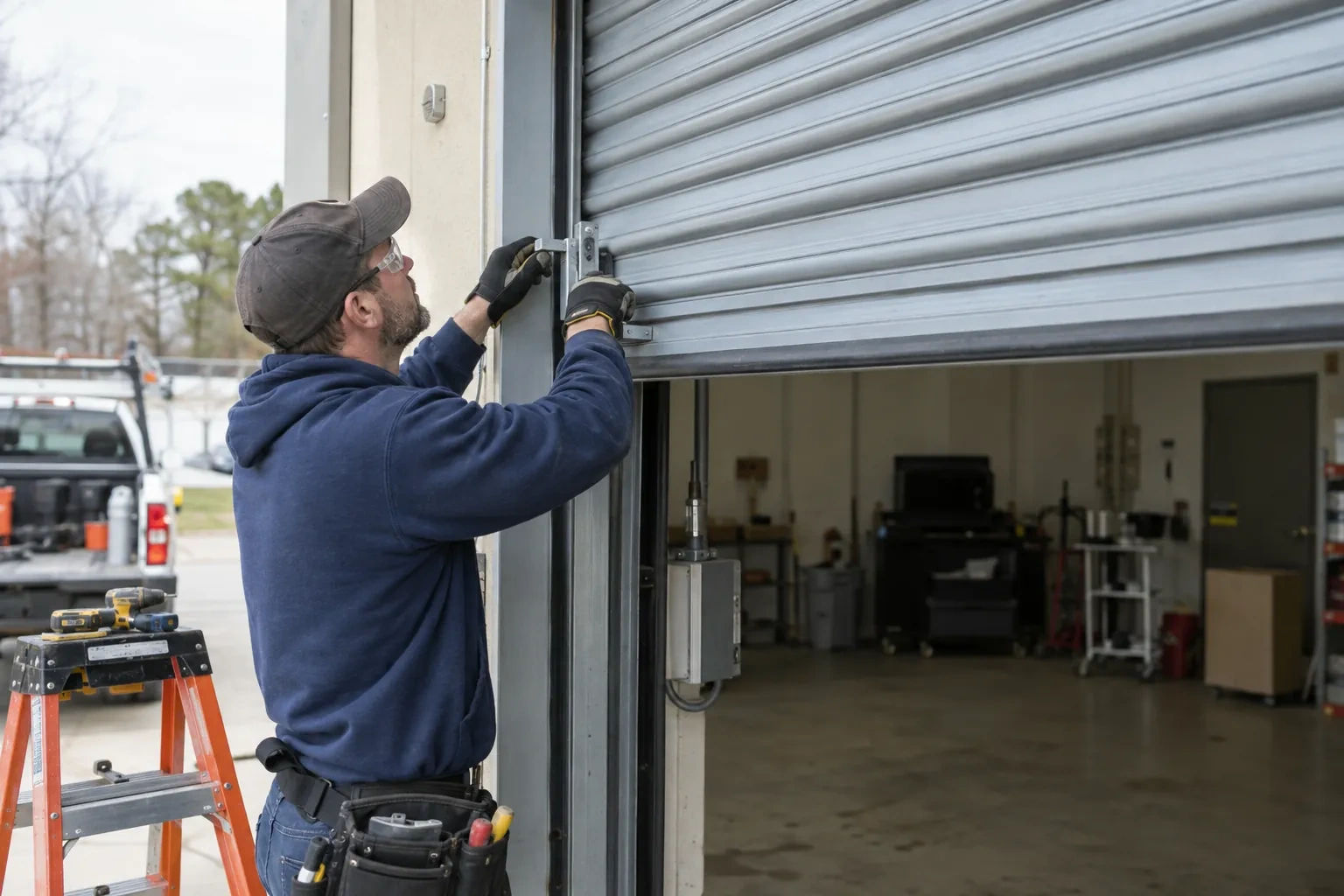
The garage in winter and what it does to a belt
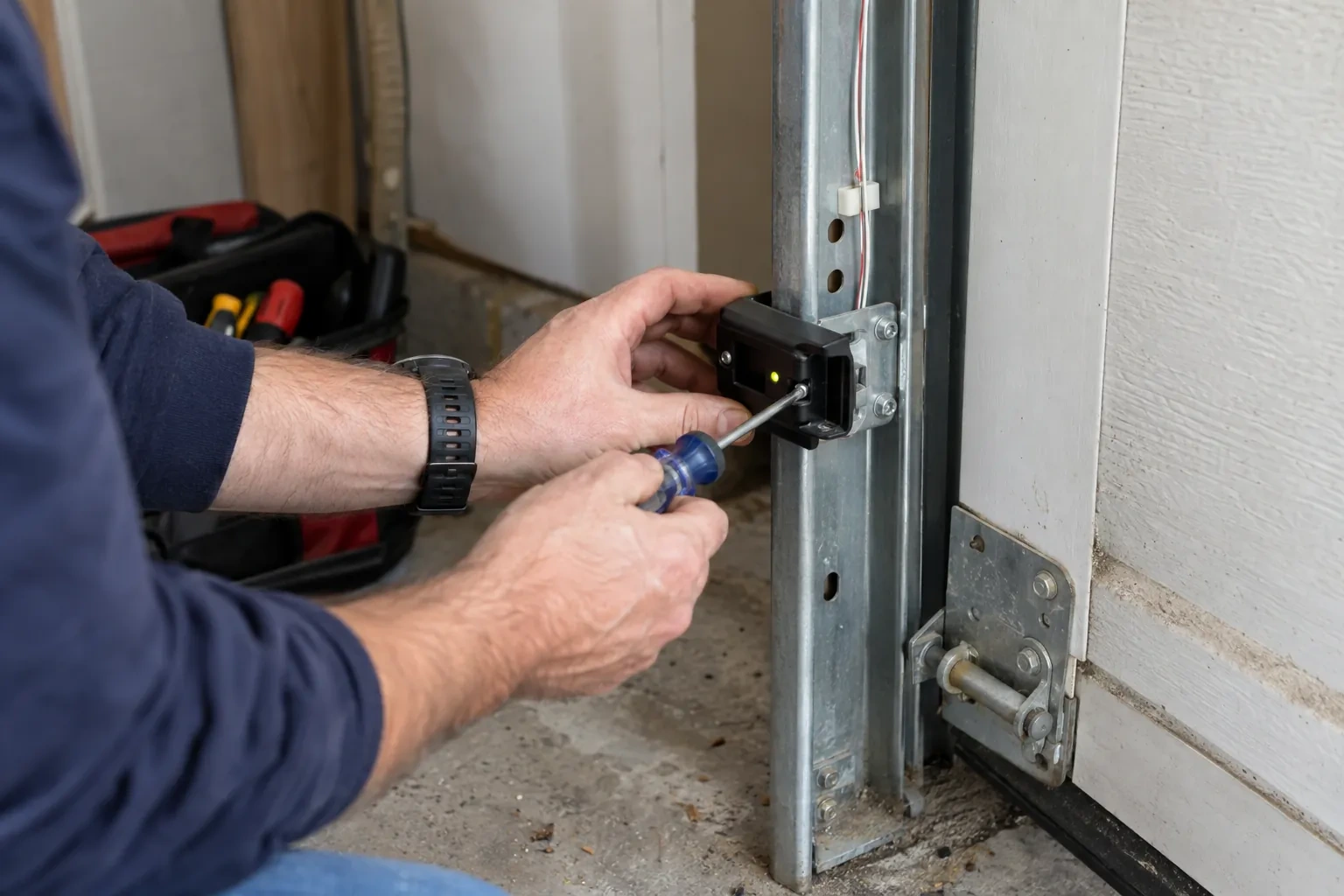
For a detached or unheated garage the technician asks about the season the trouble started. Rubber stiffens in deep cold, so a belt that runs quietly in June can slap or bind in January, and tension set on a mild day may need a second look at minus twenty. A bottom seal frozen to the slab makes a modern operator reverse before the door has lifted, which looks like a belt fault and is not. Salt tracked in on tires corrodes the bottom brackets and cable ends that the balance test depends on. The belt's tension still follows the opener maker's specified measurement, not a temperature-based setting, though a cold-rated lubricant suits the door hardware in an unheated garage.
Re-tensioning a belt that has stretched
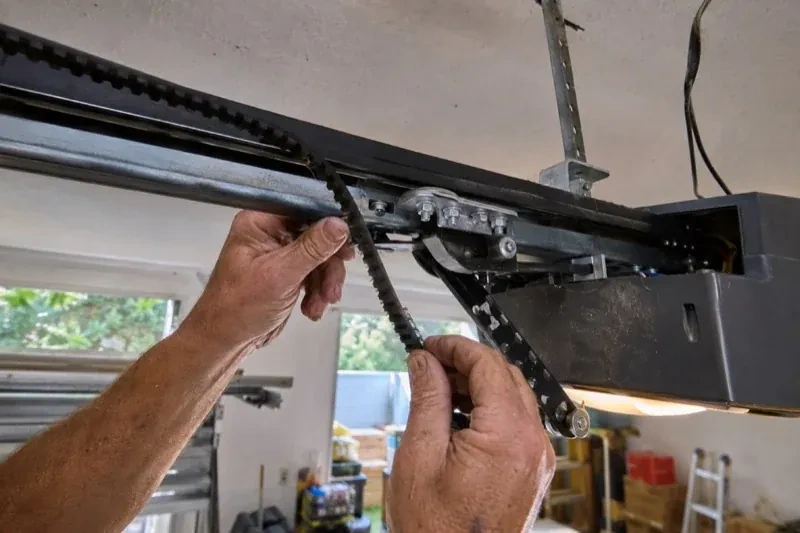
With the operator unplugged and the trolley released from the door, the technician turns the square nut on the inner trolley a little at a time, drawing the belt up until the tension spring reaches the length the maker specifies. Each turn lifts the belt slightly. They press the belt at mid-span to feel for the small give that means it is neither slack nor strained, then reconnect the trolley and run the door by motor, listening at the sprocket for the rattle that says the belt is still loose or has gone too tight. A belt that will not reach its spring length with the adjuster at its limit has stretched too far and is replaced instead.
How to check the belt by eye
You leave knowing what a healthy belt looks like from the garage floor. It runs level, just above or inside the rail, with no visible sag between the motor head and the header. Its teeth are even along the whole length and its edges are square, not fuzzy. Every few months, with the door closed, glance up and along the rail; then open the door and look again, since sag shows on the return run. If the belt begins to hang below the rail, slap on the way up or click at the same point each cycle, that is the moment to call, while it is a tension adjustment rather than a stalled door.
Belt-Drive Opener Repair
In the van
Light grease for the drive gear
2x4 offcut for the reversal test
Inner and outer trolley
Rail hanger straps and fasteners
Belt tension spring and square nut
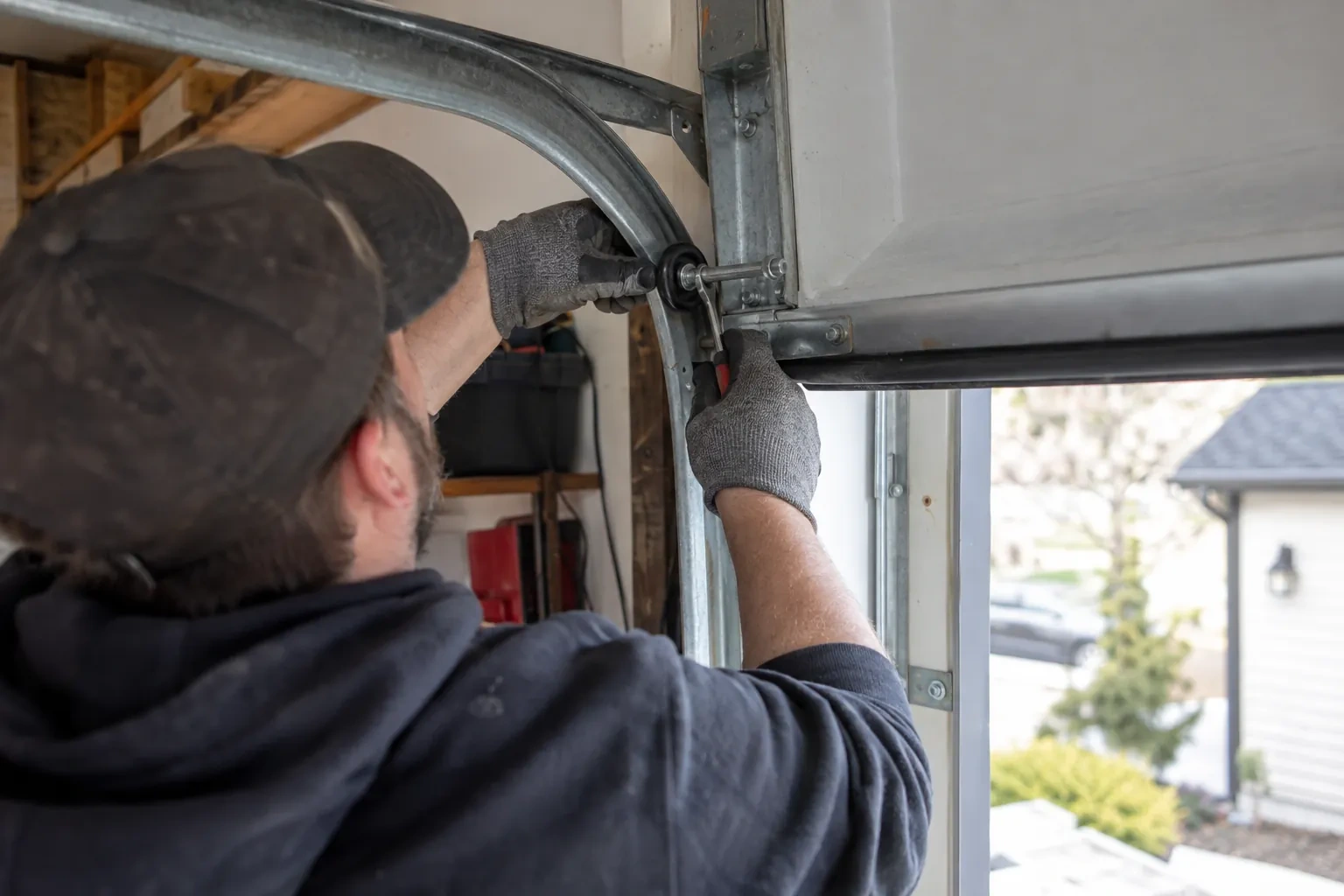
Belt-Drive Opener Repair
What affects the quote
How far the technician drives
A garage on the edge of town and one down a long rural road take different time to reach, and that trip is a line of the quote.
Trolley condition
A trolley that releases and re-engages cleanly stays. One that is cracked, stuck or loose on the rail is replaced during the same visit and listed as its own part.
Door size and weight
A wide double door or a heavy insulated one asks more of the belt and trolley, and the inspection may point to a suitably rated opener or a top-section strut for that door, alongside the belt matched to the rail and sprocket.
What to have ready
- When did the trouble start, and did it follow a power cut or a pulled red cord?
- Are there plastic shavings or grease on top of the motor housing?
- Is the garage heated and attached to the house, or a cold detached one?
Belt-Drive Opener Repair: questions
QuestionsDoes the trolley need replacing when the belt does?
Not usually. The trolley is checked while the belt is off: its halves should part with the release cord and lock again, the housing should be free of cracks and it should ride the rail without play. A trolley that passes those checks stays and simply receives the new belt and a fresh clip. One that sticks or rattles is replaced in the same visit.
What is the difference between belt-drive repair and opener replacement?
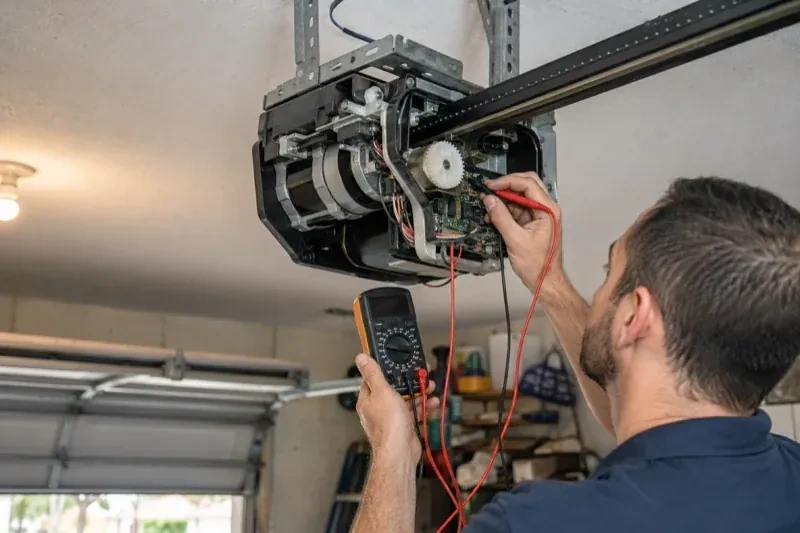
Repair keeps the operator you have and renews the piece of the drive that has failed: the belt, its tension, the trolley, the idler pulley or the gear and sprocket at the motor head. It suits a unit with a sound motor and board, photo eyes near the floor and rolling-code remotes. Replacement is the answer when the operator predates those features or when its board or motor has failed and is no longer made.
The motor runs but the door stays still. What has happened?
Something between the motor and the door has let go. On a belt drive the usual suspects are a broken clip where the belt joins the trolley, a belt that has jumped off the sprocket or idler pulley, a trolley that failed to re-engage after the red cord was pulled, or a stripped drive gear inside the motor head, which leaves plastic shavings on the housing. Each is a specific repair.