Repairs · Oshawa
Garage Door Tune-Up
The door lands with a thud you can feel through the kitchen floor, and sometimes it bounces back up a few centimetres before settling.
In plain words
Garage doors here live through a wide swing of seasons, and a tune-up before winter pays for itself in smooth mornings. Cold thickens tired lubricant and stiffens steel, so a door that ran fine in September can groan in January. Rubber seals go hard, meltwater freezes the bottom seal to the slab, and road salt works on the lower hardware. The fall visit replaces old lubricant with a low-temperature product, treats the seals with silicone and checks the threshold, since a door frozen to the slab should be freed and dried rather than forced by the opener.
How the visit goesSince the first cold snap the door has been sluggish. It climbs slowly, hesitates near the top and the opener motor sounds strained. On the coldest mornings it opens a hand's width, thinks about it, and comes back down.
Garage Door Tune-Up
How the visit goes
Watching one full cycle first
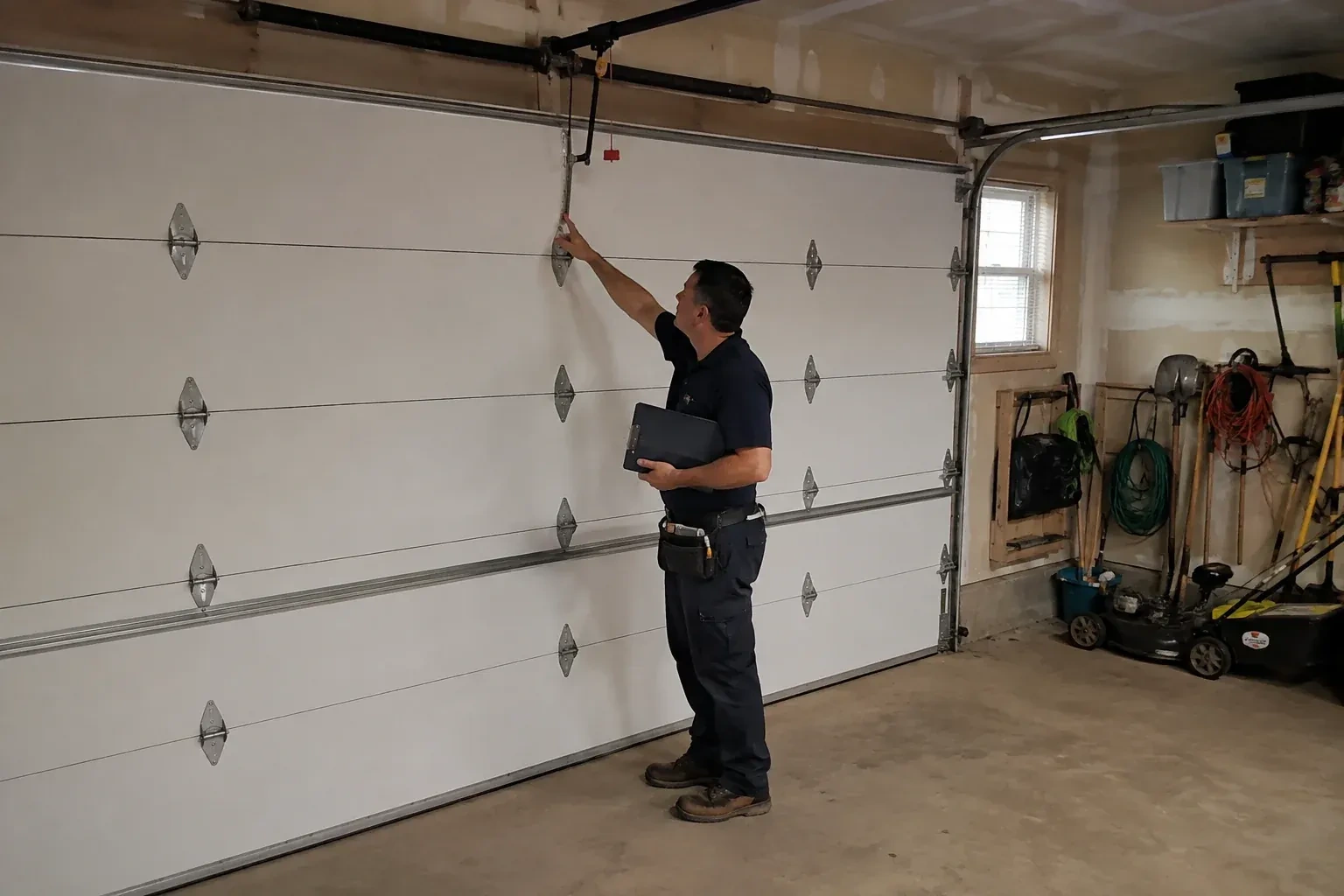
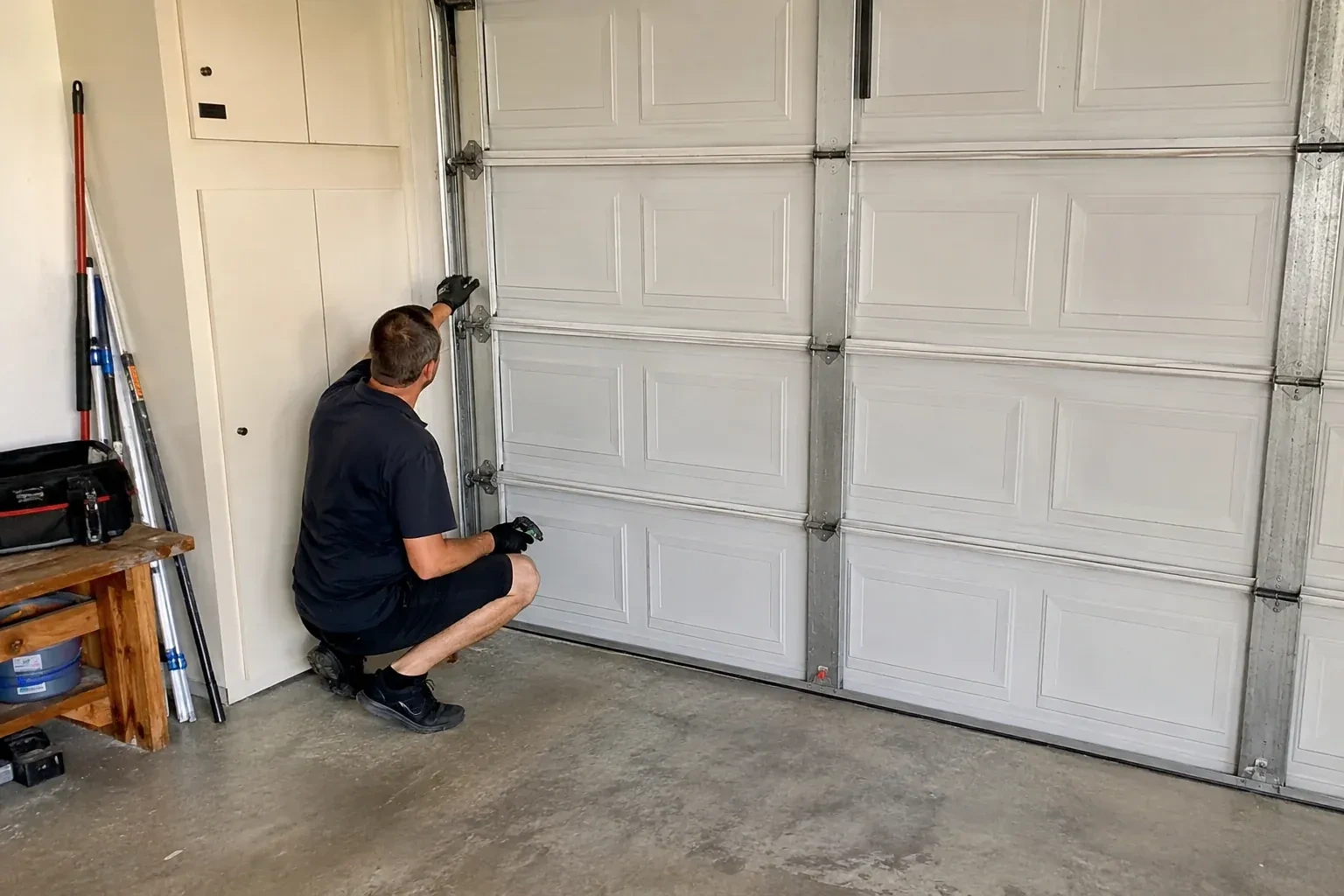
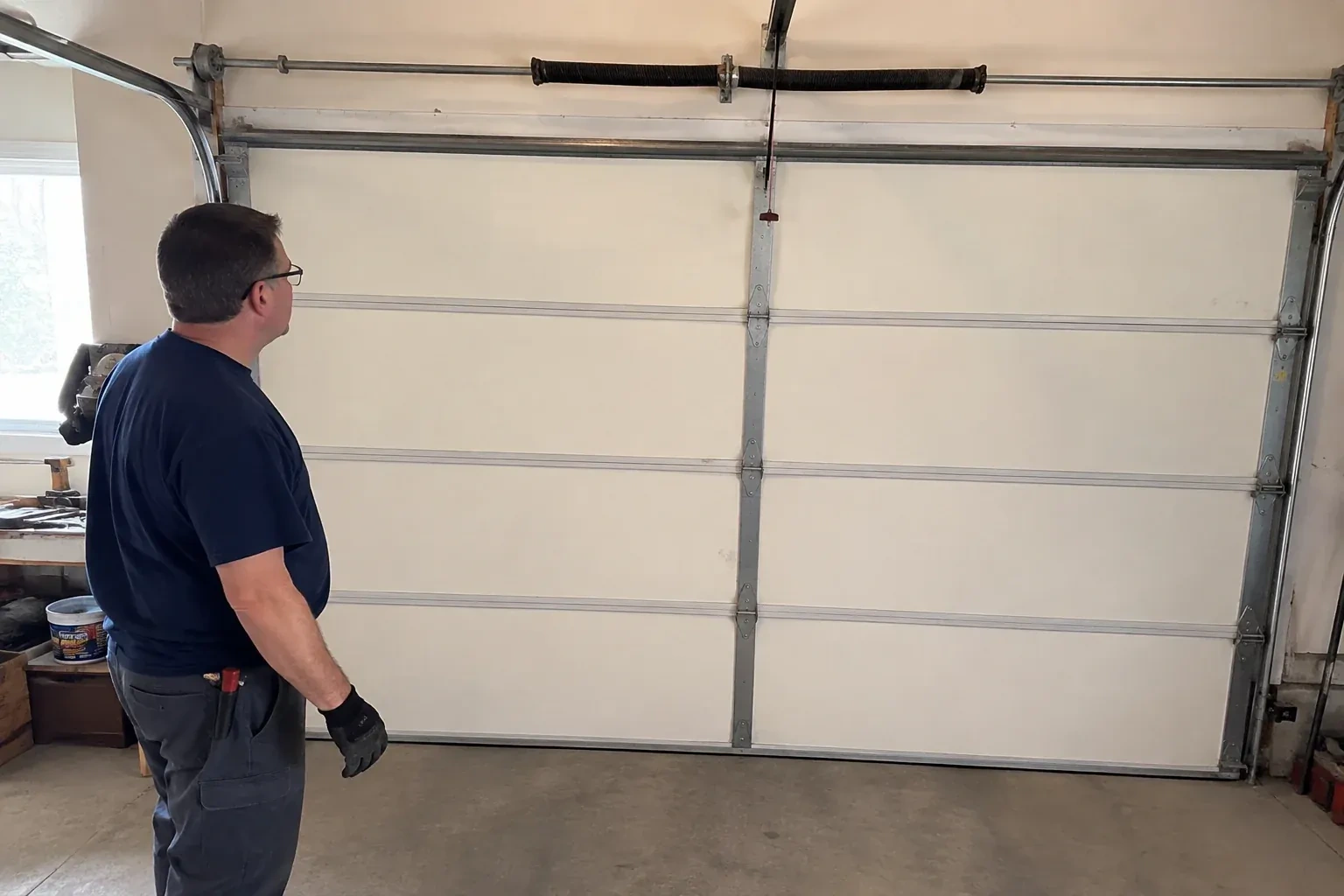
Before a wrench comes out, the technician stands clear of the opening and runs the door all the way up and all the way down. They are listening and watching at the same time: where the squeal starts, whether the sections shake at a particular height, whether the door hesitates at the curve of the track, how it lands on the floor, and whether the opener labours or hums. Each observation is tied to a spot on the door or a point in the travel. That map guides the hands-on inspection that follows and gives a fair comparison at the end, when the same cycle is run again after the work.
Small adjustments with a big effect
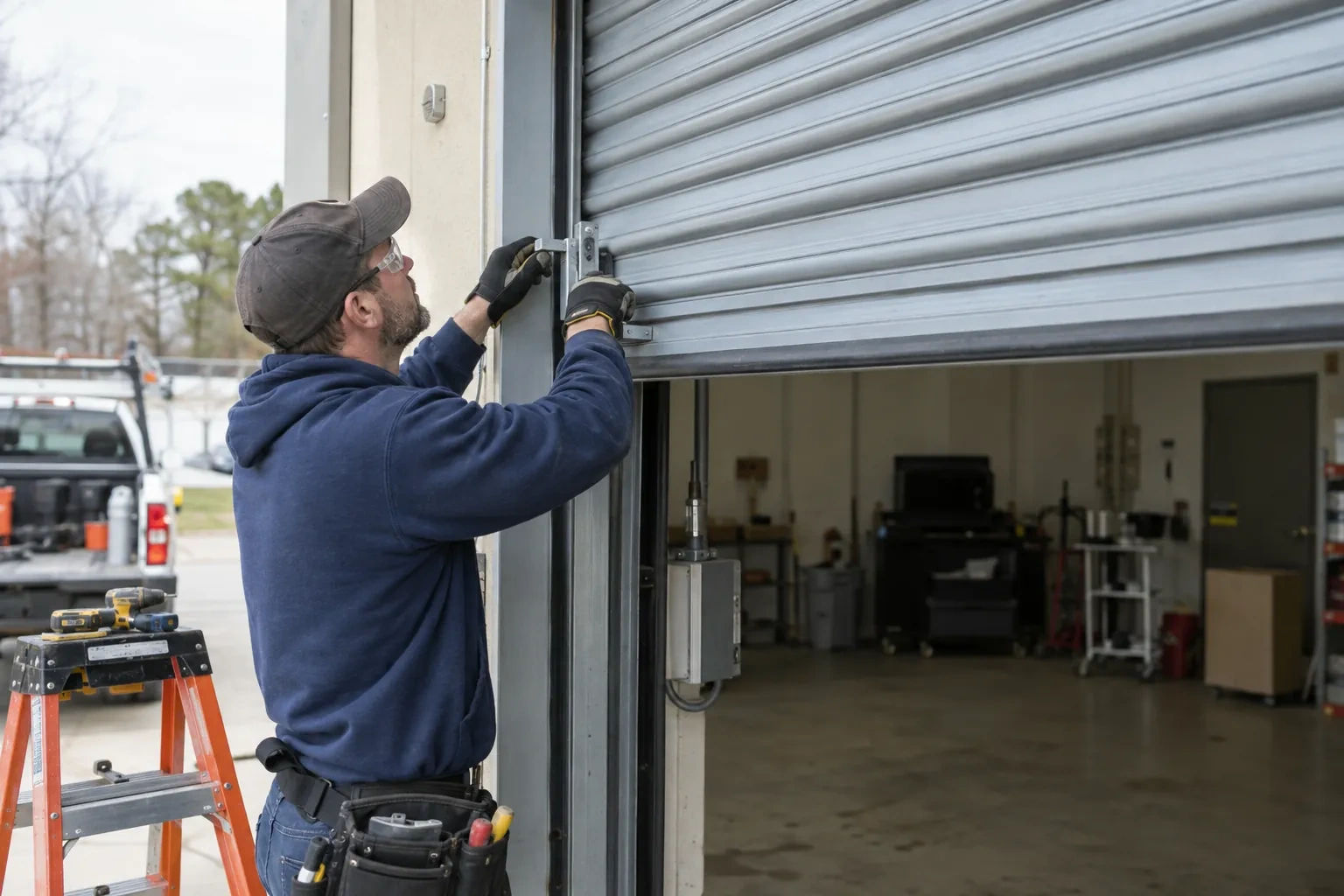
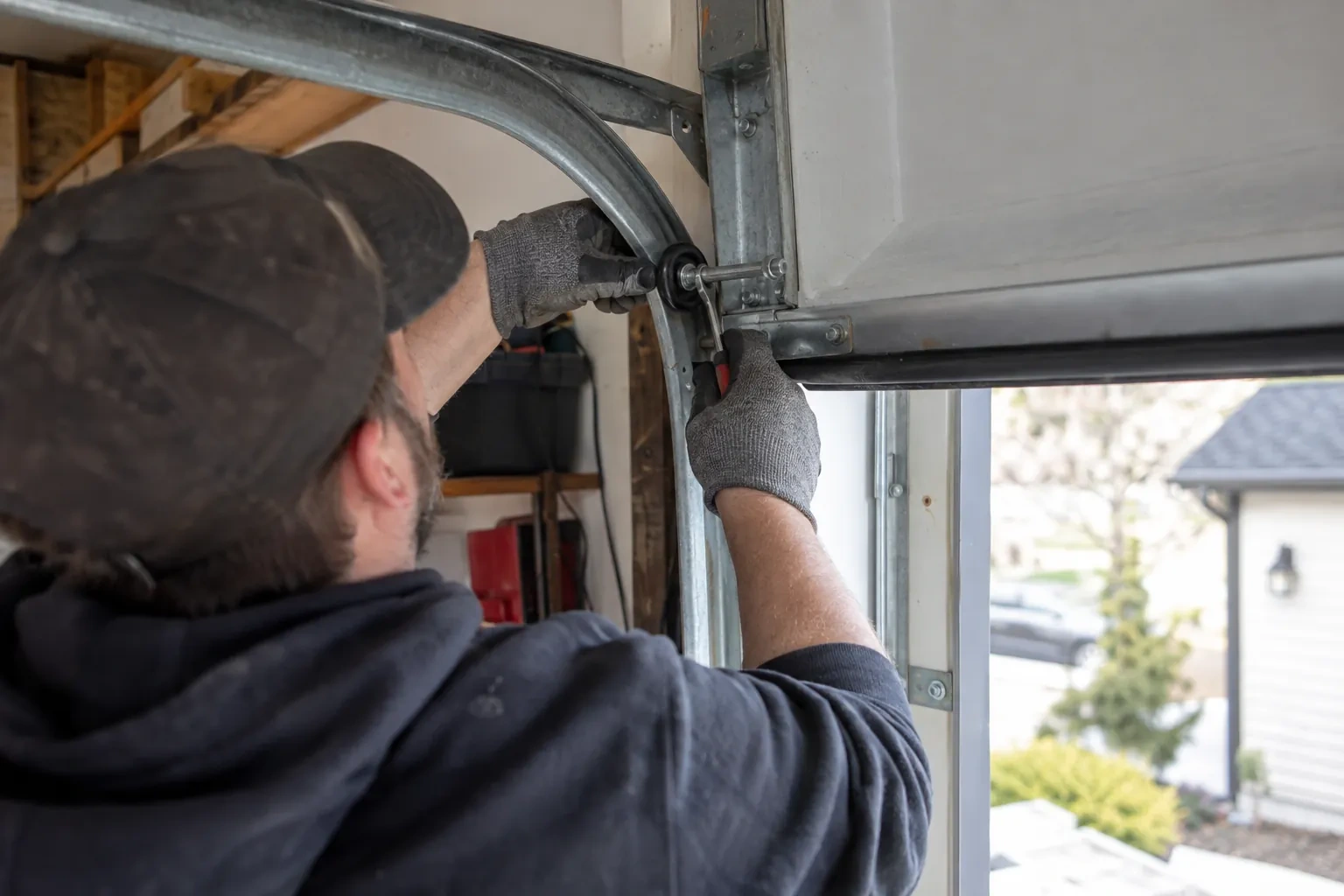
A few minutes of fine adjustment often change the character of a door. A vertical track that has crept inward is eased back so the rollers run in the centre of the channel. A horizontal track that has sagged on its hanger is brought level so the door does not drop into the curve. A strut on a wide top section is checked and tightened so the panel stops flexing when the opener pulls on it. The lock bar is aligned with its slot, or disabled on an opener-driven door so it can never be engaged against the motor. None of these are repairs; they are corrections that let the existing parts work as designed.
Two safety tests you can repeat every month
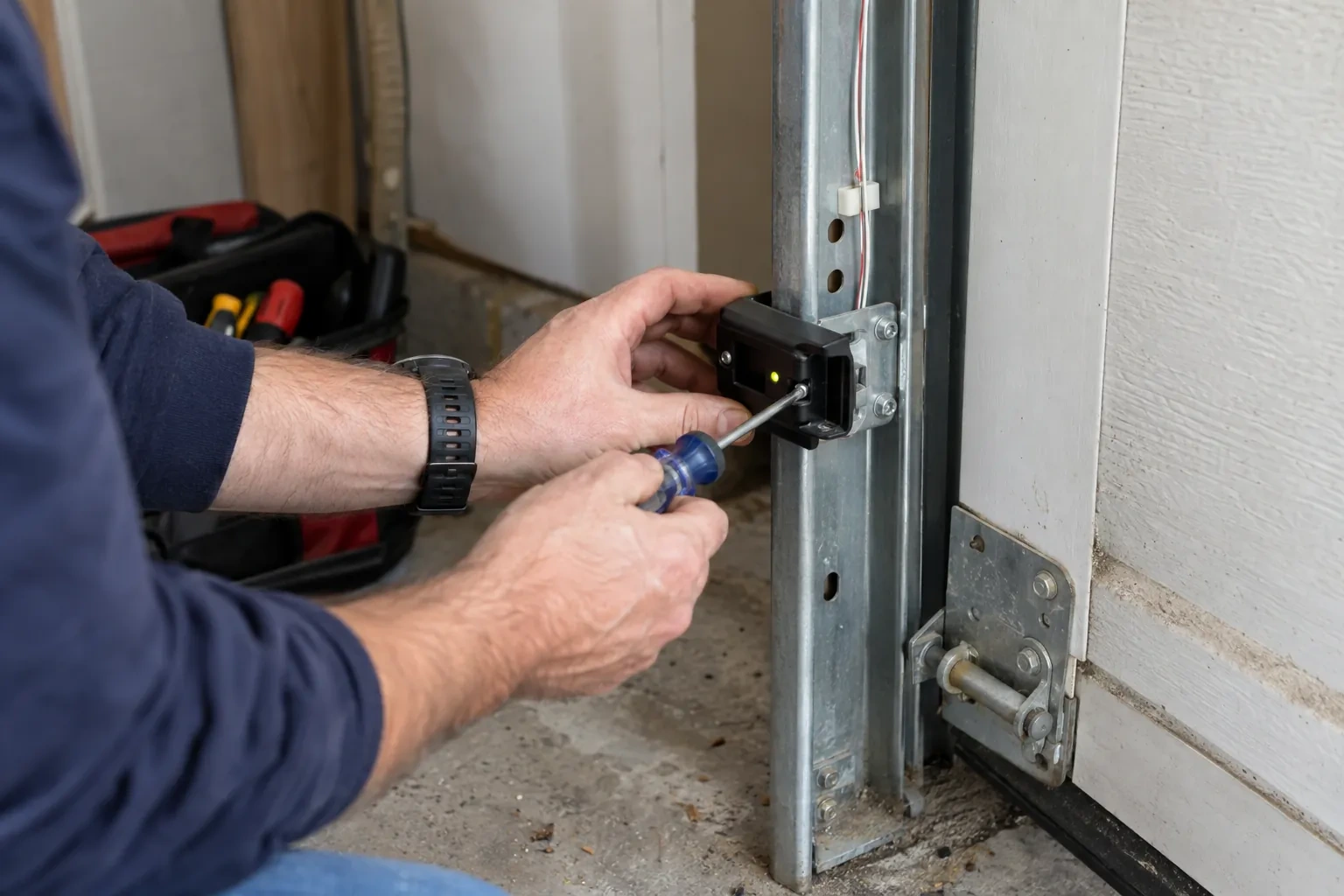
You leave knowing how to run the same two tests the technician ran. With the door open, start it closing and wave a broom handle through the photo-eye beam: the door should stop and return fully open. Then lay a 2x4 flat on the floor under the centre of the door and close it: the door should reverse when it touches the board. Manufacturers ask for both tests monthly and after any adjustment. A door that stops on the board rather than reversing needs its down travel or force reset, which the record explains, and a door that fails again is a reason to call. The tests take two minutes and are the heart of a safe opener.
Garage Door Tune-Up
In the van
Socket set and drivers
Replacement steel or nylon rollers
Replacement hinges
Silicone or lithium garage door lubricant
Silicone spray for seals
Garage Door Tune-Up
What affects the quote
Door construction and weight
A heavy wood or insulated steel door works its hardware harder than a light aluminum one, and the balance check and fastener work take a little longer on the heavier door.
Balance findings
If the balance test shows the springs have lost tension, spring adjustment or replacement is a separate job with its own quote rather than part of the maintenance visit.
Single or double door
A double-width door has more hinges, rollers and track to inspect and lubricate, a heavier counterbalance and usually a strut or two on the top section, so it takes longer than a single door.
What to have ready
- Where in the door's travel does the problem happen?
- Can vehicles and stored items be moved clear of the door and tracks before the visit?
- Do both sensor lights near the floor glow steady, or does one blink?
Garage Door Tune-Up: questions
QuestionsWhat information helps when I book?
The door type and rough size, single or double; the opener brand or a photo of its label; what you have noticed, such as noise, shaking, hesitation, slamming or reversing, and whether it is worse in cold weather; whether the door has been struck by anything; and whether the springs are above the door or along the sides. None of this is required, but each detail helps the right parts and tools arrive with the technician.
Which lubricant is right for a garage door?
A silicone-based or white lithium garage door lubricant, sold for the purpose. Penetrating oils and general sprays are thin, attract dust and are gone in weeks; heavy grease traps grit. For the rubber bottom seal and weatherstrip, use only a silicone spray, since petroleum products attack rubber and make it brittle. Nylon rollers with sealed bearings need no lubricant, while ones with an exposed bearing can need a touch where their own maker calls for it. A small amount on each point, worked in by moving the door, is enough.
Should I lubricate the tracks?
No. Tracks should be clean and dry. Rollers are meant to roll along the track on their own bearings, and a film of lubricant on the track collects grit, thickens in the cold and makes the rollers slide and drag instead. Wipe the tracks with a rag and put the lubricant where it belongs: on the hinge pins, the roller bearings, the spring coils and the bearing plates at the ends of the torsion shaft.
Related services
- Off-Track Garage Door ResetOne side of the door hangs a hand's width lower than the other.
- Garage Door Panel ReplacementFrom outside, the horizontal groove between two sections now steps sideways by a centimetre.
- Garage Door Bottom Seal ReplacementEvery mild afternoon the snow melts off the car, runs to the door, and by morning the rubber strip along the bottom is frozen to the concrete.