Springs · Oshawa
Garage Door Roller Replacement
Every morning the door announces itself: a rattle on the way up, a grinding squeal on the way down, loud enough that the neighbours know when you leave.
In plain words
A garage door opener is designed to guide a balanced door, not to haul a rough one. Rollers that bind, wobble or grind add resistance across the whole travel, and the opener answers by working harder, running hotter and tripping its force limit or reversing partway. Replacing worn rollers with a smooth-running set takes that load away, which is why the opener often sounds calmer after the same visit. The technician confirms the door holds its own weight with the opener released, then checks the opener's force and reversal settings once the new rollers are in.
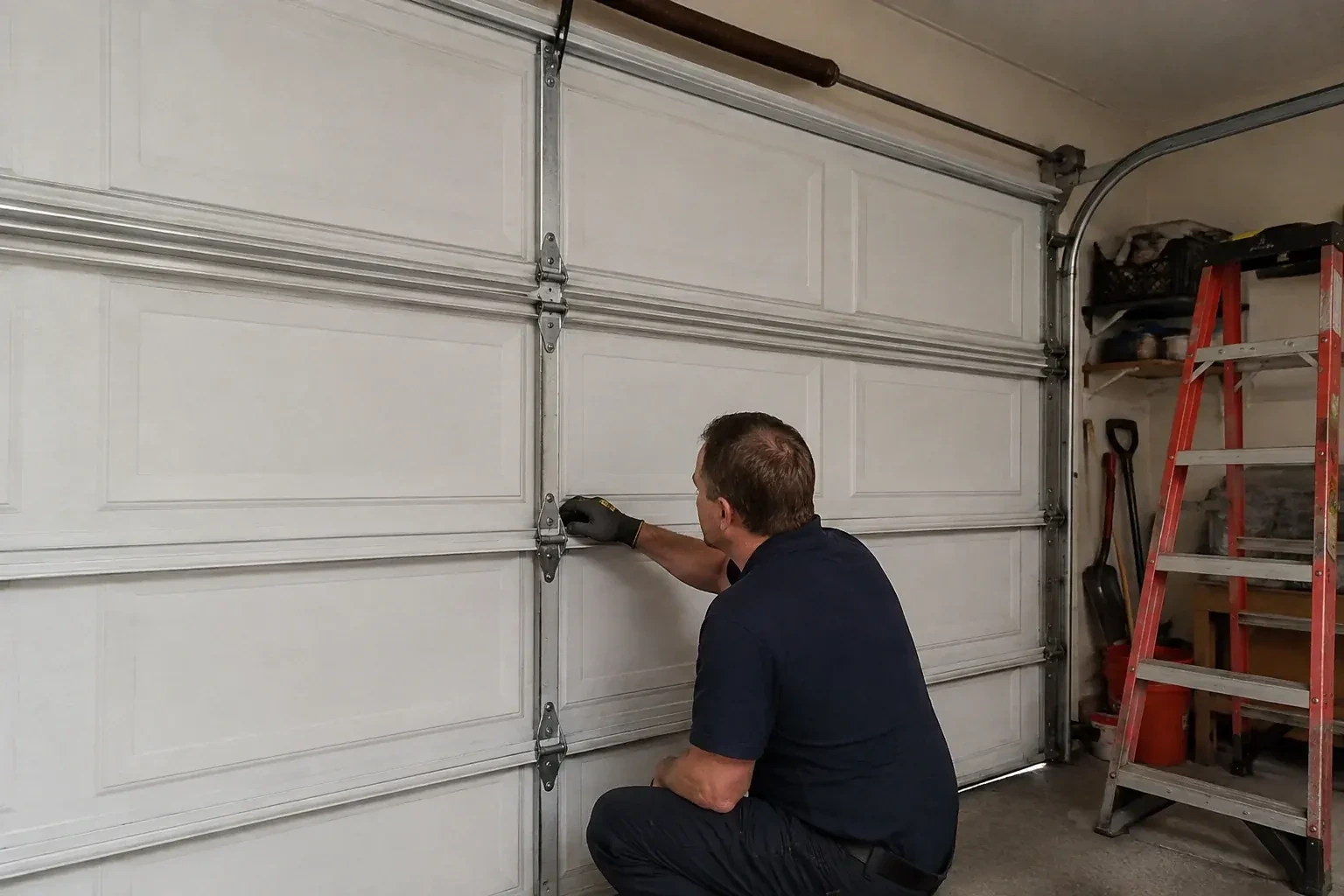
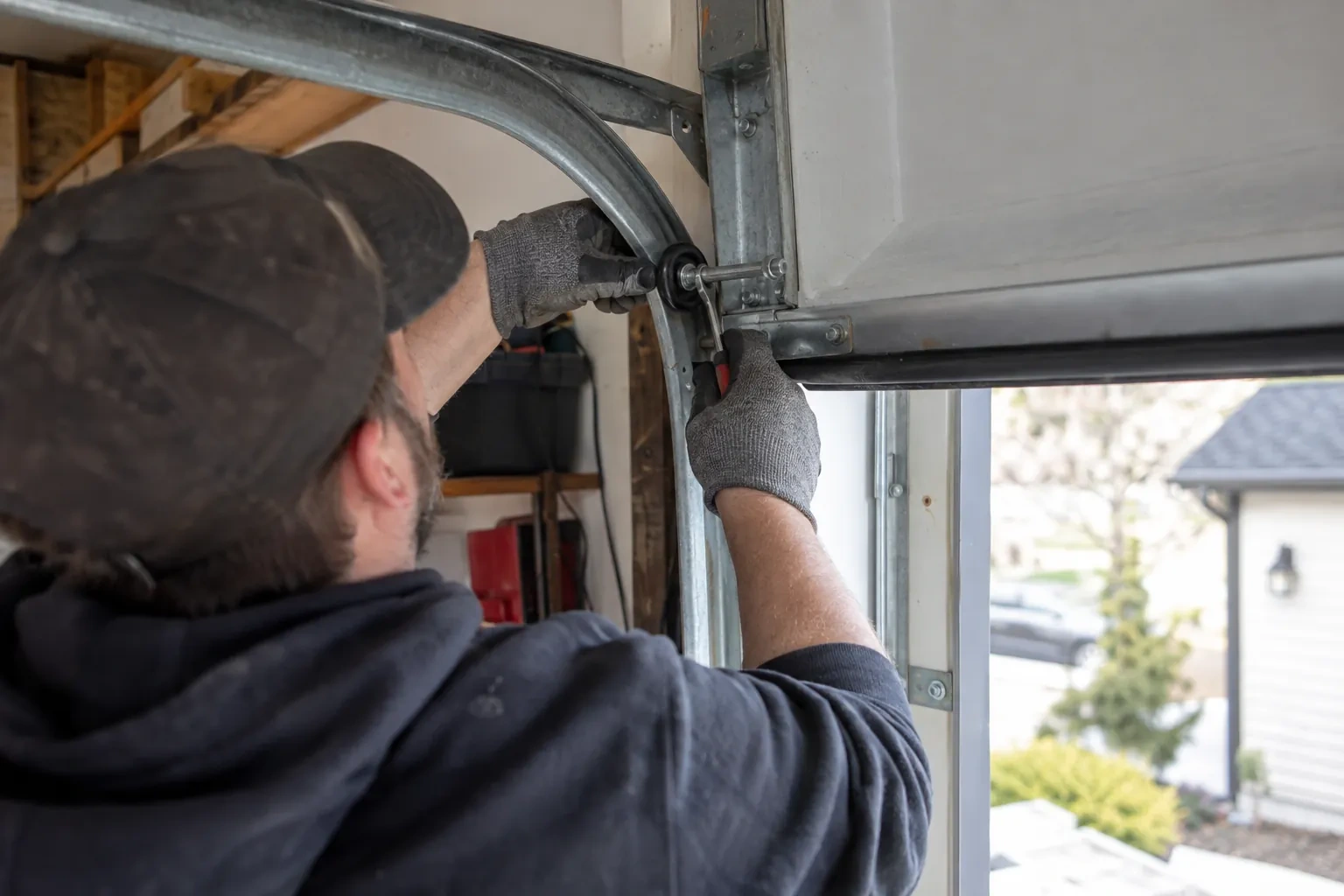
How the visit goesThe door shudders as it rises, worst where the track bends from vertical to horizontal. Watching from inside, you can see one section rock from side to side while the others sit still, and the whole door lands with a clunk.
Garage Door Roller Replacement
How the visit goes
Track straightness and roller clearance
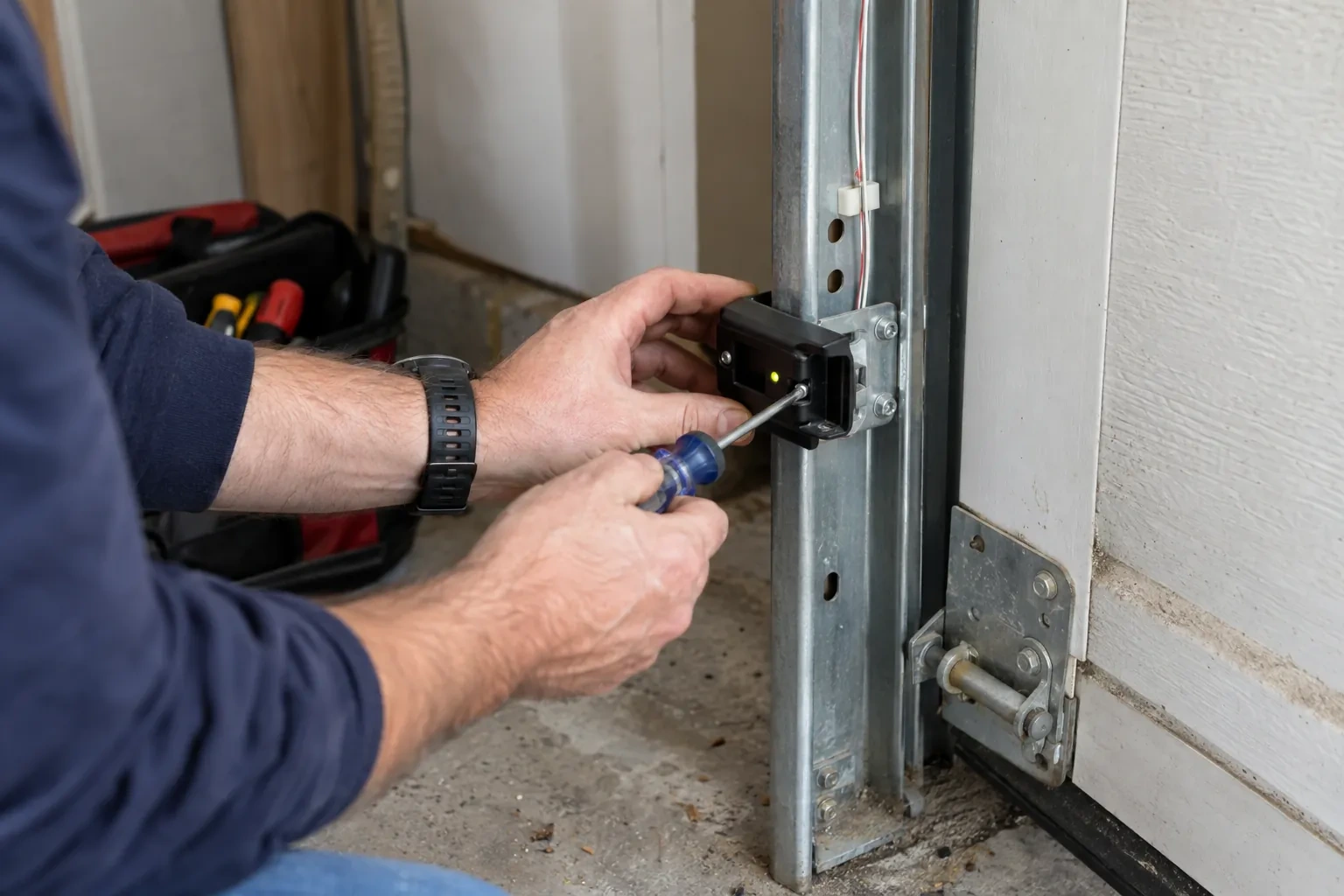
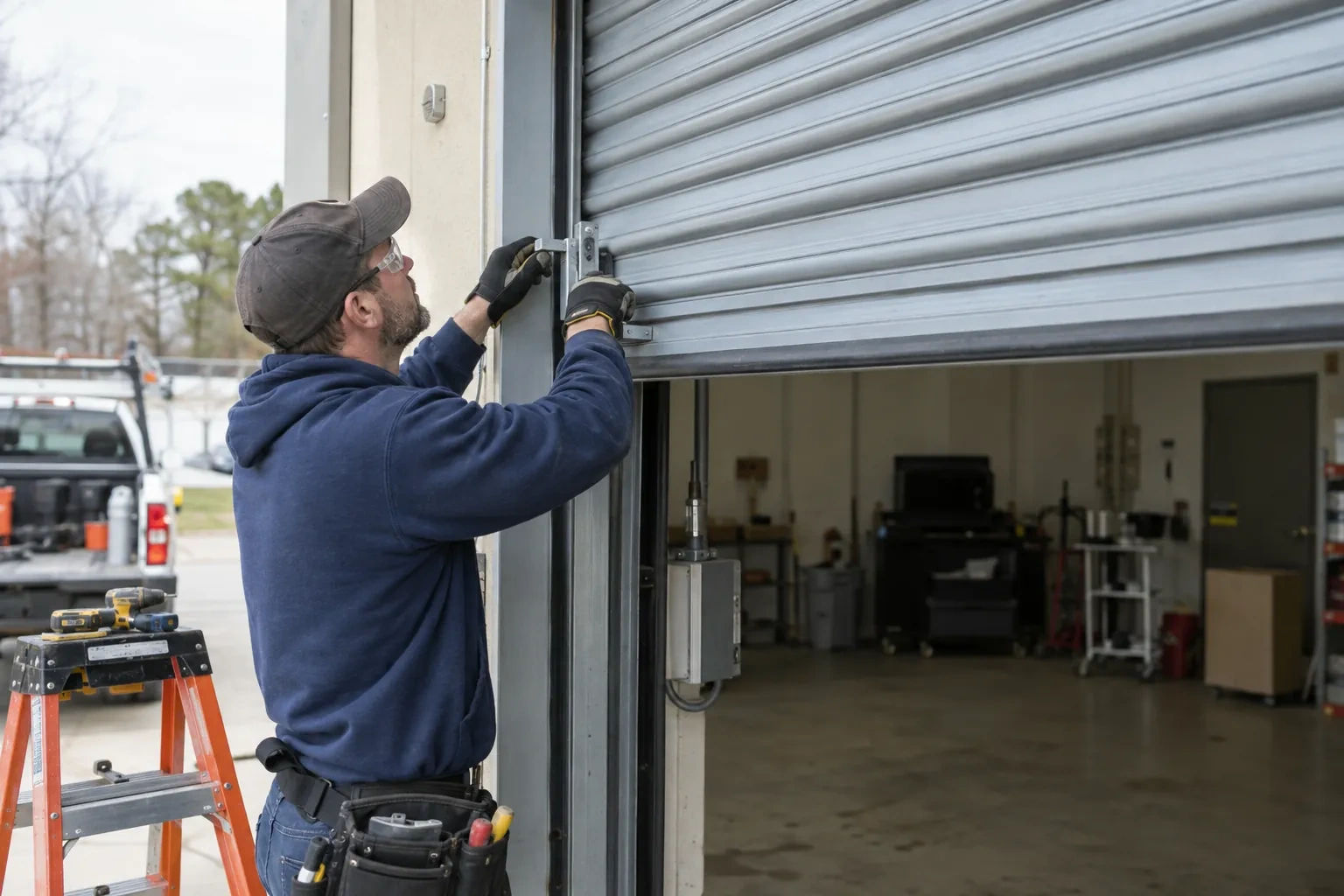
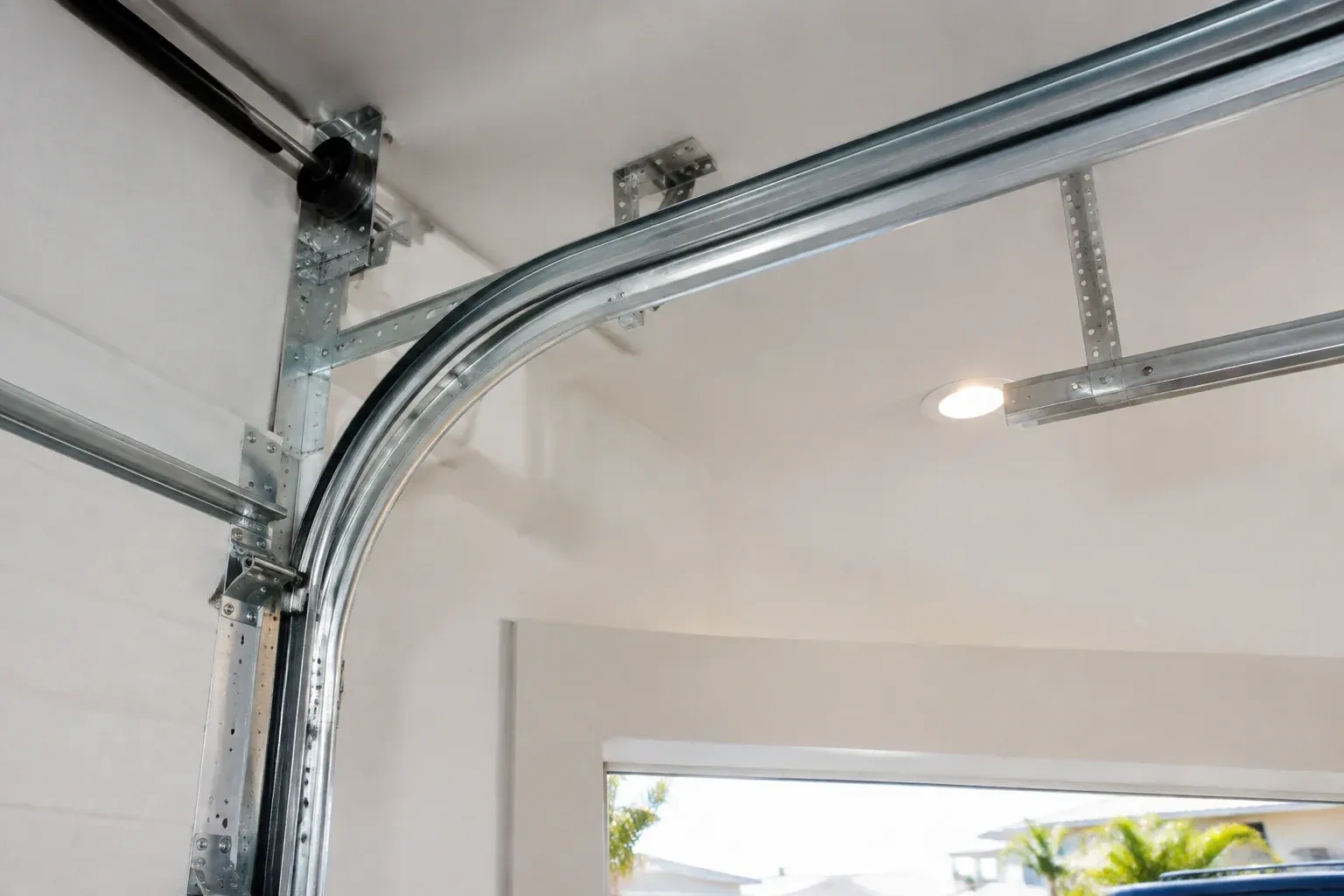
The vertical tracks are checked for plumb and the horizontal tracks for level and for sag at the rear hangers. The technician sights along each track for dents, spread or pinched edges, rust scale and the debris that collects in the bottom few inches. Clearance matters too: a wheel should turn freely with a little side play, neither squeezed by a track pulled too close to the door nor so loose that the door can lean. Where the track has drifted, the jamb brackets are adjusted before new rollers go in, because fitting fresh wheels to a crooked track simply wears them the same way the old ones went.
Fitting a matched set
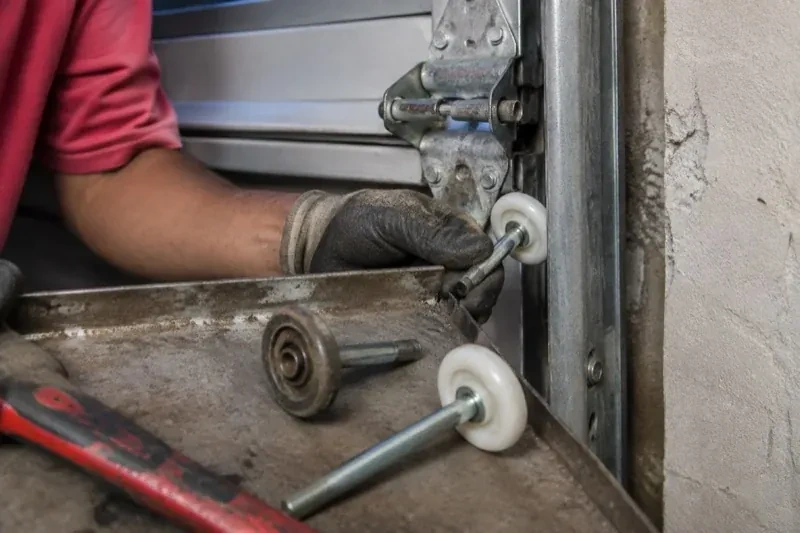
The new rollers go in as one set of one type, with the same wheel material, stem length, bearing count and load rating at every position where the hinges allow it. Mixing a couple of new nylon wheels among old steel ones leaves the door running unevenly and sounding different from side to side, so even when only two wheels looked worn, the whole set is normally changed. Where a heavier door needs seven- or ten-inch stems at the double hinges, those positions get long-stem rollers and the single-hinge positions get standard ones, all from the same range so the wheels ride at the same height in the track.
Planning the next set
New ball-bearing nylon rollers on a residential door typically give seven to ten years of ordinary use before they are due again, and sealed-bearing types often longer, while a door that cycles many times a day wears everything sooner. A sensible rule is to have the rollers looked at whenever the door is serviced and to replace them as a set when the springs are next changed, since both wear on a similar timeline and the door is already secured for the work. Industry guidance suggests a professional look at the whole door once a year, with rollers on the list.
Garage Door Roller Replacement
In the van
Track clamps or locking pliers
Garage door lubricant
Sealed-bearing nylon rollers
1-1/2 inch reversal test block
Three-inch rollers for commercial track
Garage Door Roller Replacement
What affects the quote
Track alignment and repair
Realigning jamb brackets, straightening a dented lip or replacing a damaged length of track is separate from the roller work and quoted as such when the inspection finds it.
Combining with spring or cable work
If springs or cables are being replaced in the same visit, the door is secured once and the roller set is added to that job, which is often more economical than a separate call.
Stem length and double hinges
Doors with two hinges stacked at each end need long-stem rollers at those positions. Those cost more than standard four-inch stems and are counted separately in the quote.
What to have ready
- When were the springs last replaced, if you know?
- Are there two hinges stacked at the ends of each section, or one?
- How many sections does the door have, and is it wood, insulated steel or single-skin?
Garage Door Roller Replacement: questions
QuestionsHow long do garage door rollers last?
It depends on what they are made of and how often the door moves. Builder-grade plastic wheels with no bearings often show wear after only a few years. Steel and nylon rollers with seven to thirteen ball bearings are typically rated for ten to fifteen thousand cycles, roughly the life of a torsion spring, which for many households means seven to ten years. Sealed-bearing nylon rollers are rated far higher. A door used many times a day, or one living with salt and slush, shortens all of those.
Should I replace rollers when the springs are replaced?
It is a common and sensible pairing. Rollers and springs are the two most frequently replaced parts on a door and wear on similar timelines, so a door that has used up its springs has usually worn its rollers too. Doing both in one visit means the door is secured and the opener disconnected once, and the bottom brackets, which are handled for spring work anyway, receive new rollers while they are accessible. Ask for the rollers to be checked whenever spring work is booked.
I lubricated everything and the grinding came back. Why?
Lubricant restores bearings and hinges that are still sound; it has nothing to offer a wheel worn oval, a nylon tire that has cracked, or bearings whose balls have pitted their race. When a spray settles the noise for a day or two and it returns, the wear is in the roller itself and replacement is the answer. Spray on the track or a plastic wheel can make matters worse by collecting grit, so the technician cleans that off as part of the job.
Related services
- Garage Door Track Repair or ReplacementYou bought the house with a door that sticks near the top of its travel.
- Garage Door Cable ReplacementThe cable has wrapped itself around the shaft above the door instead of sitting on its drum.
- Torsion Spring ReplacementLooking up at the coil above the door, you can see a clean split with a gap of several centimetres between the two halves.