Springs · Oshawa
Garage Door Hinge Replacement in Oshawa
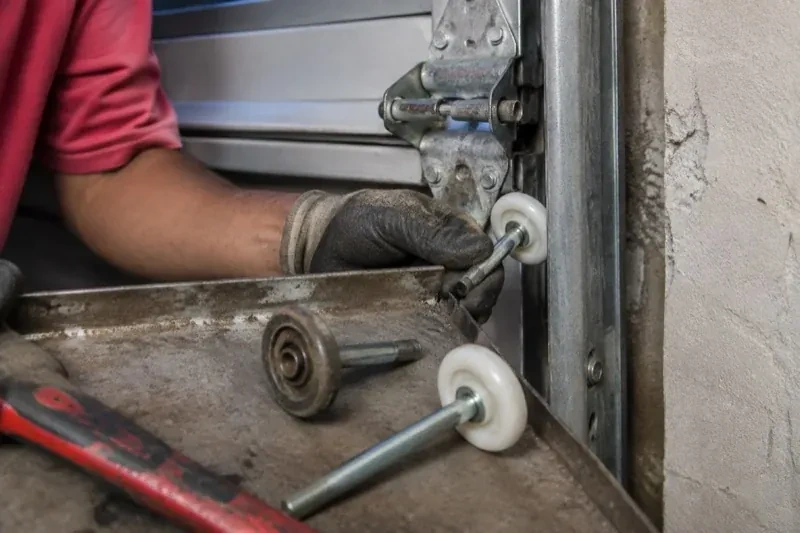
The roller at the top of the second panel is leaning outward and only half of the wheel is still in the track.
In plain words
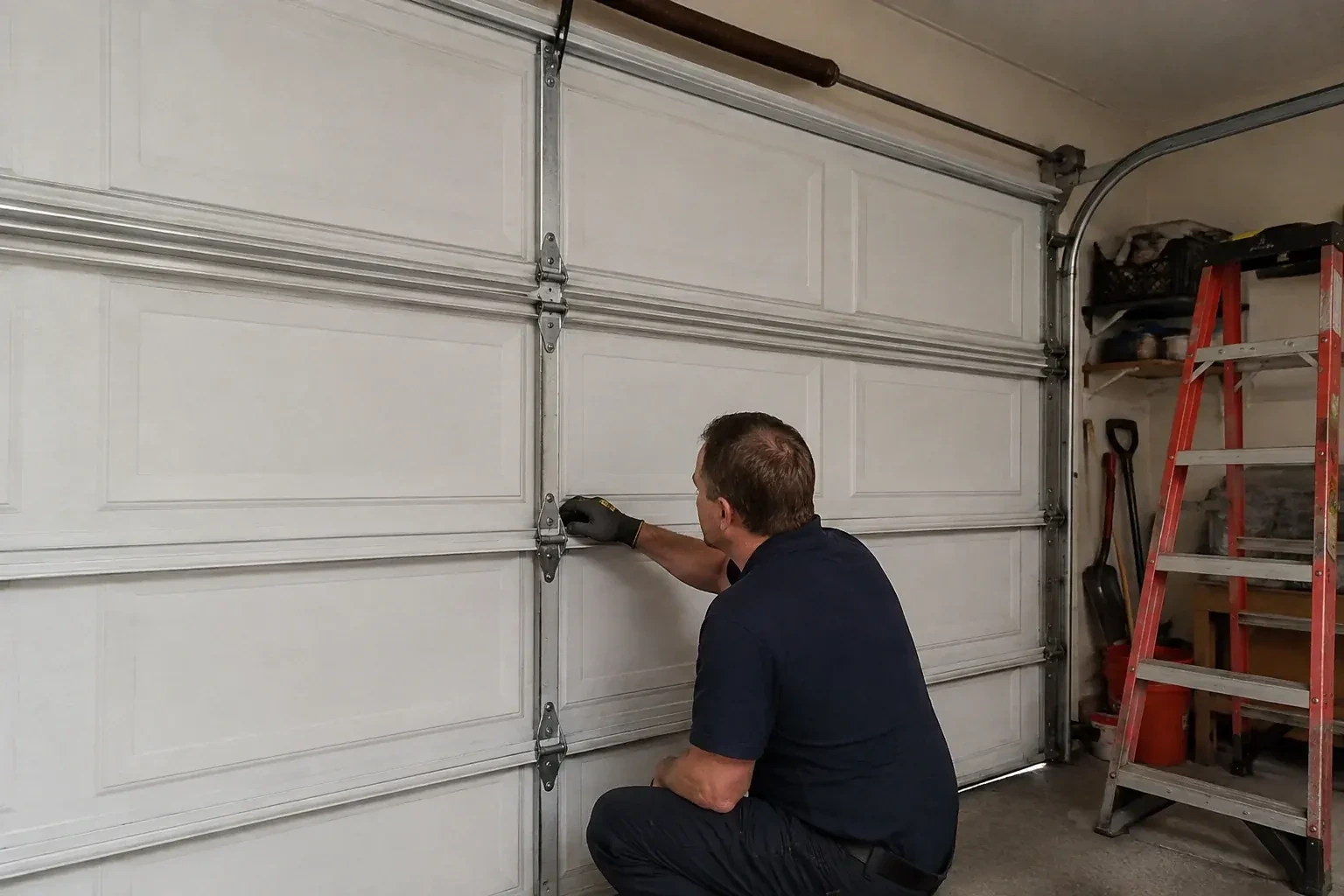
Hinges are the joints of a sectional garage door. Each pair of panels is connected by two hinges at the edges, which also hold the rollers, and by one or more centre hinges along the middle. Hinge replacement removes a hinge that has cracked, bent, worn loose at the pin or lost its grip on the panel and fits a matching one in its place. The technician keeps the door closed and the opener disconnected, changes each hinge on its own, checks the panels line up and the rollers sit true, and runs the door to confirm it folds around the curve as one piece.
How the visit goesAfter a cold night the bottom seal had frozen to the slab. The opener strained, something gave, and now one of the upper hinges sits with its leaf bent outward and the panel below it flexes when the door moves.
Garage Door Hinge Replacement
How the visit goes
The holes and the stile behind them
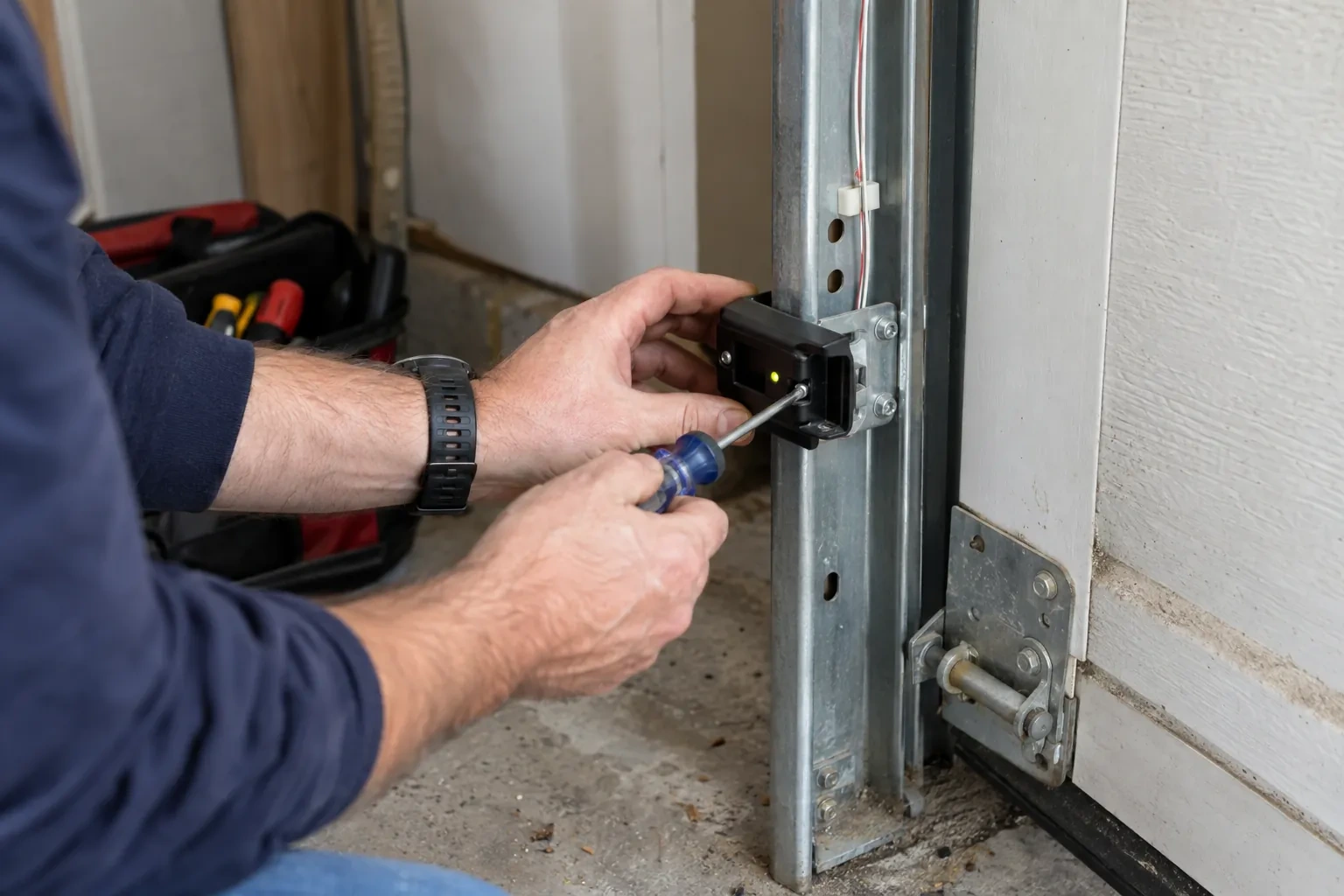
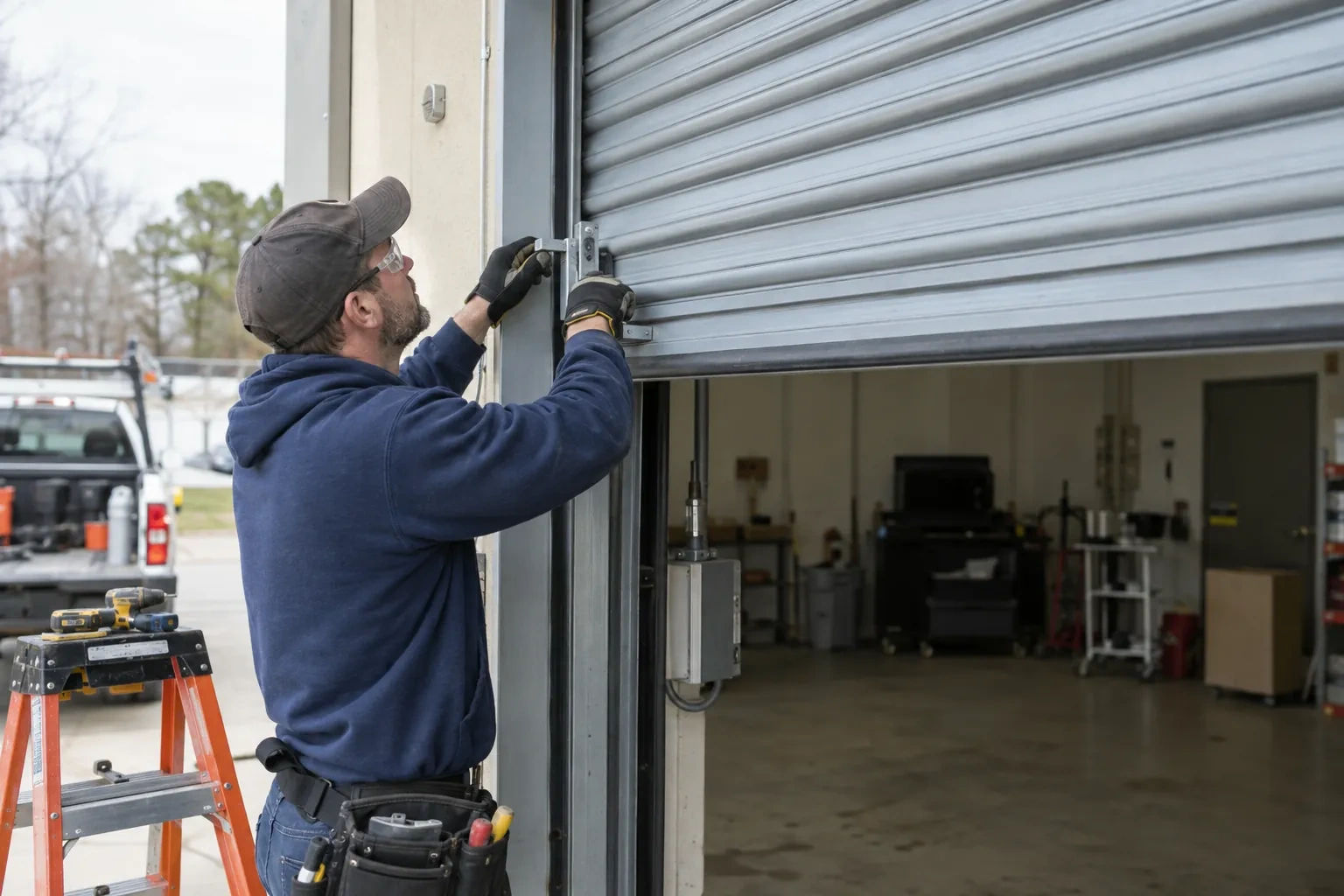
A hinge only holds if its fasteners do. The technician tests each screw for grip and looks at the stile it threads into: the folded steel channel at the panel edge on a steel door, the hinge support plate behind the skin where one is fitted, or the solid timber of a wood door. Holes that have stretched, rusted or torn are noted, because a new hinge on a stripped hole rocks just like the old one. Where the metal is thin or the wood is soft, the plan changes from screws to a through-bolt with a nut and washer, or a backer plate that spreads the load across fresh material.
Fresh anchoring for tired holes
Where screws spin or a hole has torn, the fix is a better anchor. The technician chooses from three approaches. First, shift the hinge slightly to sound metal within the stile, where the hole pattern allows it. Second, step up to a larger self-drilling screw that bites fresh threads in the existing hole. Third, drill through the panel and fit a bolt with a nut and washer, or a backer plate across the inside of the stile, so the load spreads across fresh material rather than a torn edge. On a wood door, a split stile is filled or reinforced before the hinge goes back on.
Panels that fold as one door again
The first thing you notice is quiet. The pop at the curve is gone, the panels turn into the horizontal track without a gap opening on one side, and the rollers ride flat in the track rather than leaning out. Closed, the door sits evenly against the jambs on both edges with no daylight showing. Opened by hand with the opener released, it moves with light effort and the joints stay tight. This is what a correctly hinged sectional door feels like, and it is worth running the door a few times yourself while the technician is still there so you know its new normal.
Garage Door Hinge Replacement
In the van
Track clamps or locking pliers
Hex-head self-drilling screws
Numbered galvanized edge hinges
Centre hinges
Heavy-gauge hinges for heavy doors
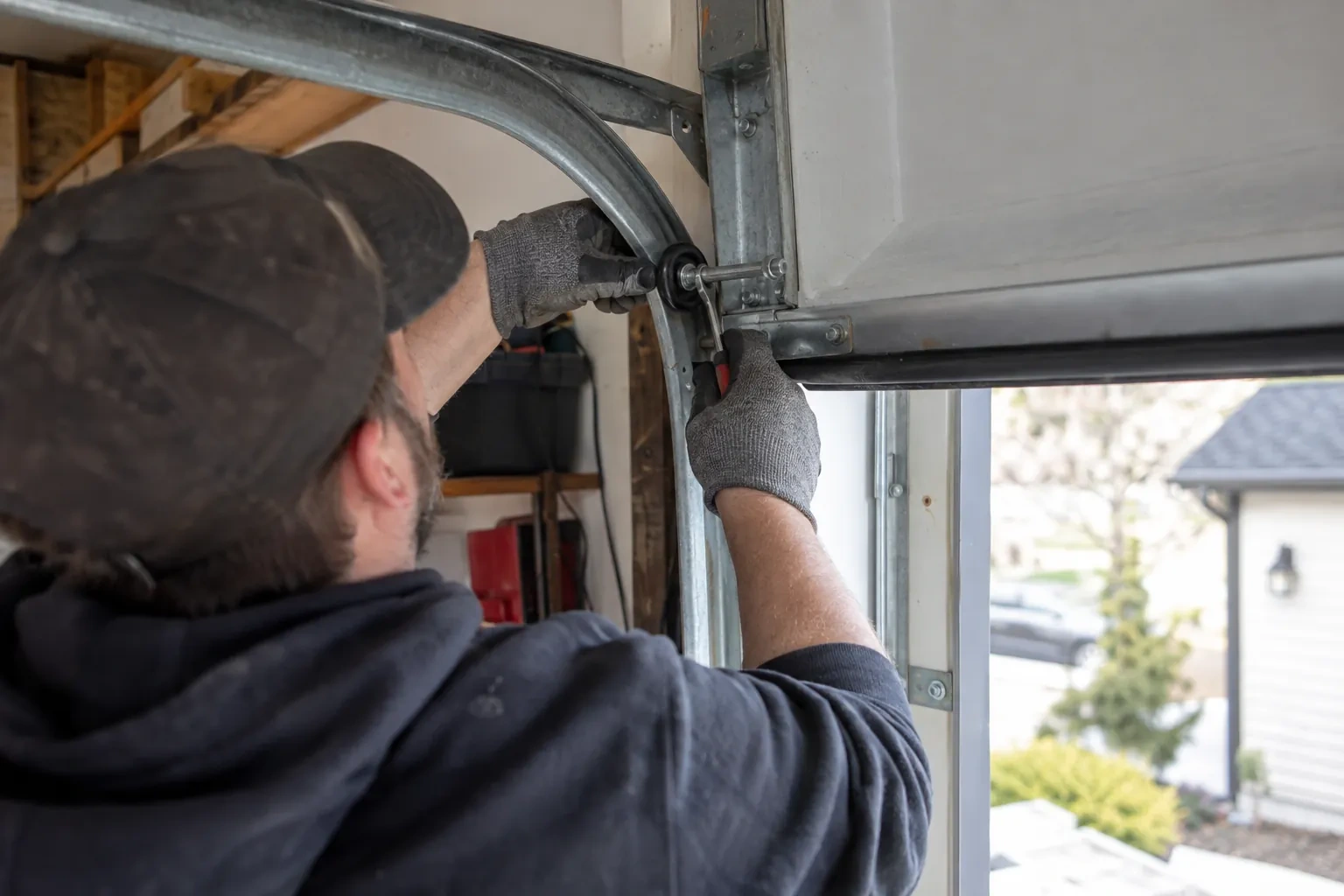
Garage Door Hinge Replacement
What affects the quote
Supporting the panel while hinges are changed
A heavy insulated panel needs to be braced while its hinges are off, so it does not sag or twist out of place mid-repair. Lighter steel or wood panels usually need no extra support, and the technician decides which applies once the panel is in front of them.
Corrosion and seized fasteners
Screws rusted solid take time to drill out, and heavily corroded hinges on the lower joints are replaced rather than reused, which shows in the parts list.
Track or balance problems found
If the inspection shows a track out of line or a door out of balance behind the hinge failure, correcting it is explained and priced on its own alongside the hinge work.
What to have ready
- Is anything stored against the door or under the track we should know about?
- Where does the pop, click or gap appear, and roughly how high up?
- Did the door feel heavy, jerky or noisy before the hinge failed?
Garage Door Hinge Replacement: questions
QuestionsWhy does the door pop or click at the same spot every time?
A noise at a fixed height points at the joint passing through the curve at that moment. A cracked hinge leaf flexing open and snapping back, a pin rocking in a worn hole, or a roller stem shifting in a loose hinge all make a sharp report as the load transfers. Because it always happens at one place, the technician can go straight to that joint and usually finds the hinge or roller responsible.
Can a light bump from the car damage a hinge?
Yes, more often than people expect. The bottom two panels take the contact, and the edge hinge at that joint bends along with the stile behind it, so the panel edges rub and the roller leans. The damage sometimes only shows as a new squeak at the curve. The technician straightens or renews the stile, fits a new hinge and roller, and checks the strut and track on that side.
Will new hinges make the door quieter?
Often noticeably. A cracked or loose hinge is the source of many pops, clicks and rattles, and a hinge that holds its roller square lets the wheel run flat instead of scraping the track lip. Combined with fresh lubricant on the knuckles and rollers, the door settles into a steady rumble. Any noise that remains usually points to the rollers, the opener chain or the springs, which the technician can identify for you.
Related services
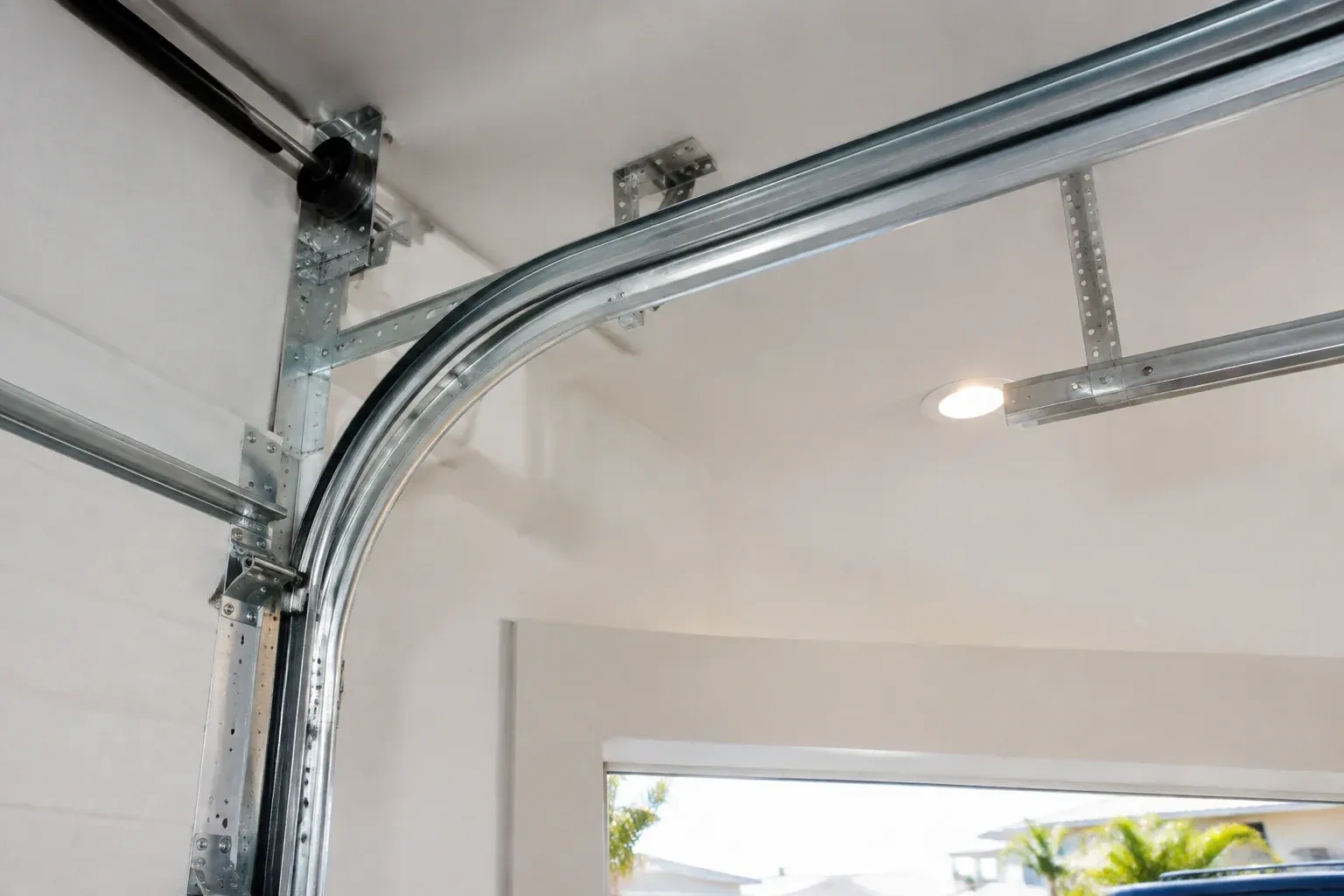
- Garage Door Track Repair or ReplacementYou bought the house with a door that sticks near the top of its travel.
- Garage Door Cable ReplacementThe cable has wrapped itself around the shaft above the door instead of sitting on its drum.
- Torsion Spring ReplacementLooking up at the coil above the door, you can see a clean split with a gap of several centimetres between the two halves.