Springs · Lakeview Park
Garage Door Balance Adjustment in Lakeview Park
Someone replaced the springs a while back and the door has bounced at the top ever since.
In plain words
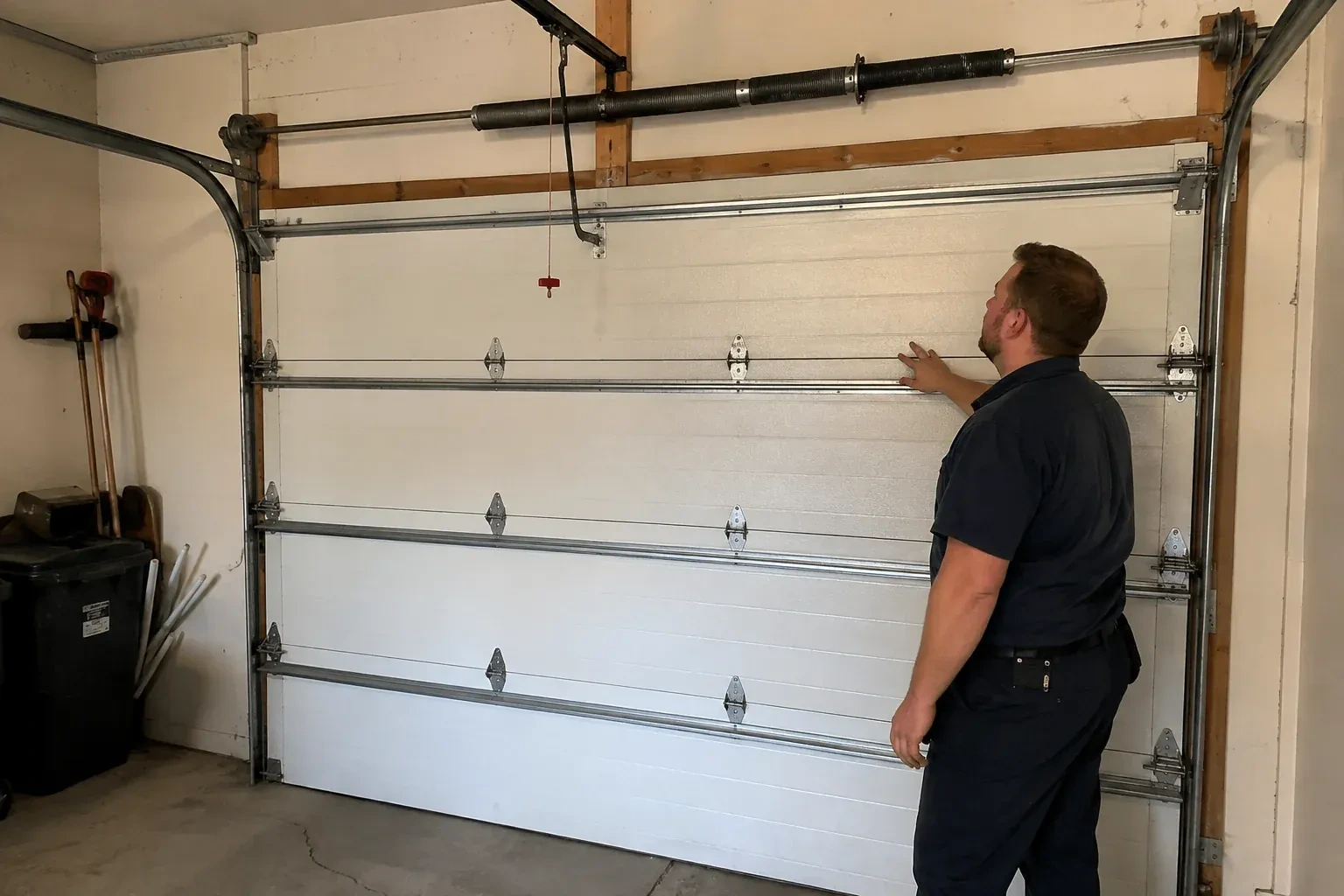
The whole service is built around one simple test that door manufacturers and safety bodies describe the same way. With the opener released, the door is lifted by hand to roughly a metre off the floor and let go. A balanced door stays where it is. One that drifts upward is carrying too much spring tension; one that sinks is carrying too little. The technician reads that behaviour at several heights, checks the door is level across its width, and then adjusts the counterbalance a quarter turn at a time, testing to the manufacturer's specified height and tolerance, until the door meets that standard and moves smoothly.
How the visit goesSince the new insulated panels went in, the door feels like a different animal. It closes with a thud, the opener labours where it used to hum, and lifting it by hand takes a proper heave rather than a fingertip.
Garage Door Balance Adjustment
How the visit goes
Talking through what you have noticed
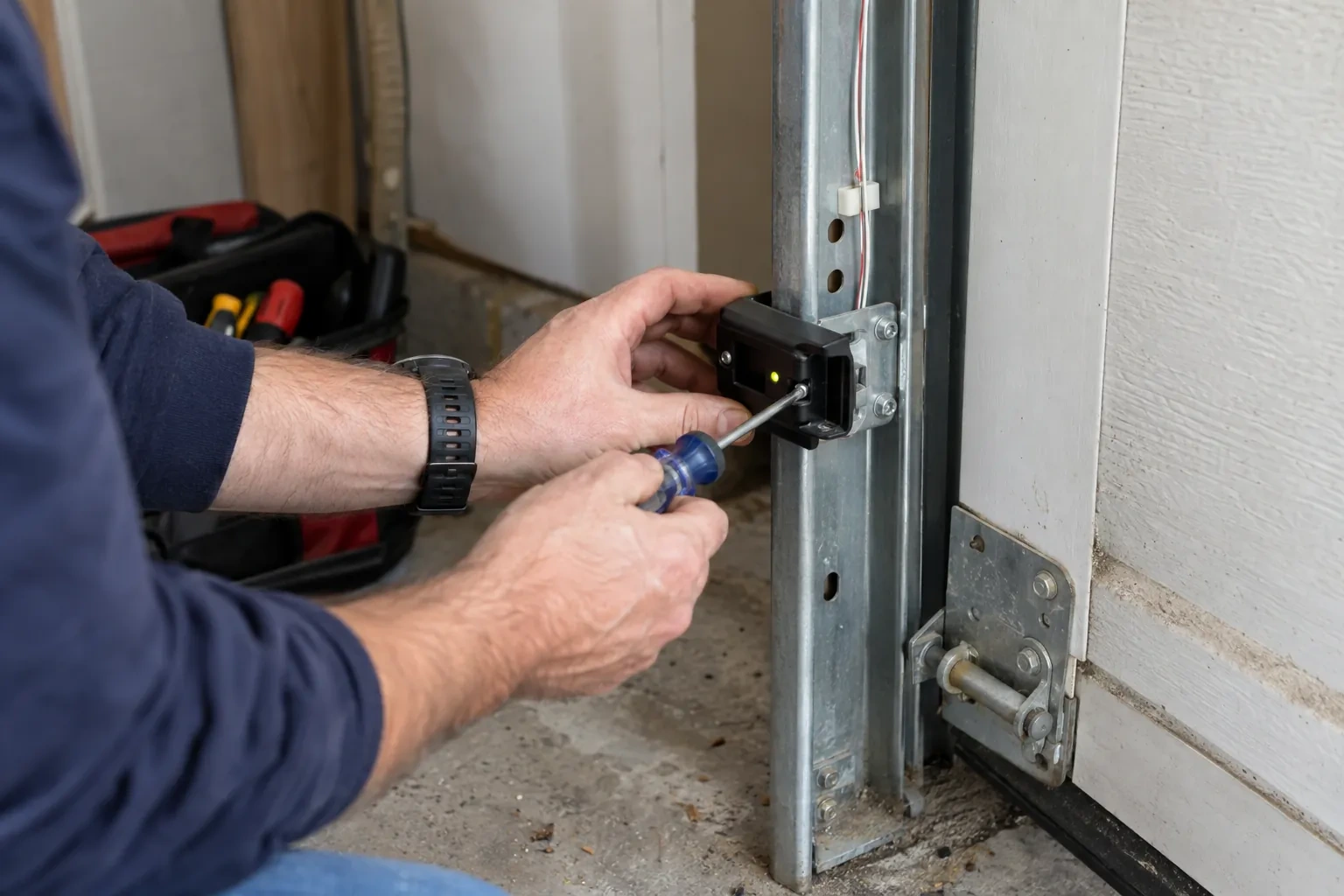
Your own observations complete the picture, because you have watched this door every day and the technician has watched it for ten minutes. When did the heaviness start, gradually or all at once? Is it worse on frosty mornings and easier by afternoon? Has anyone worked on the springs, changed the opener or added panels? Does it reverse at a particular point, and did that begin after the last power cut or a bump from the car? Each answer narrows the cause, and together they decide whether the day's work is a straightforward tension adjustment, a cable reset, some friction to remove, or a conversation about springs that have done their years.
Resetting the cables so the door sits level
If one corner of the door sat high, that is corrected before the final tension is set. The technician releases the spring tension enough to take the load off the drums, loosens the set screws on the drum on the low side, takes up or lets out cable until the door is level, and locks the drum again with the cable seated snugly in its groove. The bottom of the door is checked against the floor along its whole width, and both drums are confirmed to show the same number of wraps. Only then is the spring tension brought back up, because tension applied to a crooked door simply loads one side more.
Lubrication that keeps the adjustment true
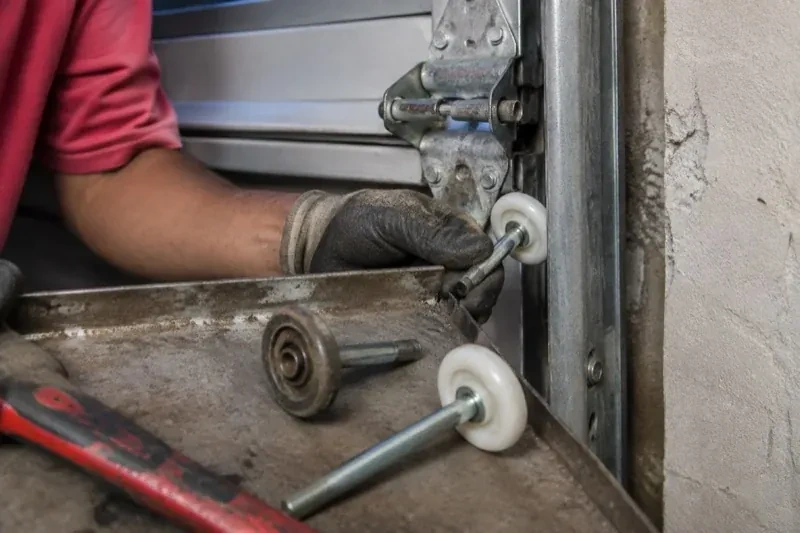
A balanced door stays balanced longer when the parts that move on every cycle are kept easy. Twice a year, spray a lubricant made for garage doors along the torsion spring, onto each hinge pin, the roller stems and bearings, and the bottom bracket pins, then run the door a few times. Wipe the tracks clean but leave them dry, since a coated track collects grit and lets rollers slide. Avoid heavy grease. Friction is part of what the hand test measures, so a door that is well lubricated reads true, and the springs are not asked to overcome drag that a moment's maintenance would remove.
Garage Door Balance Adjustment
In the van
Winding cone set screws
Torsion springs, matched pair
Replacement hinges
Garage-door lubricant
Containment cables
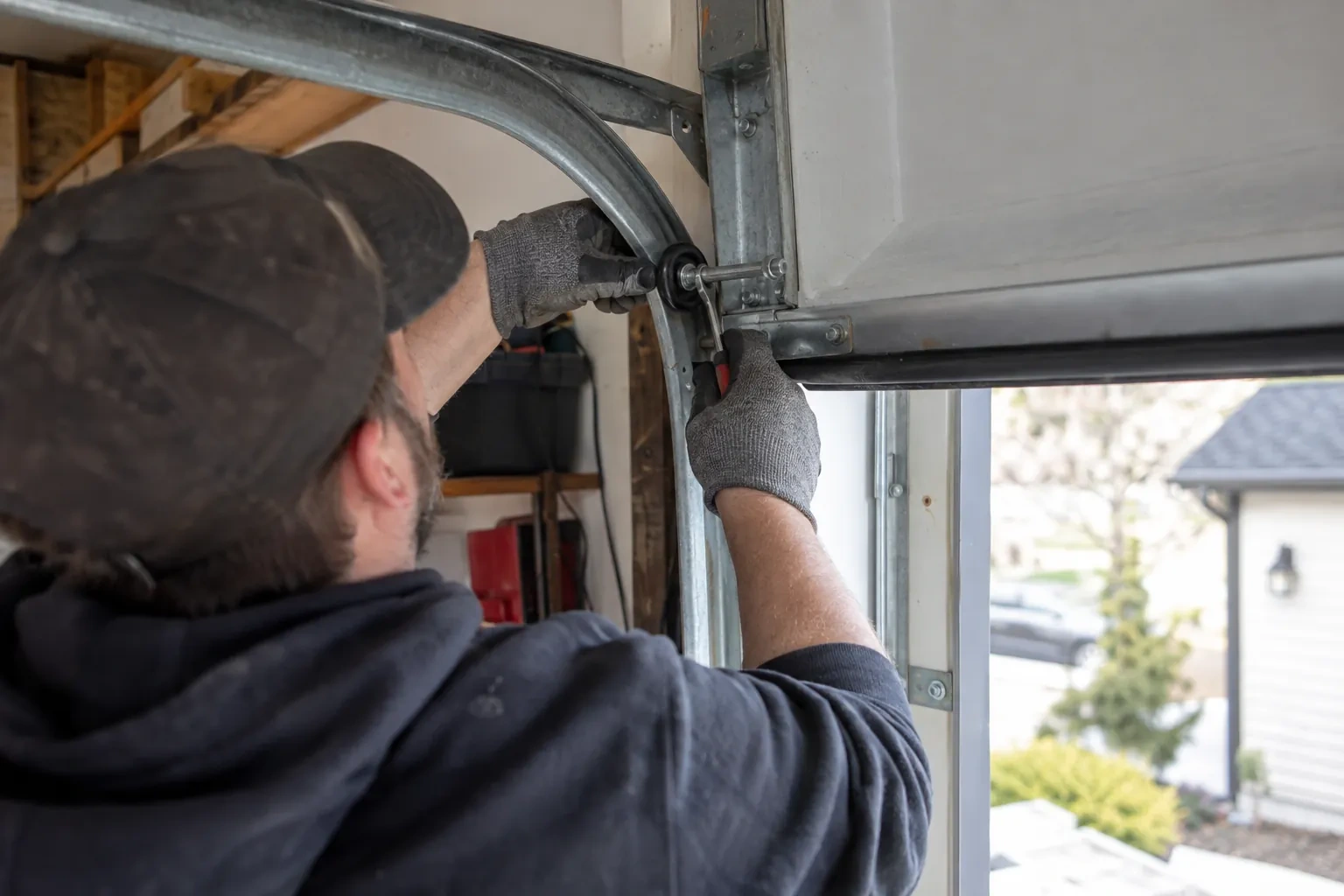
Garage Door Balance Adjustment
What affects the quote
Corroded or seized fasteners
Set screws and cone screws that have rusted solid take time to free, and badly corroded hardware is replaced rather than reused, which shows in the parts list.
Lubrication and tune-up
Some people combine the balance adjustment with a full lubrication and hardware tightening. That bundle is priced as a whole and saves a separate maintenance visit.
Adjustment or replacement
If the inspection shows springs that can be wound to the door's weight, the quote covers adjustment. Springs that are undersized or worn out mean replacement, which is priced as separate work and explained first.
What to have ready
- Is there storage or shelving near the spring shaft that needs moving?
- When were the springs last replaced or adjusted, if you know?
- Does the door behave differently in cold weather?
Garage Door Balance Adjustment: questions
QuestionsIs this something I can do myself?
The hand test, yes, and it is a good habit. The adjustment itself is a job for a trained technician, because the springs, cables, drums and bottom brackets are under high tension whenever the door is closed, and the industry's own guidance reserves any change to them for someone with the right bars, clamps and method. Leaving that part to the visit keeps the whole thing uneventful.
I am getting a new opener. Should the door be balanced first?
Yes, and installers will usually insist on it. A new opener is set up against the door it meets on the day, so its travel and force settings are only right if the door is already balanced. Fitting a new motor to a heavy door shortens the motor's life and puts the safety reversal out of range. Balancing first means the new opener starts life doing the light work it was designed for.
What is the red cord hanging from the opener for?
It is the manual release. Pulling it disconnects the door from the opener's trolley so the door can be moved by hand, which is how the balance test is done and how you get the car out during a power cut. The industry standard calls for it to be red and reachable, no more than about six feet above the floor. Reconnecting is usually as simple as running the opener once.
Related services
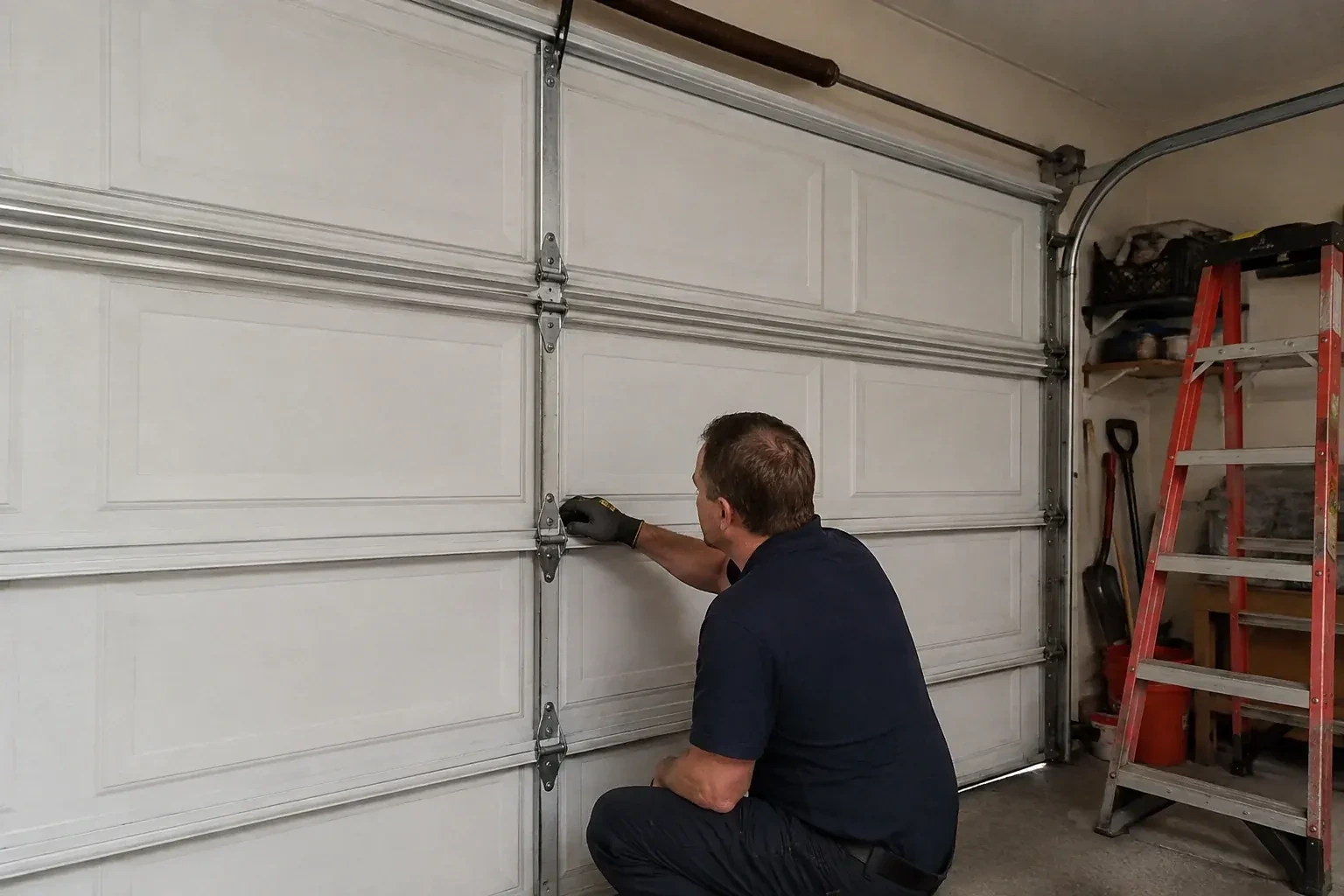
- Garage Door Hinge ReplacementThe roller at the top of the second panel is leaning outward and only half of the wheel is still in the track.
- Garage Door Track Repair or ReplacementYou bought the house with a door that sticks near the top of its travel.
- Garage Door Cable ReplacementThe cable has wrapped itself around the shaft above the door instead of sitting on its drum.