Openers · Lakeview Park
Chain-Drive Opener Repair in Lakeview Park
Press the button and the opener hums for a second, then quits.
In plain words
Cold is hard on a chain drive, and a detached or unheated garage shows it first. Grease on the rail and inside the gearbox thickens, a chain with surface rust stiffens link by link, and the operator strains against a door whose bottom seal may also be frozen to the slab. The result is a door that groans, stalls or reverses on the coldest mornings and works by afternoon. The repair frees or replaces a rusted chain, cleans and regreases the rail and gears, and sets force so the operator moves the door in the cold without being pushed past its safety limit.
How the visit goesThe door opens about a third of the way and stops. Turning the limit screw on the head has made no difference, and the trolley seems to sit in the wrong place along the rail when the door is fully closed.
Chain-Drive Opener Repair
How the visit goes
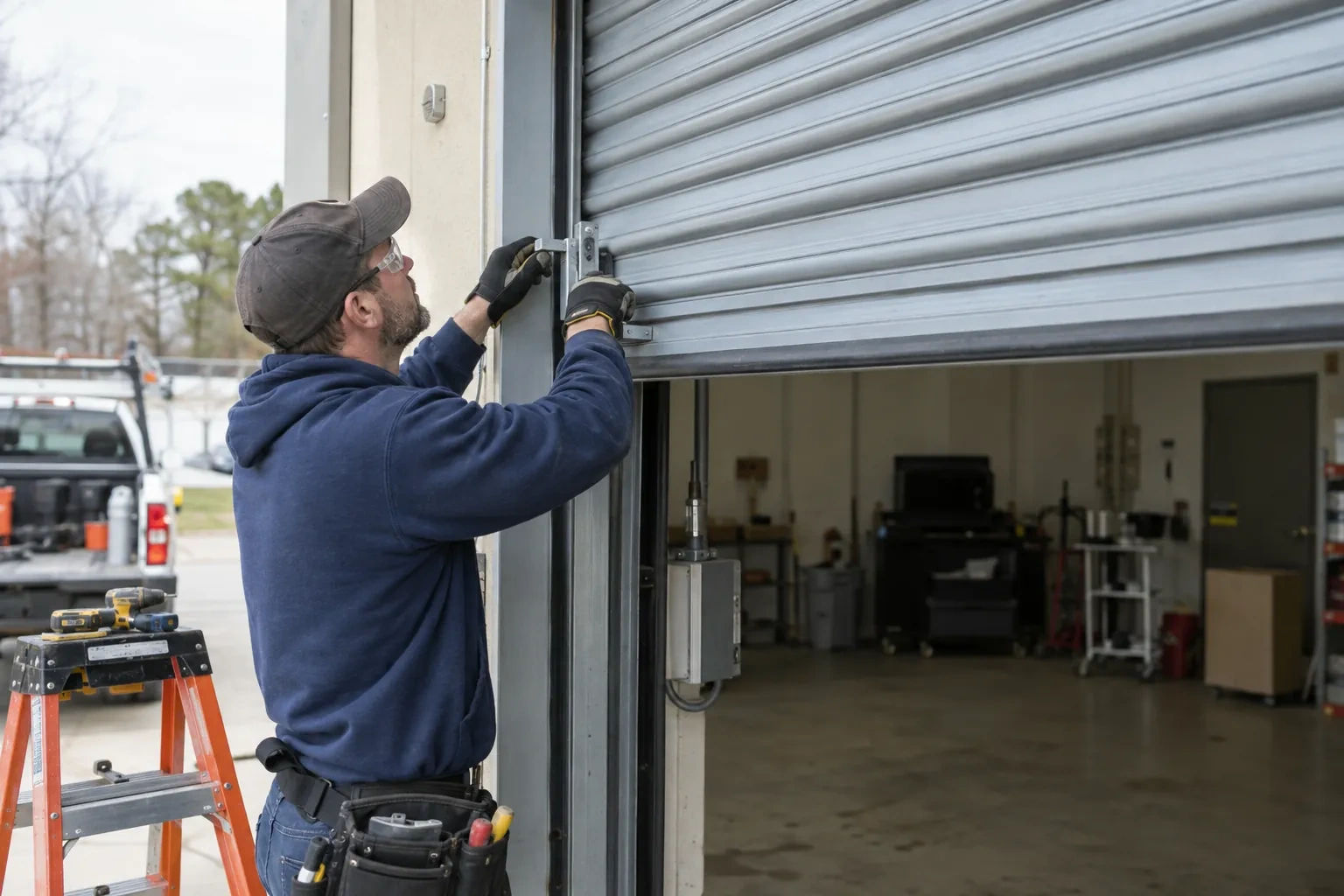
Sprocket at the head, idler at the door
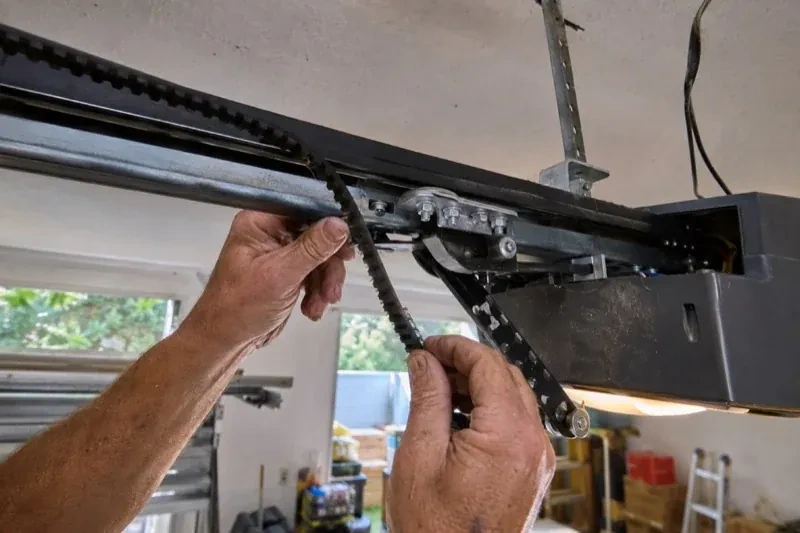
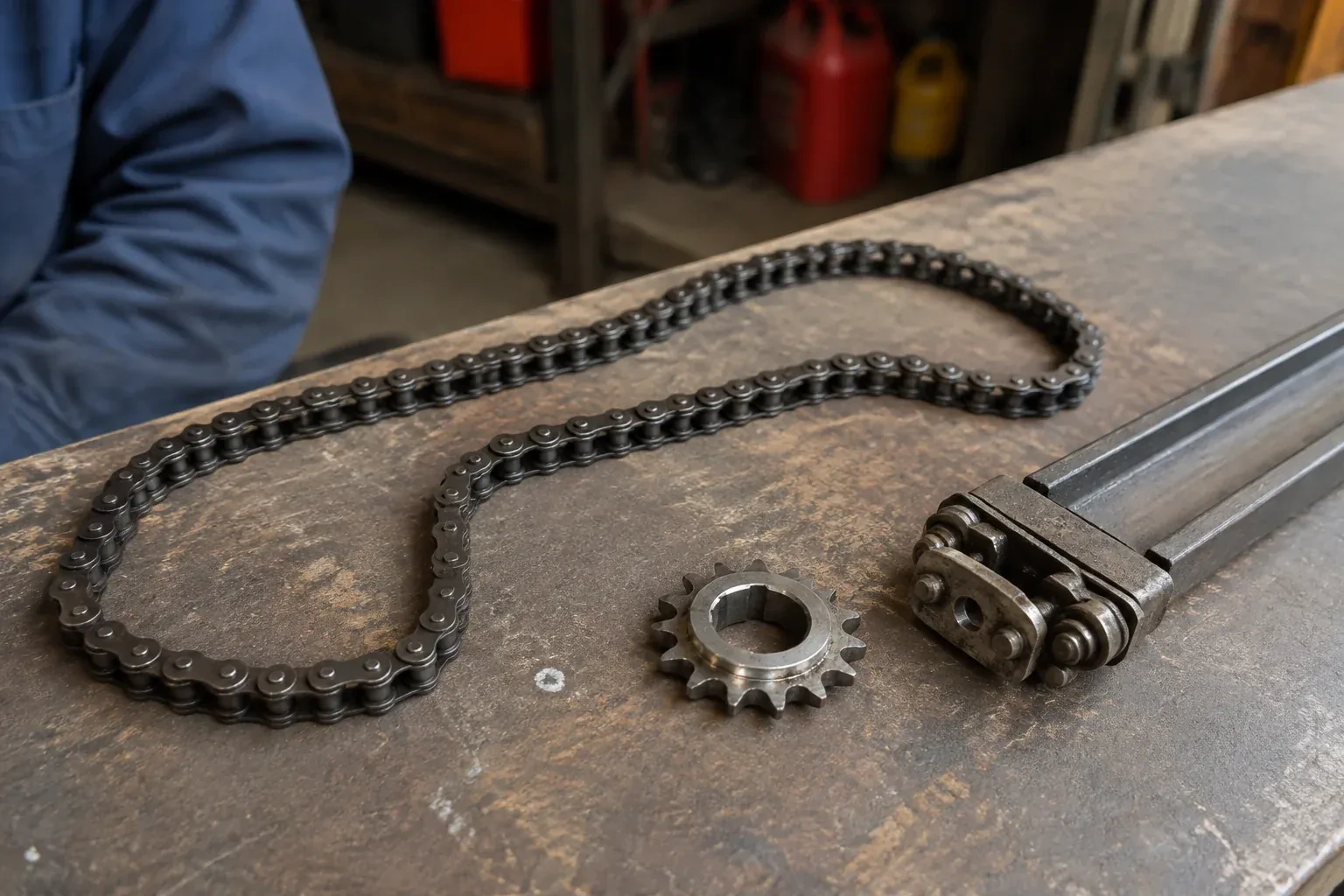
The chain runs over two wheels: the drive sprocket on top of the motor head and an idler sprocket or pulley at the far end of the rail near the door. Both are inspected. Sprocket teeth that have worn into hooks let the chain ride up and skip under load, usually at the same spot every cycle, and a sprocket that has loosened on its shaft turns a fraction behind the motor. The idler is checked for a seized bearing or a groove worn off centre, which drags the chain to one side of the rail. Matching wear on chain and sprocket usually means both are renewed together so a new chain is not run over old teeth.
Setting the tension by the numbers
With the door closed and disconnected, the two nuts on the tensioner shaft at the trolley are used in order. The outer nut, nearest the door, is loosened until the chain droops below the rail, the inner nut is backed off to make room, and then the outer nut is turned to raise the chain until it sits at the height the opener's own manual calls for on that rail shape, measured at the rail's midpoint. The inner nut is tightened against it to lock the setting. Once the door is reconnected and closed some droop appears in the chain; that is normal provided the measurement returns with the door open.
Balance is what protects the new gear
The drive gear that was replaced can wear out when it is asked to lift more than the chain should carry, though binding or wear elsewhere in the drive can share the blame. Keeping the load honest starts with the door's balance. Each season, with the door closed, pull the red release, lift the door by hand to about a metre and let go; it should stay put. If it sinks or creeps upward, the springs have drifted and a spring adjustment is due before the operator starts working harder to compensate. Reconnect by running the operator until the trolley picks up the arm. This one check does more for the gearbox than anything else you can do.
Chain-Drive Opener Repair
In the van
Idler sprocket or pulley
Cold-rated garage door lubricant
Drive gear and worm gear kit
Motor start capacitor
White lithium grease
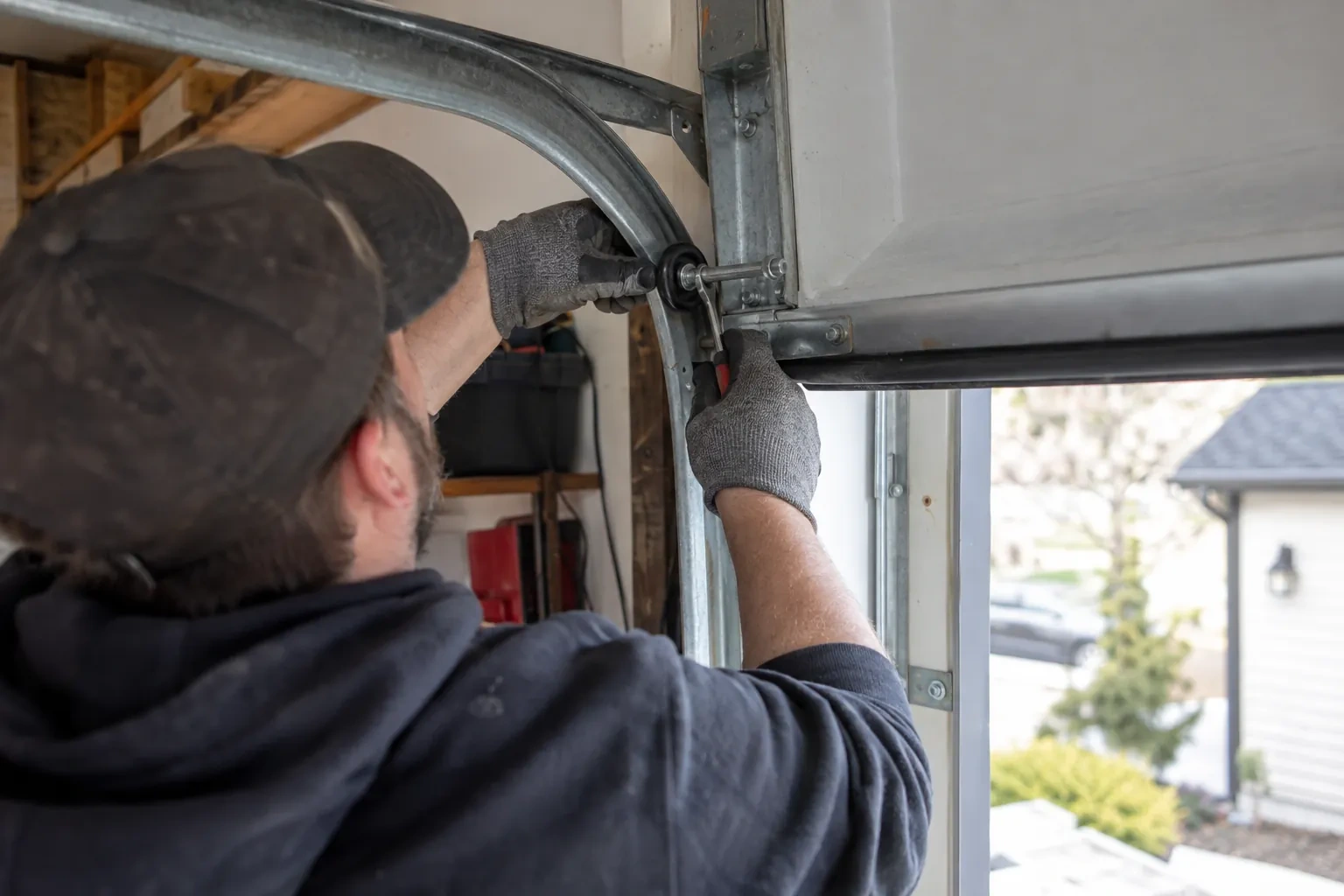
Chain-Drive Opener Repair
What affects the quote
The gear kit for your model
Drive gear, worm gear and sprocket shaft assemblies are made to fit a particular head, and the kit for an older or less common unit is a different item from the one for a current model.
Age of the operator and parts supply
Parts for recent heads are on the van; parts for a unit several decades old may need ordering, and where a maker no longer supplies them the conversation turns to what can be done instead.
Ceiling height and access
A head hung from a high or cathedral ceiling, or a rail boxed in by storage racks, a lift or ductwork, takes longer to reach and work on than one under a standard joist with a clear floor.
What to have ready
- With the red cord pulled, does the door lift by hand and stay about a metre up?
- Does the door stop short, reverse at the floor, or open only partway?
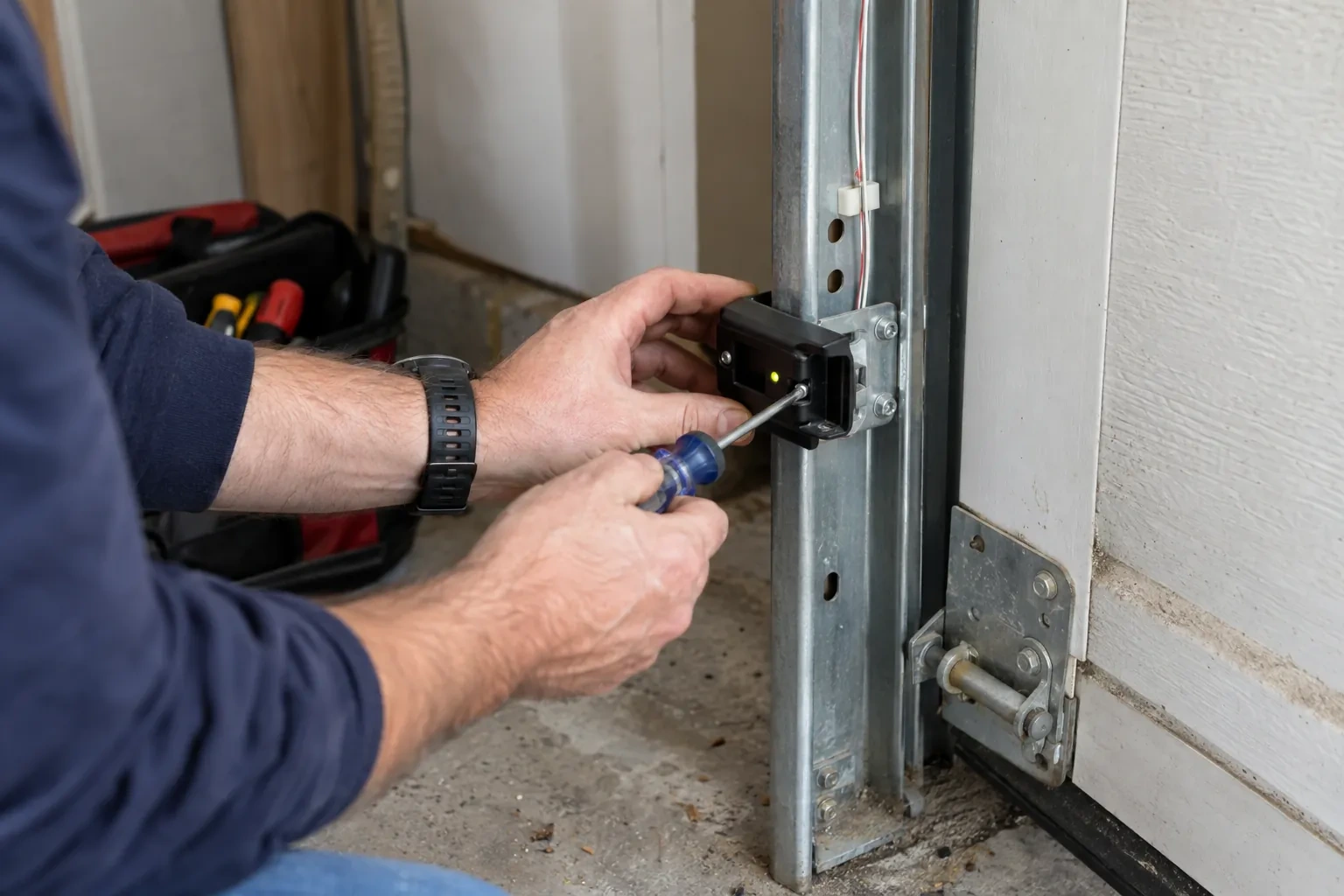
- Do the photo-eye sensors near the floor show steady lights?
Chain-Drive Opener Repair: questions
QuestionsHow long does a chain-drive repair take?
A tension and limit adjustment with the reversal tests is generally a short visit. Replacing a gear and sprocket assembly or fitting a new chain, phasing it, tensioning and re-setting the limits takes longer, usually a good part of a morning or afternoon. If the balance check shows spring or roller work is needed first, or a part for an older model has to be ordered, the technician will say so and plan a second visit.
My garage is detached and unheated. Does that change the repair?
It shapes it. Cold thickens grease and stiffens a chain with any rust on it, so the technician cleans and regreases the rail and gears, replaces a rust-bound chain rather than tensioning it, and sets force so the door moves at low temperature without the operator being oversensitive. Salt corrosion on the chain and bottom hardware from vehicles is checked. The advice afterwards leans on keeping the threshold clear so the seal does not freeze to the slab.
My opener is decades old. Can the chain drive still be repaired?
Often, yes. Gear kits, sprockets, chains and trolleys are still made for many older heads, and tension, phase and limits can be set on almost any unit. The limit is parts: some makers no longer support units made before the mid-1990s, and those also lack the photo-eye protection expected today. The technician checks parts availability for your model and lays out repair beside renewal so you can decide with the facts.